
India's Maritime Silk Road: Tracing the Ancient Trade Routes that Shaped Global Commerce and Culture
Long before the airways connected continents, before the global economy was shaped by shipping lanes, there was the Maritime Silk Road—a vast network of sea routes that bound civilizations across the Indian Ocean. And at the heart of it all was India. Stretching from the Arabian Peninsula to Southeast Asia, from East Africa to China, India’s ports were bustling hubs of cultural exchange, goods, and ideas. Today, the legacy of this ancient maritime route is often overshadowed by overland trade routes like the famous Silk Road. But as we delve into the forgotten sea lanes of the Indian Ocean, it becomes clear: India’s Maritime Silk Road was just as crucial, shaping not only the economic landscape but the cultural and religious exchanges that defined the ancient world.
India, with its extensive coastline and strategic position, was a key player in this maritime network, with ports such as Bharuch, Muziris, and Surat acting as gateways to the wider world. These were not just places where goods were exchanged, but vibrant meeting points of ideas, languages, and beliefs. From Roman glassware and Chinese silks to African ivory and Southeast Asian spices, India was both a conduit and a beneficiary of the flows that crisscrossed the seas. The bustling port of Muziris on the Malabar Coast, for instance, was a melting pot where the Romans, Greeks, Persians, and Arabs would converge, leaving behind traces of their cultures and artifacts that still echo through India’s history.
The movement of goods along the Maritime Silk Road wasn’t just limited to luxury items. It was an intricate web of everyday trade, ranging from textiles to precious metals, from grains to pottery. But perhaps the most profound exchange was that of ideas. The spread of Buddhism across Asia, for example, was largely facilitated by the maritime routes. Indian monks sailed to Sri Lanka, Southeast Asia, and as far as China, spreading not just the teachings of the Buddha but also the artistic and architectural styles of ancient India. This exchange left an indelible mark on the cultures of the East, as seen in the temples and stupas that still stand today, carrying the influence of Indian artistry and philosophy.

However, the story of India’s Maritime Silk Road is not without its challenges. Despite its significance, much of this history has been forgotten or obscured by the sands of time and the dominance of later European trade routes. The rise of colonial powers, the shifting dynamics of global trade, and the decline of ancient ports all contributed to the fading of this once-vibrant network. Yet, as modern historians and archaeologists rediscover ancient shipwrecks, inscriptions, and the remnants of long-lost ports, a clearer picture of India’s role in the Maritime Silk Road is emerging—one that tells a tale of interconnectedness, global trade, and cultural exchange long before the age of globalization.
As the world becomes more interconnected once again, India’s ancient maritime routes hold lessons in the power of exchange. The Maritime Silk Road was a conduit for more than just commerce—it was a bridge between cultures, peoples, and civilizations. In the same way that the Silk Road left an enduring imprint on the land, the Maritime Silk Road left a legacy on the oceans, where trade was not only about the exchange of goods but about shaping the very essence of cultures across continents. The rich history of India’s maritime past, from its bustling ports to the treasures found beneath the waves, is a story that deserves to be remembered—one that offers both a glimpse into our shared history and a vision for a more connected future.
Before the rise of sophisticated trading empires and the establishment of the Maritime Silk Road, long before the Romans and the Chinese began to map the sea lanes that would shape global commerce, there were ancient mariners navigating the vast expanses of the Indian Ocean. These prehistoric seafarers, whose names and cultures have often been lost to time, laid the foundations of what would later become one of the world’s most significant trade routes. The earliest maritime networks, predating the famous Silk Road, were crude yet ingenious systems that connected disparate regions and cultures across the open seas, forging the earliest pathways of trade, communication, and cultural exchange.

While written records are sparse, archaeological evidence from ancient coastal settlements provides intriguing clues about these early maritime routes. By around 3000 BCE, coastal communities along the Arabian Peninsula, the Indus Valley, and the coasts of Southeast Asia were already engaged in a form of maritime commerce, exchanging goods like obsidian, shells, and precious stones. Early evidence from the shores of Oman, India’s western coast, and the Arabian Gulf shows that these prehistoric sailors were skilled navigators who used the stars and the monsoon winds to guide them across vast stretches of ocean. They may not have had the luxury of advanced navigation tools, but they understood the rhythms of the sea—tides, currents, and seasons—making their voyages incredibly sophisticated for their time.
The Indian Ocean, with its intricate network of islands and coastal hubs, served as a natural trade corridor. But these early traders weren’t just exchanging materials; they were exchanging ideas, technologies, and cultural practices. Pottery and beadwork found at ancient trading sites on the coast of Kenya, for example, suggest that the East African coast was involved in these trade networks long before the Swahili Coast rose to prominence in later centuries. Similarly, the discovery of Harappan seals and figurines in distant places like Mesopotamia hints at the maritime links between the Indus Valley Civilization and the Sumerians, indicating that trade by sea was already a significant practice for these early peoples.
Perhaps the most surprising aspect of these early maritime networks is their scope. While the evidence is still being pieced together, it appears that prehistoric mariners were not only moving goods between the Indian subcontinent, the Arabian Peninsula, and East Africa, but also reaching Southeast Asia and even the distant shores of Australia. The Lapita culture, a prehistoric people who flourished in the Pacific around 1600 BCE, carried advanced maritime techniques that allowed them to navigate vast stretches of ocean. Archaeological evidence of Lapita pottery has been found as far away as Fiji and Tonga, suggesting that their maritime routes were as expansive as they were intricate, connecting the distant shores of Oceania and Southeast Asia.

The collapse of these early maritime networks, like the decline of many ancient civilizations, is a story that remains shrouded in mystery. Some scholars point to environmental changes, such as shifts in monsoon patterns, or the advent of more invasive civilizations along the coasts that altered the balance of trade. Yet, the legacy of these ancient seafarers lives on, not just in the physical remnants they left behind but in the ways modern trade routes still echo their ancient routes. From the ancient seafaring techniques of the Polynesians to the bustling ports of Southeast Asia, the foundation laid by these prehistoric mariners continues to shape our world today.
At its zenith, India’s Maritime Silk Road wasn’t just a trade route—it was the lifeline of ancient global commerce. Stretching from the shores of the Arabian Peninsula to Southeast Asia, and from the East African coast to China, this intricate web of maritime pathways formed the foundation of India’s connections to the wider world. By 500 CE, India’s coastal cities were bustling hubs, where luxury goods, precious metals, and cultural practices from across continents met and mingled. It was during this time that the Maritime Silk Road reached its true height, embodying the Indian Ocean’s role as a crossroads of civilizations and trade, and propelling India into a central position in the global economy.
The heart of this expansive trade network lay in India’s coastal cities, which acted as both ports and cultural melting pots. Places like Bharuch, the ancient port city of Gujarat, and the legendary port of Muziris along the Malabar Coast were integral to the flow of goods. Spice traders from Southeast Asia, merchants from the Roman Empire, and seafarers from Africa all converged in these bustling hubs, bringing with them not only commodities but also languages, religious ideas, and technologies. The spice trade was perhaps the most famous of these exchanges, with black pepper, cinnamon, and cardamom being transported across the seas, often fetching exorbitant prices in markets as far away as Rome and Alexandria.

India’s position as a key player on the Maritime Silk Road wasn’t just about goods—it was about ideas. This was the age when Buddhism, which had originated in the Indian subcontinent, spread rapidly to Sri Lanka, Southeast Asia, and beyond, carried by Indian merchants and monks sailing along these very sea lanes. The architectural styles of India’s temples and stupas, too, began to appear in the Southeast Asian kingdoms of Cambodia, Thailand, and Indonesia. These cultural exchanges didn’t stop at religion and architecture—they also reached the realms of language, art, and philosophy, leaving enduring legacies that shaped the cultures of the entire region.
The significance of these maritime trade routes was also reflected in the flourishing of Indian craftsmanship and innovation. Indian artisans created some of the finest textiles, intricate jewelry, and high-quality metalwork of the ancient world. The export of such items helped India establish a reputation for luxury and quality, ensuring that its coastal cities became synonymous with wealth and sophistication. It wasn’t just luxury items that flowed along these routes, however; raw materials like ivory, gemstones, and even cotton found their way to the distant corners of the ancient world, giving India a unique role in shaping global commerce.
Yet, as powerful as the networks of the Maritime Silk Road were, they were not impervious to the forces of nature and human conflict. The rise of Arab and Persian seafaring prowess during the 7th and 8th centuries, along with the increasing dominance of Chinese maritime power in the 10th century, began to shift the dynamics of global trade. The collapse of the Gupta Empire and the decline of regional powers along India’s coasts also played a role in reducing India’s direct control over these routes. Still, the legacy of the Maritime Silk Road lived on. By the time the European colonial powers began their expansion in the 15th century, the routes that had once been so vital to India’s economy were forever altered, though never entirely forgotten.

By the end of the first millennium, the vibrant maritime trade routes that once thrived along India’s coasts began to lose their influence, setting the stage for the decline of one of the world’s most vital ancient trade networks. India’s Maritime Silk Road had once been the heartbeat of global commerce, connecting distant shores from Africa to China. But as political shifts, external invasions, and changing global trade dynamics altered the world’s economic landscape, India’s once-dominant role in maritime trade began to ebb. The decline of the Maritime Silk Road is a complex story of changing power structures, shifting priorities, and the forces of nature, which together reshaped the global currents of trade and culture.
The first signs of trouble for India’s maritime dominance came with the rise of new political powers in the 7th and 8th centuries. In the west, the Umayyad Caliphate and later the Abbasid Caliphate began to assert greater control over the Arabian Sea, consolidating power in key trading hubs like Oman and the Arabian Peninsula. The caliphates not only brought with them new economic systems and technologies but also disrupted the ancient balance of trade. Along India’s coasts, cities like Bharuch and Surat, which had once flourished as key ports, saw their importance wane as Arab traders and naval forces began to dominate the routes that had previously been shared by Indian merchants and their partners. The control of the seas by foreign powers weakened India’s direct influence over the vital routes that had been the lifeline of its economy.
Simultaneously, the rise of the Chinese maritime empire, under the Tang and Song Dynasties, further shifted the balance of power in the Indian Ocean. Chinese merchants and navy began to dominate the eastern seas, using their technological advances in shipbuilding and navigation to extend their influence. With powerful ships, advanced cartography, and an expanding trade network, China soon became the center of commerce in the East. India’s maritime influence, though still significant, was now overshadowed by the growing strength of China’s presence, particularly along the trade routes linking Southeast Asia and China. The port of Guangzhou, with its direct connections to the South China Sea, increasingly became the key hub for goods traveling between the East and the rest of the world, pushing India’s coastal cities to the periphery.

As the Indian subcontinent faced external pressures, internal fragmentation began to unravel the once-strong maritime networks. The decline of the Gupta Empire and the weakening of regional powers along India’s coasts left a vacuum that was gradually filled by rising powers in Southeast Asia, such as Srivijaya and later the Khmer Empire. These maritime kingdoms, although linked to India through trade and cultural exchange, began to establish their own independent networks. The cities of Java, Sumatra, and the Malay Peninsula became powerful centers of trade and maritime commerce, diverting traffic away from India’s ports. The decline in centralized authority, combined with the rise of these new players, further eroded India’s control over the maritime trade routes.
The final blow to India’s Maritime Silk Road came with the arrival of European colonial powers in the 15th century. The Portuguese, Dutch, and later the British, all seeking to control the spice trade and other lucrative commodities, pushed their way into the Indian Ocean. With superior naval technology and military strength, they established fortified ports and monopolized trade in ways that India had never seen before. The once-open, shared sea lanes of the Maritime Silk Road became tightly controlled by European powers, who redirected the flow of goods to suit their colonial interests. The vibrant, multi-cornered trade network that had once connected Africa, the Middle East, India, and Southeast Asia was replaced by a colonial economic order that reduced India’s role to a supplier of raw materials and a captive market for European goods.
Beneath the waves and scattered along India’s ancient coastlines lies a rich archaeological record of the once-thriving maritime trade network that connected civilizations across the Indian Ocean. India’s role in the Maritime Silk Road—an expansive system of sea routes linking the subcontinent to Africa, the Arabian Peninsula, and Southeast Asia—has long been overshadowed by more famous overland trade routes. Yet, the discovery of ancient ports, shipwrecks, and trade goods offers a fascinating glimpse into the intricate web of commerce, culture, and exchange that existed long before the world was as connected as it is today. Archaeological sites along India’s western and eastern coasts are slowly revealing the story of an ancient world at sea, where the movement of goods shaped not only economies but also the course of history.

One of the most striking examples of India’s maritime heritage is the discovery of the port city of Muziris (modern-day Kerala), an ancient hub of trade that flourished as early as 300 BCE. Excavations here have unearthed Roman coins, glassware, and amphorae—evidence of the long-distance trade that flowed between the Roman Empire and the subcontinent. The finds are crucial in understanding the scale of the trade, revealing a complex network of exchanges that included not just luxury goods like spices, textiles, and precious stones, but also everyday items such as pottery and agricultural products. The port of Muziris was one of the most important centers on India’s west coast and played a key role in the movement of goods from the Indian subcontinent to the Mediterranean world.
Alongside the treasures of Muziris, other archaeological sites have illuminated the rich diversity of cultures that participated in the Maritime Silk Road. In Bharuch, on the western coast of Gujarat, a large number of inscriptions and artifacts from the Roman period have been discovered, indicating its role as a key gateway for trade between the Indian Ocean and the Roman Empire. Meanwhile, Poompuhar, an ancient port in Tamil Nadu, has yielded evidence of maritime activity dating back to the early centuries CE. Here, pottery from the Roman world, Chinese ceramics, and beads from Africa have been found, pointing to a diverse and interconnected trading network that spanned vast distances. These sites offer proof that India’s ports were not merely passive participants but active nodes in a global network that spanned from the Mediterranean to Southeast Asia.
Perhaps the most intriguing discoveries have come from beneath the sea. Shipwrecks found off the coast of Kerala and Tamil Nadu have provided tantalizing clues about the ancient maritime world. One of the most famous finds is a 2,000-year-old shipwreck discovered near the port of Cochin, which contained a vast cargo of pottery, beads, and even Chinese porcelain. These shipwrecks not only offer a glimpse into the everyday trade but also provide insight into the technology of ancient seafaring. The ships themselves—often large, multi-decked vessels with sophisticated navigation systems—demonstrate the advanced maritime knowledge of Indian sailors, who were able to traverse vast stretches of ocean using the monsoon winds, celestial navigation, and simple, yet effective, shipbuilding techniques.
In recent years, as archaeological methods have advanced, scholars have also begun to examine the material culture found at these coastal sites. Traded items like beads, coins, and ceramics are helping archaeologists reconstruct the cultural exchanges that took place along these routes. The spread of Buddhism across Southeast Asia, for instance, was facilitated by Indian merchants and monks traveling along the Maritime Silk Road. Indian sculptures and architectural styles can still be found in ancient temples across Thailand, Cambodia, and Indonesia, offering evidence of the cultural diffusion that took place through these maritime connections. The presence of Indian artifacts in distant lands, alongside local goods, tells a story of interconnectedness—one where trade was not merely about goods, but about the exchange of ideas, religions, and cultures that shaped the world.
From the sweltering deserts of East Africa to the vibrant markets of Southeast Asia, and all the way to the shores of China, India’s Maritime Silk Road was a lifeline for cultures, commodities, and ideas. At its peak, the maritime routes were far more than mere highways for goods; they were conduits of cultural exchange, shaping the ancient world in ways that resonate to this day. The extent of India’s role in this far-reaching network is a testament to the country’s geographical, political, and economic significance over two millennia.
The heart of India’s Maritime Silk Road lay along its expansive coastline—nearly 7,500 kilometers of land hugging the Indian Ocean. Key ports like Muziris, Bharuch, Poompuhar, and Surat were not only bustling commercial hubs but also rich cultural meeting points. India’s coastal cities acted as gateways, connecting the subcontinent to the Arabian Peninsula, Southeast Asia, and beyond. Along these routes, Indian traders, sailors, and merchants engaged in the exchange of luxury goods such as spices, textiles, ivory, and gemstones, but they also facilitated the movement of less tangible assets like religion and ideas. The ports became melting pots of culture, with travelers from Greece, Rome, Arabia, East Africa, and China mingling in these vibrant coastal towns, sharing stories, art, and traditions.
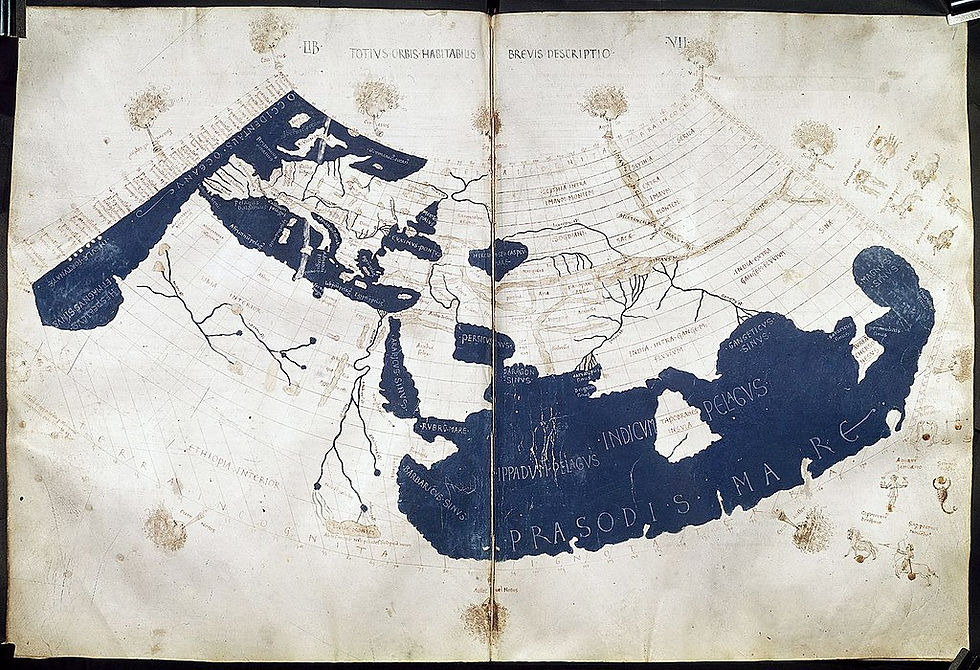
One of the most significant stretches of the Maritime Silk Road was the route linking the Indian subcontinent to Southeast Asia. Indian influence in this region was profound, as Indian merchants carried not only valuable goods like spices and textiles but also cultural and religious ideas. It is no surprise that Bali, Java, and Sumatra in modern-day Indonesia are home to intricate temples and monuments reflecting strong Indian architectural and religious influences. Indian merchants played a key role in the spread of Hinduism and Buddhism across Southeast Asia, where Indian art, literature, and religion found fertile ground, especially in places like Angkor Wat in Cambodia, a stunning example of Indian-inspired architecture.
The Arabian Peninsula was another critical player in the Maritime Silk Road, acting as a hub for goods traveling between India and the Mediterranean. Ports in Oman, Yemen, and the Persian Gulf became central nodes for the Indian Ocean trade. The Muscat port, in particular, flourished as a transshipment hub, connecting India to the Middle East, Africa, and Europe. In return, India received silks, glassware, and precious metals from the west, as well as valuable Islamic cultural and technological knowledge, which began to influence Indian architecture, mathematics, and astronomy.
Traveling farther westward, India’s Maritime Silk Road also reached the coasts of East Africa. Ancient trade networks connected the coastlines of modern-day Kenya, Tanzania, and Mozambique with the Indian subcontinent. The bustling port city of Kilwa on the Swahili Coast, for example, was a thriving center of commerce where Indian merchants traded beads, pottery, and ivory for African gold, ivory, and animal hides. These exchanges played a crucial role in the rise of Swahili culture, which blends African, Arab, and Indian influences, leaving behind a rich legacy of shared art, language, and architectural styles.

The waves of the Indian Ocean have long carried more than just trade goods—they have borne the legacy of a network that connected the ancient world in ways that we are only now beginning to fully appreciate. India’s Maritime Silk Road, a vital and expansive trade route that flourished from around 300 BCE to the 15th century CE, linked the subcontinent to the Mediterranean, East Africa, Southeast Asia, and China. This intricate web of coastal hubs, ports, and sea routes facilitated the exchange of goods, culture, and ideas, making it one of the most significant maritime trade networks in history. Now, as India’s rich maritime heritage seeks recognition, the push to nominate key sites along this ancient route for World Heritage status promises to illuminate the global importance of these coastal landscapes and the maritime cultures that shaped them.
At the heart of this proposed World Heritage nomination are the bustling ancient ports of Muziris, Bharuch, Surat, and Poompuhar—sites that once thrived as trade centers. These coastal towns were more than just commercial hubs; they were vibrant meeting places for a myriad of cultures, religions, and peoples. Muziris, for example, was a flourishing port on the Malabar Coast, where Roman, Greek, Arabian, and Indian merchants exchanged everything from spices and textiles to ideas and technologies. Artifacts from ancient Roman glassware to Chinese ceramics found in these locations offer evidence of the far-reaching network that connected India to the rest of the world. The potential UNESCO World Heritage recognition would honor the legacy of these ports as living cultural landscapes that played an integral role in the formation of early global trade.
The nomination also emphasizes the cultural and religious significance of India’s Maritime Silk Road. Indian traders not only exchanged goods but also carried Buddhism, Hinduism, and Indian artistic traditions across the seas, enriching the cultures of Southeast Asia and the Far East. Sites like the Borobudur Temple in Indonesia and Angkor Wat in Cambodia bear the unmistakable influence of Indian religious and architectural traditions. The sea routes enabled Indian monks and merchants to spread religious philosophies and cultural ideas, leaving lasting marks on Southeast Asian civilization. By seeking World Heritage recognition, these historical exchanges would be preserved not only as archaeological sites but as living testaments to the cross-cultural connections that defined the ancient maritime world.

Moreover, the proposal to include the maritime sites along India’s coast emphasizes the technological and navigational achievements of ancient Indian mariners. Archaeological evidence, including ancient shipwrecks off the coasts of Kerala and Tamil Nadu, reveals a sophisticated understanding of shipbuilding, navigation, and the monsoon winds. These ships were capable of traversing vast distances, connecting distant lands with astonishing regularity. The preservation of these maritime landscapes could shed light on the technological innovations that allowed India to dominate the seas for centuries, highlighting the role of seafaring cultures in shaping the world’s maritime history.
The World Heritage nomination is not only about recognizing India’s maritime past; it is also a call to safeguard these fragile coastal sites for future generations. Many of the ports and trade routes along India’s Maritime Silk Road are now threatened by urbanization, climate change, and rising sea levels. The legacy of these trade routes is in danger of being eroded if preservation efforts are not made. The World Heritage status would provide the necessary protection and funding to ensure that these historical sites are preserved, studied, and shared with the world. Additionally, it would raise global awareness about the interconnectedness of the ancient world, reminding us of the global trade networks that existed long before modern globalization.
The ancient Maritime Silk Road, once a flourishing network of trade and cultural exchange connecting India to East Africa, the Middle East, and Southeast Asia, now finds itself at the center of modern geopolitical currents. What was historically a route of commerce, ideas, and diplomacy has become a canvas onto which contemporary nations project strategic ambitions, national pride, and regional influence. As India and its neighbors reexamine their roles within this historic maritime space, the legacy of the Maritime Silk Road has been reshaped by modern political agendas, turning age-old sea routes into focal points of power and contention.

India’s growing prominence as a regional and global power has brought new attention to the Maritime Silk Road’s historic routes. As China aggressively promotes its 21st Century Maritime Silk Road under the ambitious Belt and Road Initiative (BRI), India has sought to reclaim its narrative by emphasizing its ancient maritime heritage. The historic trade routes that once linked Indian ports to Africa and Southeast Asia are now being invoked as symbols of India’s longstanding influence in the Indian Ocean. Indian policymakers and cultural institutions highlight this maritime legacy as evidence of India’s rightful role as a guardian of regional security and prosperity, challenging China’s expanding presence in the same waters.
This competition has turned the Indian Ocean into a stage for strategic rivalry, with ports and sea lanes becoming key assets in a larger geopolitical chess game. India’s investments in the Chabahar Port in Iran and its strengthening ties with Sri Lanka, Maldives, and Mauritius reflect attempts to build alternative networks of influence and counterbalance Chinese projects such as the Gwadar Port in Pakistan and infrastructure developments in Sri Lanka. These moves are more than economic—they are deeply political, reinforcing India’s vision of a “Free and Open Indo-Pacific” where no single power dominates the vital trade routes that have connected civilizations for centuries.
The politicization of the Maritime Silk Road also extends to cultural diplomacy and heritage. India’s government and academic circles have increasingly emphasized the country’s historic role as a peaceful maritime power, underscoring its contributions to regional art, religion, and commerce. This cultural narrative serves as a soft power tool, strengthening India’s ties with Southeast Asian nations that share deep historical connections through trade and Buddhism. At the same time, this framing allows India to position itself as a counterweight to China’s influence, which some see as economically driven and politically assertive. Heritage and history thus become entwined with contemporary diplomacy, shaping perceptions and alliances in a region where past and present are inseparable.
However, this politicization risks overshadowing the rich and multifaceted history of the Maritime Silk Road, reducing it to a battleground for influence rather than a shared heritage of exchange. The once vibrant network of cooperation and cultural intermingling now faces the challenge of being seen through the lens of suspicion and rivalry. For local communities and historians, there is a growing urgency to preserve the inclusive spirit of the Maritime Silk Road, promoting collaboration rather than competition. Archaeological projects, academic research, and cultural exchanges strive to highlight the interconnectedness that defined the ancient maritime world—reminding us that the seas have historically united more than they divided.



Comments