
German in Namibia: Colonial Echoes and the Lingering Legacy of the Herero and Nama Genocide
- Jun 16, 2025
- 6 min read

The German language holds a unique place in Namibia’s cultural and historical landscape, reflecting over a century of complex colonial legacy. Namibia was a German colony from 1884 to 1915, during which time German became a dominant administrative and educational language. Although German rule ended after World War I, the language persisted, especially among the white German-Namibian community and within certain institutions such as private schools, churches, and media outlets. Today, German is not an official language—English holds that status—but it remains widely spoken among about 30,000 Namibians, particularly in towns like Swakopmund, Lüderitz, and Windhoek. German-language newspapers, radio stations, and cultural festivals still thrive, preserving the language’s presence in everyday life.
Beyond communication, German serves as a cultural identifier for many Namibians of European descent and plays a role in the country’s tourism and heritage industries. Visitors often encounter German architecture, cuisine, and signage, especially in coastal towns. However, the language also evokes painful memories for many indigenous groups, tied to colonial oppression and the Herero and Nama genocide. As Namibia continues to navigate its post-colonial identity, the German language remains a symbol of both cultural continuity and historical complexity—bridging communities while reminding the nation of its contested past.
The Herero and Nama genocide, considered the first genocide of the 20th century, occurred between 1904 and 1908 in what is now Namibia, then a German colony known as German South West Africa. Tensions between German colonial authorities and the indigenous Herero and Nama peoples had been escalating due to land seizures, forced labor, and violent repression. In January 1904, the Herero launched an uprising against German rule, soon joined by the Nama. The German Empire responded with brutal military force under General Lothar von Trotha, who issued an extermination order that declared the Herero and Nama people were to be driven into the desert and denied access to food and water.

The genocide led to the deaths of an estimated 80% of the Herero population and 50% of the Nama. Survivors were sent to concentration camps, such as the one on Shark Island, where they faced inhumane conditions, forced labor, and medical experiments. The genocide marked a horrifying example of colonial violence and racial ideology, as the German administration viewed the Herero and Nama as racially inferior. Though long ignored in German historical memory, the atrocity has in recent years gained international recognition, prompting calls for reparations and official acknowledgment from the German government.
Following uprisings by the Herero and later the Nama against oppressive German rule, the German military, led by General Lothar von Trotha, launched a brutal campaign of extermination. Von Trotha issued an infamous order declaring that all Herero—men, women, and children—would be killed or driven into the desert without food or water. It is estimated that around 80% of the Herero population (approximately 65,000 people) and 50% of the Nama (around 10,000 people) perished as a result of mass killings, starvation, and dehydration.
Survivors were captured and sent to concentration camps, the most notorious being located on Shark Island. In these camps, prisoners faced forced labor, starvation, disease, and death. Many were subjected to medical experiments conducted by German doctors, including Eugen Fischer, who later influenced Nazi racial ideology. Prisoners’ skulls were sometimes shipped to Germany for racial studies. Conditions were inhumane, and death rates were extraordinarily high. The genocide was largely ignored by the international community at the time, but in recent decades, Germany has begun to officially acknowledge the atrocity and has faced calls for reparations and justice.
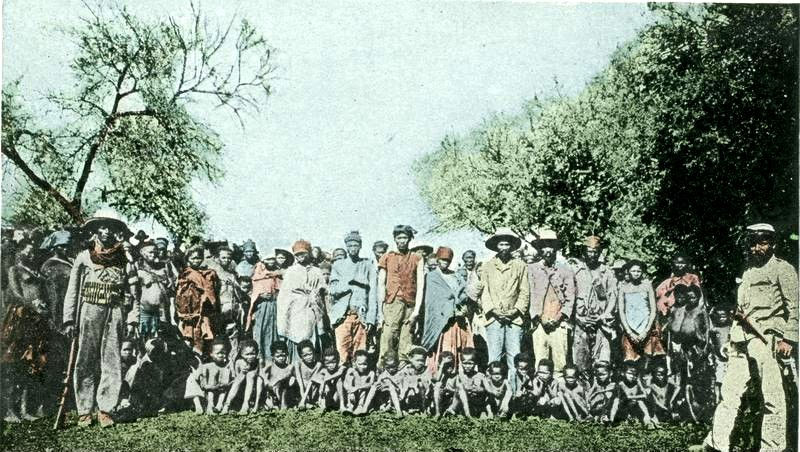
The aftermath of the Herero and Nama genocide left deep scars on Namibia’s social, cultural, and political fabric. After the genocide ended in 1908, surviving Herero and Nama were stripped of their land, cattle, and rights. Many were confined to prison camps, subjected to forced labor, and barred from practicing their traditions or speaking their languages freely. The loss of life and displacement shattered entire communities, and the trauma of these events was passed down through generations. Germany’s colonial administration established a racial hierarchy that would continue to influence Namibia’s development under later South African apartheid rule, compounding the marginalization of indigenous groups.
For decades, the genocide was largely erased from international and German historical memory. Survivors received no compensation, and their stories were rarely acknowledged in official narratives. Only in recent years has there been significant recognition of the atrocity. In 2004, Germany formally acknowledged the genocide, and in 2021, the German government agreed to provide development aid as a gesture of reconciliation, though it stopped short of offering direct reparations. Many Herero and Nama leaders and descendants continue to demand formal apologies, legal accountability, and restitution. The genocide’s legacy remains a central issue in Namibian society, shaping ongoing struggles for justice, memory, and historical recognition.
The cultural impact of the Herero and Nama genocide was profound and long-lasting, devastating traditions, languages, and ways of life that had been preserved for generations. The systematic extermination and displacement of the Herero and Nama peoples not only resulted in the loss of tens of thousands of lives but also fractured communities and disrupted cultural continuity. Ceremonies, oral histories, and spiritual practices were interrupted or erased, and survivors were often forbidden from practicing their customs while confined to concentration camps or forced into labor. Generations grew up without full access to their cultural heritage, as colonial authorities actively suppressed indigenous identity in favor of German dominance.
Despite these efforts at cultural erasure, both the Herero and Nama have worked to preserve and revive their traditions. Annual commemorations, such as the Herero Day in Okahandja, serve not only as acts of mourning but also as powerful expressions of resilience and resistance. Traditional dress, oral storytelling, and ceremonies have seen a resurgence as communities reclaim their heritage and pass it on to younger generations. However, the genocide left deep cultural wounds that still affect the self-perception and social standing of Herero and Nama peoples in Namibia today. Rebuilding cultural identity remains an essential part of healing and justice.
Efforts toward reconciliation and repatriation in response to the Herero and Nama genocide have gained momentum in recent decades, though progress has been slow and contested. For much of the 20th century, Germany refused to acknowledge the genocide or engage meaningfully with descendants of the victims. However, growing international pressure and persistent advocacy by Herero and Nama communities prompted Germany to formally recognize the genocide in 2004. In 2021, the German government announced a pledge of €1.1 billion in development aid to Namibia as part of a reconciliation agreement, though it carefully avoided the term “reparations,” leading to criticism that the response lacked sincerity and justice.
At the heart of reconciliation efforts are calls for the return of ancestral remains and cultural artifacts taken during and after the genocide. In recent years, Germany has repatriated several skulls and bones that had been held in museums and universities for racial "research." Ceremonies accompanying these returns have been emotionally powerful for communities seeking closure and acknowledgment. Still, many Herero and Nama leaders argue that these efforts remain symbolic without direct compensation, legal accountability, and meaningful inclusion in negotiation processes. True reconciliation, they insist, must involve not just recognition, but restorative justice that centers the voices and rights of the descendants.
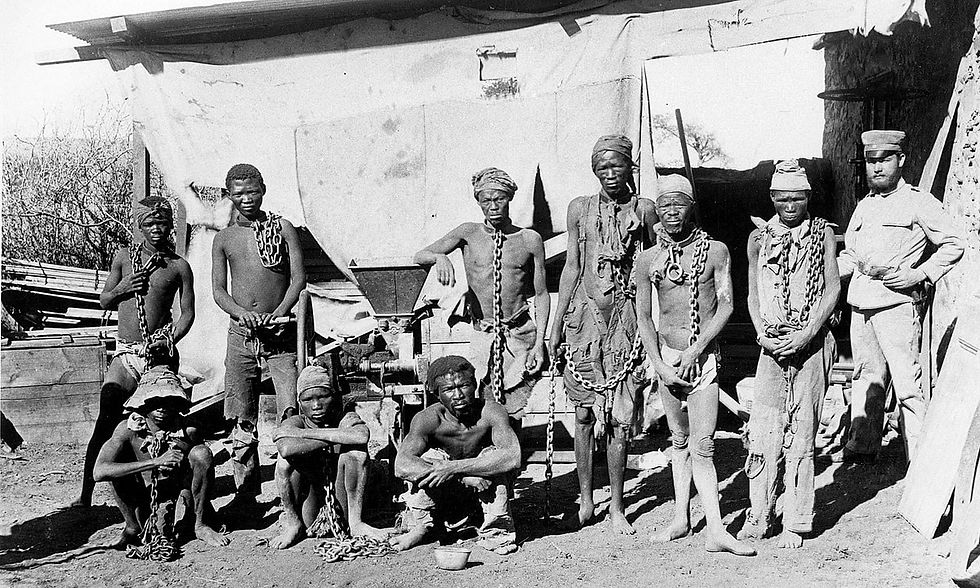
Modern activism in response to the Herero and Nama genocide has centered on demanding justice, recognition, and reparations from the German government. For decades, descendants of the victims have organized protests, cultural commemorations, and international campaigns to pressure Germany into formally acknowledging the genocide and addressing its long-term impact. Activists have also worked closely with historians, legal experts, and human rights organizations to ensure that the voices of the affected communities are heard on global platforms, including the United Nations and international courts.
In recent years, activism has intensified, leading to some breakthroughs. Germany formally recognized the genocide in 2021 and pledged €1.1 billion in development aid over 30 years. However, many activists argue this offer falls short of true reparations and lacks direct compensation to descendants. Herero and Nama leaders continue to demand a more inclusive dialogue and legal accountability. Additionally, the return of looted cultural artifacts and ancestral remains remains a key issue. Social media has become an essential tool for spreading awareness and mobilizing support, especially among younger generations. Overall, modern activism seeks not only material redress but also the restoration of dignity, historical justice, and healing for Herero and Nama communities worldwide.
Depictions of the Herero and Nama genocide in mainstream media have been sparse and often overshadowed by narratives of European colonialism that omit its violent legacy. While a few documentaries, independent films, and academic works have addressed the genocide—such as Cold Harbour and the German production The Colonial Misunderstanding—these are exceptions rather than the norm. The absence of this atrocity from school curricula, popular history books, and major media platforms has contributed to widespread public ignorance, especially outside of Namibia and Germany. When the genocide is portrayed, it is often through a European lens, focusing more on diplomatic developments than on the lived experiences and cultural destruction suffered by the Herero and Nama peoples.
This gap in representation underscores a pressing need for greater public awareness. More inclusive and accurate media portrayals are essential not only for educating wider audiences but also for honoring the memory of those who perished. Expanding coverage through films, exhibitions, digital storytelling, and curriculum reform can help globalize the conversation around colonial violence and historical justice. Public awareness is a necessary foundation for meaningful reconciliation and reparative action. Without visibility, the trauma and legacy of the genocide remain marginal, denying the Herero and Nama communities full recognition of their history.


Comments