
Wonder Woman of the Week: Susan B. Anthony
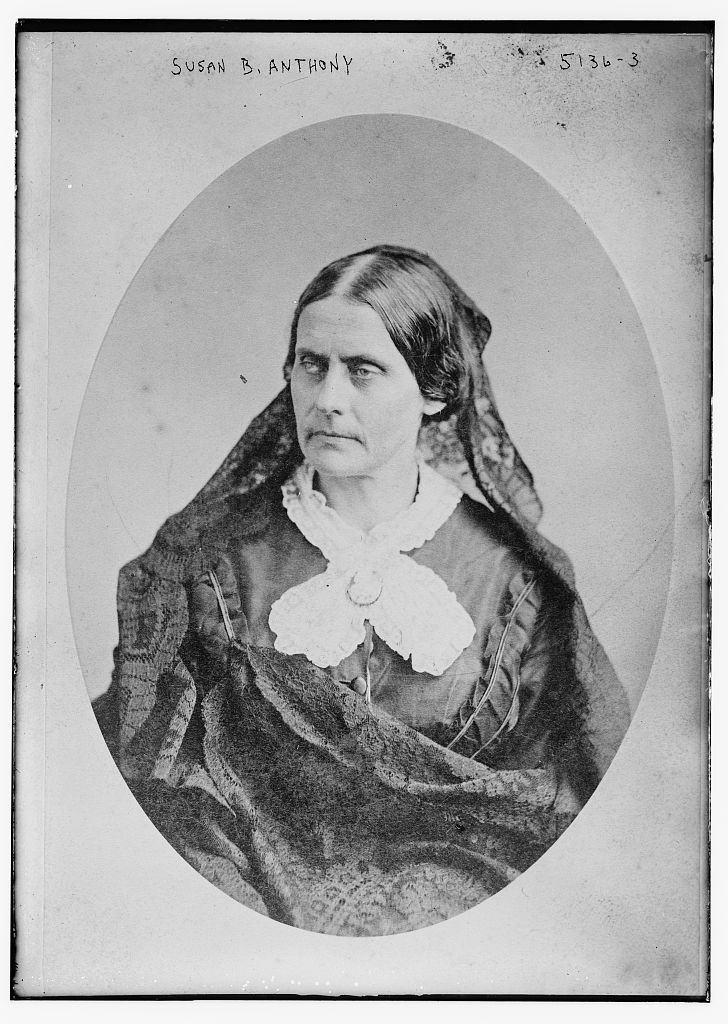
We are one week away from our 200th Wonder Woman, and there is one woman crucial to the history of the United States that I have wanted to write about for years. There have been many women throughout history critical to the development of women’s rights in their nations, but one woman from the United States helped launch a movement that inspired Women’s Civil Rights across the globe. Her story is one of the most well-known and well-documented cases of social reform, and she is without a doubt the most famous woman in US history. The Wonder Woman of the Week is Susan B. Anthony.
Susan Brownell Anthony was born in 1820 in Massachusetts. Growing up in a Quaker family, Anthony developed a strong sense of morals early on, which helped launch her passion for campaigning for social justice. When Anthony’s family moved to New York state in 1826, Anthony went off to school. After Anthony’s father lost his business, she moved back with her family and became a school teacher to help make ends meet. It was in her new home in Rochester, New York where Anthony and her family became involved in the abolitionist movement- a new social reform movement dedicated to ending slavery in the United States. Not only did the Anthony family take an active role in the new movement, their home became a meeting place for historic figures like Frederick Douglass. On top of all of that early social reform, Anthony became the head of the girl’s department at Canajoharie Academy. [1]
The new head of the girl’s department at the Canajoharie Academy became involved in the state’s teacher’s union when she discovered women were making 25% the paycheck of male teachers- for the same labor. Susan B. Anthony’s fight for women’s rights began. Anthony expanded her fight for social justice to include campaigns for temperance- a prohibition of alcohol (which for those unfamiliar with US Women’s Civil Rights History, was a campaign established to sober up abusive husbands)- women’s pay equality, and antislavery. [2]
Fellow social reformer Elizabeth Cady Stanton encouraged Susan B. Anthony to join the women’s rights movement in 1852 sparking a life-long partnership that would define the US Women’s Civil Rights movement of the 19th Century. The movement quickly devised its first goal- women’s suffrage. Anthony toured across the country, ignoring abuse and opposition, lecturing and canvassing hundreds of neighborhoods, towns, and cities; education people on why women deserved the right to vote, why African-Americans deserved to be free, and why all US citizens deserved a livable wage. [3]
After the American Civil War, Elizabeth Cady Stanton and Susan B. Anthony founded the Women’s Suffrage Association in 1869 along with a weekly suffragette newspaper- The Revolution. To drive in the campaign further, Anthony illegally cast a ballot in the 1872 election. She was arrested and fined $100- a fine she never paid. When Anthony died in 1906, women in the US still did not have the right to vote. Women’s suffrage finally came in 1920 with the 19th Amendment. But Anthony’s contribution to the women’s suffrage movement did not go unnoticed. In 1979, Anthony’s portrait was minted onto one dollar coins, giving Susan B. Anthony the first women to earn the honor. [4]
Susan B. Anthony did not live to see her campaign for women’s suffrage complete, but she and dozens of women like her were part of a small band of political activists that expanded into a force spanning multiple continents bound by purpose. Anthony’s work in the abolitionist movement helped end slavery in the United States, her work in the temperance movement helped lead to Prohibition (although, I am personally happy that one wasn’t permanent), and her work in the women’s suffrage movement helped pave the way for the 19th Amendment- giving adult women in the United States the right to vote.
“Susan B. Anthony Biography.” 2016. Biography.com. Accessed 13 July 2016. http://www.biography.com/people/susan-b-anthony-194905
“Susan B. Anthony.” 2016. National Park Service. Accessed 13 July 2016. https://www.nps.gov/wori/learn/historyculture/susan-b-anthony.htm
“Biography of Susan B. Anthony.” 2013. National Susan B. Anthony Museum & House. Accessed 13 July 2016. http://susanbanthonyhouse.org/her-story/biography.php
“Susan B. Anthony.” 2016. History.com. Accessed 13 July 2016. http://www.history.com/topics/womens-history/susan-b-anthony


Comments