
Bygone Barbados
The British Empire emerged from the Second World War victorious, yet profoundly diminished. Two global conflicts had drained Britain's treasury, weakened its industrial power, and transformed the political landscape of its colonies. Across Asia, Africa, the Caribbean, and elsewhere, movements for self-government gathered strength. India and Pakistan became independent in 1947, followed by a widening procession of territories that chose different paths: some entered independence as members of the Commonwealth, maintaining constitutional and cultural links with Britain, while others forged entirely separate national identities. The empire did not disappear overnight. Instead, it receded decade by decade, as imperial subjects increasingly demanded the right to govern themselves.
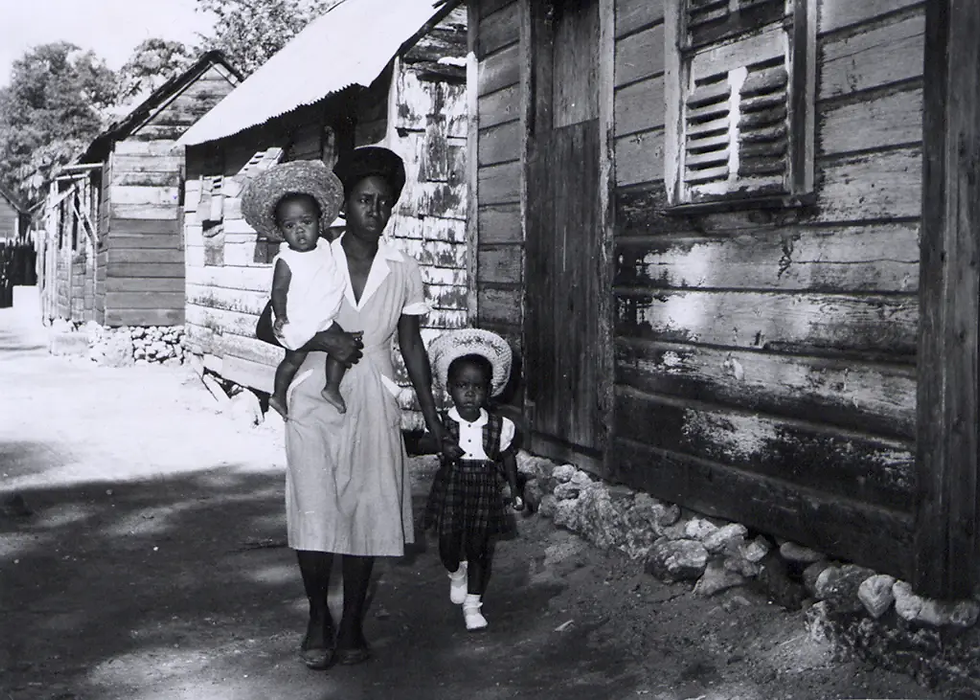
In Barbados, the 1950s became a final chapter in a colonial era that had lasted for centuries. The island remained a British colony, but political consciousness was changing rapidly. Universal adult suffrage, introduced in 1951, expanded participation in public life, while trade unions and political organizations gave working people greater influence over the questions shaping their future. Yet prosperity remained uneven. Bridgetown and other communities contained densely populated working-class neighborhoods where families often lived in small houses, sometimes crowded together with limited space and inadequate sanitation. Daily life revolved around work in sugar, commerce, domestic service, construction, and the growing tourist economy. Wages could be modest, and opportunities were sharply constrained by class and the island's dependence on agriculture.
For ordinary Barbadians, the twilight of empire was therefore less a dramatic political rupture than a gradual transformation of everyday expectations. Radios carried news of an increasingly independent Caribbean and a rapidly changing world, while schools, churches, unions, and political meetings became spaces where ideas about citizenship and self-government circulated. The old imperial hierarchy remained visible in government institutions and social customs, but its permanence was increasingly questioned. Barbados achieved internal self-government in 1961 and independence in 1966, joining the Commonwealth as a sovereign nation. For families in its crowded working-class districts, independence promised something larger than a new flag: the possibility that the institutions governing their homes, wages, schools, and futures might finally answer to the people who lived within them.



Comments