
West Africa's Seasonal Dust Bowls
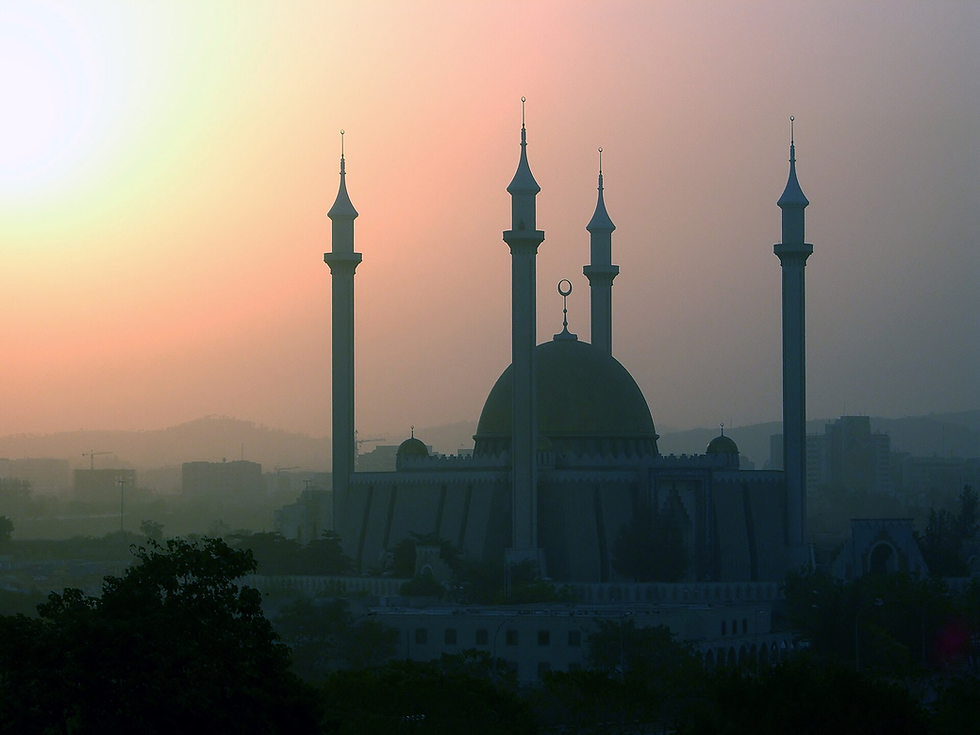
From late autumn into the dry months of winter, a dusty wind sweeps across much of West Africa. It is called the Harmattan, and it can turn bright blue skies hazy and pale. The Harmattan begins when cool, dry air builds over the Sahara Desert and flows southward toward the warmer, more humid Gulf of Guinea. This seasonal wind is part of a larger climate pattern driven by differences in air pressure between the Sahara and the Atlantic Ocean. As the dry air moves south, it carries enormous quantities of tiny soil and mineral particles into the atmosphere.
The dust comes from some of the driest landscapes on Earth. Strong winds can lift loose particles from the Sahara and the Sahel, a broad belt of semi-arid land just south of the desert. During especially windy periods, dust and sandstorms can spread thick clouds of particles across thousands of miles. The smallest particles can remain suspended high in the atmosphere, traveling far from their source. Visibility may fall so much that drivers must slow down, aircraft can face delays, and distant hills and buildings seem to disappear behind a brown or gray veil.
For people living through the Harmattan, the season can be more than an inconvenience. Fine dust can enter homes, schools, and lungs, irritating the nose, throat, and eyes. Children may be particularly affected because their lungs are still developing and they breathe more air relative to their body size than adults. Dusty conditions can worsen asthma and other breathing problems, while coughing, wheezing, and respiratory infections may become more common. Infants are especially vulnerable because their tiny airways can become irritated more easily, and they depend on adults to keep their surroundings as clean and protected as possible.
Yet the Harmattan is also a remarkable part of West Africa's natural climate cycle. Its dry air helps shape the region's seasons, while the dust itself can travel across the Atlantic Ocean and carry minerals that eventually enrich distant ecosystems. For children growing up in the region, however, the season is a reminder that weather can be both beautiful and powerful. A single gust of desert wind can transform the landscape, darken the sky, and send a microscopic piece of the Sahara drifting into the world around them.


Comments