
Vodun: The West African Roots of Voodoo
Long before the word voodoo became associated with Hollywood horror films, mysterious dolls, and tales of supernatural curses, spiritual traditions rooted in West Africa connected communities to their ancestors, their environment, and the unseen forces believed to shape everyday life. Known by names including Vodun, Vodoun, and Vodú, these traditions developed among peoples of what is now Benin, Togo, Ghana, and neighboring regions. Their influence would eventually cross the Atlantic, carried by millions of Africans caught in the transatlantic slave trade. In the Americas, these spiritual systems survived enslavement and cultural persecution, evolving into distinct religions that continue to shape communities today.
The word Vodun is associated particularly with the Fon and Ewe peoples of the region historically known as the Slave Coast, encompassing parts of present-day Benin, Togo, and southwestern Nigeria. Although these communities shared religious concepts, West African spirituality was never a single, uniform system. Different ethnic groups maintained their own deities, rituals, oral histories, and sacred practices. The Fon word vodun is commonly understood to refer to a spirit or divine power, reflecting a worldview in which the visible world exists alongside an invisible realm of spiritual forces. Rather than separating religion from ordinary life, Vodun traditions often connect spiritual relationships with agriculture, healing, family, political authority, and the responsibilities people owe one another.
At the heart of many Vodun traditions is the understanding that the universe contains numerous spiritual powers that influence human existence. Some communities recognize a supreme creator, often identified among the Fon as Mawu-Lisa, a divine principle associated with creation and, in some traditions, complementary cosmic forces. Beneath or alongside this supreme power are numerous vodun, spiritual beings associated with natural phenomena, places, ancestors, and particular aspects of human experience. Their identities and importance vary among communities. Spirits associated with thunder, the sea, fertility, iron, or the earth may receive offerings and ceremonies intended to maintain respectful relationships between the human and spiritual worlds.

Ancestors also occupy an important place in many West African religious systems. The dead are not necessarily understood as having disappeared entirely from the lives of their descendants; instead, they may remain sources of guidance, protection, and moral authority. Families preserve memories of their forebears through storytelling, offerings, ceremonies, and the observance of inherited customs. Religious specialists help communities interpret spiritual concerns, conduct rituals, and address illness or misfortune. Divination, herbal knowledge, music, dancing, and drumming can all play roles in particular traditions. These practices are not simply attempts to control supernatural forces. They can also reinforce community bonds, preserve historical knowledge, and provide ways of understanding the uncertainties of life.
Vodun developed over centuries through cultural exchange, migration, and political change. The Kingdom of Dahomey, which emerged in the seventeenth century in what is now Benin, became an important center of Fon culture and religious life. Yet the kingdom's influence did not create Vodun from nothing, nor did its traditions remain isolated within its borders. Trade networks, warfare, migration, and relationships among neighboring peoples helped spiritual practices and religious ideas travel throughout the region. Sacred objects, ritual knowledge, and stories passed between communities, while local traditions adapted to new circumstances. This diversity would prove essential to Vodun's survival when the Atlantic slave trade forcibly transported its practitioners to the Americas.
From the sixteenth through the nineteenth centuries, European merchants and colonial powers participated in an expanding system of human trafficking that carried millions of enslaved Africans across the Atlantic. The Bight of Benin became one of the principal regions from which captives were deported, particularly during the eighteenth century. Many came from communities where Vodun and related spiritual traditions shaped religious life. Enslaved people were transported to destinations including Saint-Domingue, the French colony that became Haiti, as well as Cuba, Brazil, and other parts of the Caribbean and the Americas. They arrived under brutal conditions, separated from families and communities, while slaveholders frequently attempted to suppress their languages, customs, and religious practices.

Despite these efforts, African spiritual traditions endured. Enslaved people preserved religious knowledge through oral transmission, communal ceremonies, music, dance, healing practices, and the veneration of spiritual powers and ancestors. Because enslaved populations included people from different African societies, religious traditions encountered one another and sometimes blended with European colonial Christianity and Indigenous American influences. The resulting religions were neither unchanged replicas of African practices nor simple imitations of Catholicism. They were creative, resilient spiritual systems shaped by people determined to maintain connections to their heritage while responding to the dangers and demands of life under slavery.
In Saint-Domingue, African-derived religious traditions contributed to the development of Haitian Vodou, a religion with strong connections to West and Central African spiritual systems. Enslaved communities honored the lwa, spiritual beings who could assist, advise, or demand obligations from their human followers. Ceremonies involving drumming, singing, dancing, and offerings helped establish relationships with these spirits. Catholic saints sometimes became associated with particular lwa, creating forms of religious expression that could preserve African spiritual identities under a colonial regime dominated by Catholicism. Haitian Vodou would become especially significant during the Haitian Revolution, which began in 1791 and culminated in Haiti's independence in 1804. Religious gatherings formed part of the broader social world in which enslaved people organized resistance, although the revolution itself arose from many political, military, and social forces.
Other African-derived religions developed along different paths. In Cuba, traditions associated with Yoruba religion helped shape Lucumí, commonly known as Santería, while Congolese and other African influences contributed to additional religious systems. In Brazil, Candomblé developed through the interaction of several African religious traditions, including Yoruba, Fon, and Bantu influences. Louisiana Voodoo emerged from African spiritual practices, Catholic influences, and the particular history of French and Spanish colonialism in the Gulf South. These religions share historical connections, but they should not be treated as interchangeable versions of one faith. Each has its own communities, ceremonies, spiritual authorities, and understanding of the divine.

Today, Vodun remains a living religious tradition in Benin and neighboring parts of West Africa, while its American descendants continue to sustain communities across the Atlantic world. Its history challenges the familiar stereotype of voodoo as sinister superstition, a caricature reinforced by sensational stories and popular entertainment. At its roots lies a complex understanding of spiritual relationships, ancestral responsibility, healing, and communal life. Tracing Vodun from West Africa to the Americas reveals not merely the survival of an ancient faith, but the remarkable cultural resilience of people who carried their beliefs across an ocean despite enslavement, persecution, and generations of efforts to erase their heritage.
For practitioners of West African Vodun, the world is inhabited by forces that extend beyond what human eyes can see. Trees, rivers, storms, ancestors, and sacred objects may all possess spiritual significance, while human beings exist within a network of relationships linking the living to the dead and the natural world to the divine. These beliefs vary among the Fon, Ewe, and neighboring peoples of present-day Benin, Togo, and southwestern Nigeria, but many share an understanding that maintaining harmony between visible and invisible realms is essential to individual and communal well-being. Vodun is not simply a collection of gods and ceremonies; it is a way of understanding existence, responsibility, and the spiritual forces believed to animate the universe.
Among the Fon, the word vodun refers to a spirit or divine power, although its meaning and application differ across communities. Many traditions recognize a supreme creator, often called Mawu-Lisa, associated with the creation and ordering of the cosmos. Yet this creator is not necessarily approached in the same manner as the numerous spiritual beings who participate more directly in everyday life. These beings, known collectively as vodun, may be associated with natural phenomena, particular locations, human activities, or the protection of communities. Their identities and relationships differ according to local religious traditions, reflecting a spiritual landscape shaped by centuries of cultural exchange rather than a single universal doctrine.

Some Vodun traditions distinguish between prominent or principal vodun and more localized spiritual powers. Among the Fon, figures such as Sakpata, associated with the earth and smallpox, Hevioso, associated with thunder and lightning, and Gu, associated with iron and metalworking, hold important places in particular religious systems. Mami Wata, a powerful water-associated spiritual figure with diverse representations across Africa and the Atlantic world, is also honored in some communities. These beings are not merely symbolic personifications of nature. Practitioners may regard them as active spiritual presences capable of influencing human affairs, requiring appropriate respect, offerings, and ceremonies. Their worship can connect communities to the environment upon which their livelihoods depend.
Alongside these prominent spiritual powers are ancestral vodun, whose significance emerges from the relationships between families, communities, and their deceased members. Ancestors may be remembered as guardians whose continued presence helps protect descendants, preserve traditions, and reinforce obligations between generations. In some communities, revered ancestors become the focus of established religious observances, while particular family or lineage traditions maintain their own relationships with the dead. Not every deceased person automatically becomes a revered ancestor; remembrance, ritual recognition, and local understandings of spiritual status can influence how the dead are honored. Through offerings, prayers, storytelling, and ceremonies, descendants maintain bonds with those who came before them, understanding the past as an active presence in the lives of the living.
This ancestral relationship also reflects a broader conception of personhood. Human existence is not always understood as an isolated experience belonging solely to an individual. Instead, a person's identity develops through family ties, community responsibilities, inherited knowledge, and relationships with spiritual powers. The living have obligations to their descendants as well as their ancestors, creating a chain of responsibility that stretches across generations. Neglecting these relationships may be interpreted in some circumstances as contributing to misfortune or spiritual imbalance, although explanations for illness and hardship vary considerably among practitioners. Rituals can therefore serve not only religious purposes but also social ones, renewing family connections and reaffirming shared values.

The human head holds particular importance in several West African religious traditions, including some Vodun communities, where it may be understood as a vital seat of personal identity, spiritual destiny, or the soul. The specific terminology and theology differ across peoples, and concepts developed in neighboring Yoruba traditions should not automatically be treated as identical to Fon or Ewe beliefs. Nevertheless, the head's significance in certain traditions reflects the understanding that a person possesses an inner spiritual dimension that must be respected and maintained. Ritual attention to the head may express concern for a person's well-being, character, destiny, or relationship with the divine. Because the head is associated with the individual rather than merely the physical body, it can become an important focus of religious symbolism and ceremony.
Another important concept is acɛ, a term used in some descriptions of Vodun-related religious thought to refer to divine power or spiritual potency. Terminology and interpretation vary across languages and communities, and the concept should not be confused with a single doctrine shared by every Vodun practitioner. Where the term is used, it can describe a power through which spiritual beings, sacred objects, words, or ritual actions are understood to possess efficacy. Such power is not necessarily imagined as a force that human beings can command without limits. Instead, its expression may depend upon spiritual relationships, ritual knowledge, proper conduct, and the authority of recognized religious specialists. The idea helps explain why ceremonies and sacred objects can be understood as more than outward symbols: they may be considered means through which spiritual power becomes present and effective.
Religious specialists play important roles in interpreting and working within this spiritual landscape. Depending on local tradition, priests, priestesses, diviners, and healers may conduct ceremonies, communicate religious knowledge, prepare offerings, or help individuals understand troubling experiences. Divination can provide a framework for examining uncertainty and determining what actions might restore harmony. Herbal remedies and spiritual practices may also coexist within systems of healing, although their methods and purposes vary. These specialists generally acquire their knowledge through training, initiation, family traditions, or relationships with established religious authorities. Their responsibilities require familiarity with sacred histories, ritual procedures, and the obligations connecting practitioners to particular vodun.

Offerings and ceremonies help sustain these relationships. Food, drink, music, dancing, and other ritual acts may express gratitude, request assistance, or acknowledge spiritual obligations. Sacred spaces can include temples, family shrines, natural features, and locations associated with particular spiritual powers. Some communities maintain elaborate ceremonial structures, while others emphasize household or lineage observances. Drumming and song may accompany ceremonies, helping participants coordinate their movements and affirm their shared connection to the spiritual world. Such practices are not uniform throughout West Africa, and outsiders cannot assume that a ceremony observed in one community represents the beliefs of all Vodun practitioners.
In the coastal communities of West Africa, the religious traditions of Vodun unfold through ceremonies that connect human beings with ancestors, spiritual powers, and the forces believed to animate the natural world. In present-day Benin, Togo, and neighboring parts of Nigeria and Ghana, practitioners maintain shrines, consult diviners, prepare offerings, and participate in ceremonies that reinforce relationships between the living and the invisible realm. These practices vary considerably among the Fon, Ewe, and other peoples, reflecting local histories and religious authorities. Together, however, they reveal a spiritual tradition in which belief is not simply something to contemplate, but something to practice through ritual, community participation, and obligations to the divine.
For many practitioners, the journey into Vodun begins with initiation, a process through which an individual develops a formal relationship with a particular spiritual power and learns the responsibilities associated with that commitment. Initiation may involve instruction from experienced priests or priestesses, periods of seclusion, ritual purification, specialized clothing, and ceremonies marking the initiate's new religious status. The exact procedures depend upon the community and the vodun being honored. Initiates may learn sacred songs, ritual movements, offerings, and the proper handling of consecrated objects. Initiation is not necessarily identical for every practitioner, nor does every person who participates in Vodun ceremonies become an initiated priest or priestess. For those who do, however, it can represent a lasting commitment to religious service and spiritual discipline.

Shrines provide another important setting for maintaining these relationships. They may occupy dedicated rooms, family compounds, temple buildings, or outdoor locations associated with a particular spirit. Within them, practitioners may place vessels, stones, figurines, iron objects, textiles, and other items consecrated through ritual. Their significance does not necessarily lie in their appearance; rather, the objects may be understood as focal points for spiritual presence or as material expressions of relationships with particular vodun. Shrines can also preserve family histories and connect successive generations of worshippers. Some are maintained privately by households, while others belong to religious communities and serve as gathering places for ceremonies. Sacred groves, rivers, and other natural locations may likewise receive protection because of their religious importance.
Among the most striking Vodun ceremonies are those involving spirit possession. During particular gatherings, drumming, singing, dancing, and ritual preparations may accompany the arrival of a spiritual power through a devotee. Participants may understand the possessed individual as temporarily serving as a vessel through which the spirit communicates, offers guidance, or receives petitions. The experience is interpreted within a particular religious framework, rather than simply as a performance or an unexplained physical episode. Not every ceremony includes possession, and traditions differ in how they recognize, prepare for, and interpret it. When possession occurs, trained participants may help guide the proceedings, while the assembled community responds through songs, gestures, offerings, and respectful interaction with the spirit.
Offerings help sustain the reciprocal relationships that practitioners maintain with spiritual powers and ancestors. Food, water, palm wine, and other substances may be presented according to the requirements of a particular ceremony. Such gifts can express gratitude, fulfill religious obligations, request protection, or acknowledge assistance previously received. Animal sacrifice also occurs in some Vodun traditions, although it is not universal and its form depends upon the spirit, community, and ritual circumstances. Chickens, goats, and other animals may be sacrificed by authorized practitioners, with the act understood as a serious religious offering rather than an act of violence for its own sake. The treatment and distribution of the animal may follow established ceremonial rules, and portions of the resulting food may be shared among participants. These practices are best understood within their religious and cultural context.
Divination provides another means of interpreting the relationship between human affairs and the spiritual world. A diviner may use objects, symbolic arrangements, spoken formulas, or established interpretive systems to investigate illness, family conflict, misfortune, or important decisions. In Fon and neighboring traditions, particular forms of divination may involve specialized knowledge passed from teacher to apprentice. The purpose is not necessarily to predict an unchangeable future, but to identify spiritual obligations, explain troubling circumstances, or recommend actions intended to restore balance. Divination may lead to prescribed offerings, ceremonies, or consultations with other specialists. Although some systems share historical connections with neighboring Yoruba practices, their methods and religious interpretations should not automatically be treated as identical.
Ceremonies honoring the dead also occupy an important place in the wider religious landscape of West Africa. Among the Yoruba of southwestern Nigeria and neighboring areas, Egungun traditions honor ancestral spirits through masked performances in which elaborately dressed participants represent the presence of the ancestors. These ceremonies may reinforce family continuity, moral values, and community identity. Oro, another Yoruba institution associated in particular communities with ancestral authority and ritual observances, has its own traditions and restrictions. Neither Egungun nor Oro should be described as simply a branch of Fon Vodun; they belong to distinct but historically interconnected religious cultures. Their inclusion in the broader study of West African spirituality illustrates how different societies developed specialized ways to honor ancestors and maintain relationships between the living and the dead.
Healing is another major dimension of Vodun practice. Religious specialists may combine prayer, ritual purification, divination, and knowledge of medicinal plants to address problems understood as physical, social, or spiritual. Some treatments involve bo, a term used in parts of the region for a prepared object or substance believed to possess protective or other ritual power. Depending on the tradition, a bo may contain herbs, minerals, animal materials, or other ingredients assembled and consecrated for a particular purpose. Such objects can be carried, placed in shrines, or positioned at locations requiring protection. Their preparation may involve specialized knowledge and strict ritual obligations. Although these practices can be important sources of cultural identity and personal reassurance, serious illnesses still require appropriate medical assessment and treatment.
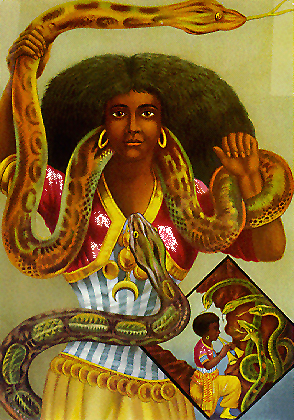
The term aze requires particular care because terminology and meanings vary across languages and local traditions. In some discussions of Fon religious life, aze is associated with witchcraft or a harmful, hidden power believed to cause misfortune. It is not synonymous with Vodun itself, nor does every practitioner share the same understanding of it. Beliefs concerning witchcraft may help communities interpret unexplained illness, conflict, or repeated setbacks, sometimes prompting consultations with diviners or other religious authorities. Such accusations can also create fear and social tension, particularly when vulnerable people become targets of suspicion. Understanding these beliefs requires distinguishing the religious concept from sensationalized portrayals that depict all Vodun practitioners as practitioners of harmful magic.
Long before European ships appeared along the shores of West Africa, spiritual traditions now associated with Vodun shaped the religious lives of communities across the region. In territories encompassing present-day Benin, Togo, Ghana, and southwestern Nigeria, people honored spiritual powers connected to the earth, water, thunder, fertility, and the ancestors. These traditions developed over centuries through migration, trade, warfare, and cultural exchange. Although Vodun was never a single, standardized religion practiced identically by every community, many traditions shared the belief that the visible world existed alongside a spiritual realm influencing human affairs. European colonialism and the transatlantic slave trade would transform these religious systems, carrying their practices across the ocean and helping create new spiritual traditions throughout the Americas.
Before European colonization, West African societies maintained complex religious systems rooted in family relationships, agricultural cycles, political authority, and the natural environment. Among the Fon and Ewe peoples, spiritual beings known as vodun occupied important places in religious life, while neighboring Yoruba communities maintained their own traditions involving orisha and ancestral powers. Shrines, sacred groves, divination, offerings, and ceremonies helped worshippers maintain relationships with these spiritual forces. Religious specialists preserved ritual knowledge and guided communities through significant moments of life. Such practices were inseparable from wider social structures: rulers sometimes sponsored religious institutions, while trade routes and migration facilitated the exchange of sacred objects and ideas. This diverse religious landscape formed the foundation from which Vodun traditions would develop under changing historical circumstances.

The emergence of the Kingdom of Dahomey during the seventeenth century marked an important chapter in the region's political and religious history. Centered in what is now southern Benin, Dahomey expanded through warfare, diplomacy, and commerce, eventually becoming deeply involved in the Atlantic slave trade. Its rulers maintained relationships with religious institutions, while the kingdom's expansion brought different communities and spiritual traditions into contact. European merchants established coastal trading relationships that connected West African politics to Atlantic commerce. Yet Vodun did not originate with Dahomey, nor did the kingdom impose a single religious system upon the entire region. Rather, the period illustrates how local spiritual traditions persisted and adapted amid political consolidation, commercial expansion, and increasingly disruptive encounters with European powers.
Christianity had reached parts of coastal West Africa through European trading and missionary activity centuries before formal colonial conquest. Catholic missions operated in the Kingdom of Kongo from the late fifteenth century, while Christian communities developed elsewhere through different historical circumstances. During the nineteenth century, Protestant and Catholic missionaries expanded their efforts in territories including present-day Benin and Togo. European missionaries frequently condemned indigenous religions as paganism or superstition, encouraging converts to abandon ceremonies, sacred objects, and ancestral observances. Later colonial administrations sometimes reinforced these attitudes through education, law, and official religious institutions. Nevertheless, Christianization did not simply erase Vodun. Some communities maintained traditional practices, while others incorporated Christian symbols or developed ways of participating in Christianity without abandoning all inherited spiritual obligations.
The transatlantic slave trade carried these traditions into the Americas on a devastating scale. Between the sixteenth and nineteenth centuries, millions of Africans were forcibly transported across the Atlantic, including many people captured in the Bight of Benin. Enslaved individuals arrived in Caribbean and South American colonies where plantation owners sought to suppress their languages, religious practices, and communal identities. Yet people carried memories, songs, ritual knowledge, and understandings of the spiritual world with them. In unfamiliar surroundings, Africans from different ethnic backgrounds encountered one another, creating opportunities for religious exchange. Under the brutal conditions of slavery, spiritual ceremonies could preserve ancestral connections, strengthen communities, and offer meaning amid suffering. The resulting religions were neither unchanged African traditions nor simple copies of European Christianity.

In the French colony of Saint-Domingue, now Haiti, West and Central African religious influences contributed to the development of Haitian Vodou. Enslaved communities honored the lwa, spiritual beings who could offer protection, guidance, or assistance when approached through appropriate ceremonies. Drumming, dancing, songs, offerings, and spirit possession became important elements of religious life. Catholic saints were sometimes associated with particular lwa, allowing African-derived traditions to survive within a society dominated by Catholicism. Religious gatherings also formed part of the wider social world in which enslaved people organized resistance. During the Haitian Revolution, which began in 1791, spiritual practices contributed to the cultural environment of the struggle, although the revolution arose from a combination of political, military, and social forces. Haiti declared independence in 1804, establishing a nation whose history would remain closely associated with its African-derived religious heritage.
Elsewhere in the Caribbean and South America, African spiritual traditions developed along different paths. In Cuba, Yoruba religious practices helped shape Lucumí, commonly known as Santería, while Kongo and other African influences contributed to additional religious systems. In Brazil, Candomblé emerged through the interaction of Yoruba, Fon, Bantu, and other African traditions. Although these religions share historical connections, each possesses distinct ceremonies, spiritual authorities, and theological understandings. Louisiana Voodoo developed later within the particular history of French and Spanish colonial rule, African enslavement, Catholicism, and migration in the Gulf South. During the eighteenth and nineteenth centuries, people arriving from Saint-Domingue, including refugees fleeing the Haitian Revolution, helped shape the region's religious and cultural landscape. Louisiana Voodoo and Haitian Vodou are related historically but are not interchangeable traditions.
Following the abolition of slavery, Vodun and its American descendants continued to face discrimination. In West Africa, European colonial governments and Christian missionaries frequently portrayed indigenous religions as obstacles to modernization, while colonial authorities sometimes restricted ceremonies and religious institutions. In the Americas, Vodou and related traditions were often stigmatized through racial prejudice, sensational journalism, and popular entertainment. In the twentieth century, stories about curses, zombies, and mysterious rituals helped turn complex religious systems into caricatures. Yet practitioners continued to maintain shrines, initiate new members, honor ancestors, and transmit sacred knowledge within families and religious communities. These practices ensured that the traditions remained living religions rather than relics of the past.

Political independence across West Africa during the mid-twentieth century created new opportunities to reconsider indigenous cultural heritage. In Benin, Vodun gained renewed public recognition after independence in 1960, although its position shifted under different governments. During the Marxist-Leninist government of Mathieu Kérékou, which took power in 1972, traditional religious institutions faced periods of official hostility. Political changes beginning in the late 1980s opened the way for greater religious freedom and public celebration. Benin subsequently established an annual National Vodun Day, first observed in 1993, recognizing the tradition's importance to national identity and cultural history. Similar efforts across the region have helped promote religious heritage, although practitioners continue to negotiate the relationship between tradition, Christianity, Islam, and contemporary society.
Across the Atlantic, renewed interest in African heritage has likewise encouraged practitioners and scholars to challenge centuries of stigma. Haitian Vodou remains central to many communities, while Louisiana Voodoo continues to attract renewed attention through cultural preservation and historical research. In Brazil and Cuba, African-derived religions sustain extensive networks of temples, ceremonies, and intergenerational teaching. These traditions are not simply revivals of an unchanged past; they have evolved through centuries of adaptation, resistance, and cultural exchange. Tracing Vodun from precolonial West Africa to the Caribbean, South America, and Louisiana reveals a remarkable history of survival. Despite enslavement, colonial repression, and popular misconceptions, its spiritual descendants continue to connect people with ancestors, communities, and a shared African heritage.


Comments