
The Unique Flavors of Jiangxi Cuisine
Jiangxi, a landlocked province tucked between the mountains and river valleys of southeastern China, often lives in the shadow of its better-known neighbors, Sichuan to the west and Hunan to the northwest. Yet its cuisine reveals a distinctive culinary identity shaped not by celebrity, but by geography, agriculture, and centuries of local tradition. Crisscrossed by the Gan River and nourished by fertile wetlands surrounding Poyang Lake—the largest freshwater lake in China—Jiangxi has long relied on rice cultivation, freshwater fish, preserved ingredients, and bold flavors born from humid summers and cool winters. While outsiders often group Jiangxi's cooking alongside China's famously fiery regional cuisines, the province tells a different story, one where heat serves not simply as spice, but as substance, woven into nearly every meal in ways that reflect the rhythms of everyday life.

At first glance, Jiangxi's generous use of chili peppers invites comparisons with Sichuan and Hunan. But the similarities quickly give way to important differences. Sichuan cuisine builds its reputation on the electrifying combination of dried chilies and Sichuan peppercorns, producing the famous málà sensation that numbs as much as it burns. Hunan cuisine, meanwhile, emphasizes the bright, direct heat of fresh chilies balanced by smoked meats and pickled vegetables. Jiangxi charts its own course. Here, peppers are treated less like a seasoning sprinkled over a finished dish and more like a vegetable in their own right. Large quantities of fresh green and red chilies are sliced, stir-fried, braised, or steamed alongside meats and vegetables, creating dishes in which peppers become a substantial ingredient rather than simply a source of heat. The result is a cuisine that feels earthy, robust, and deeply agricultural, celebrating abundance rather than intensity alone.
The province's pantry further distinguishes Jiangxi from its neighbors. Tea oil, pressed from the seeds of the camellia tree, serves as one of the region's signature cooking fats. Light, fragrant, and well suited to high-temperature cooking, it lends a subtle nutty aroma without overpowering delicate ingredients. Equally important are fermented black beans, whose concentrated savory character adds remarkable depth to braises, stews, and stir-fries. Combined with garlic, ginger, scallions, rice wine, and locally brewed soy sauces, these fermented beans create layers of flavor that rely as much on fermentation as on spice. Fresh bamboo shoots, lotus root, taro, mushrooms, river shrimp, duck, pork, and freshwater fish from the Gan River basin and Poyang Lake round out a cuisine rooted firmly in the landscapes that surround it.
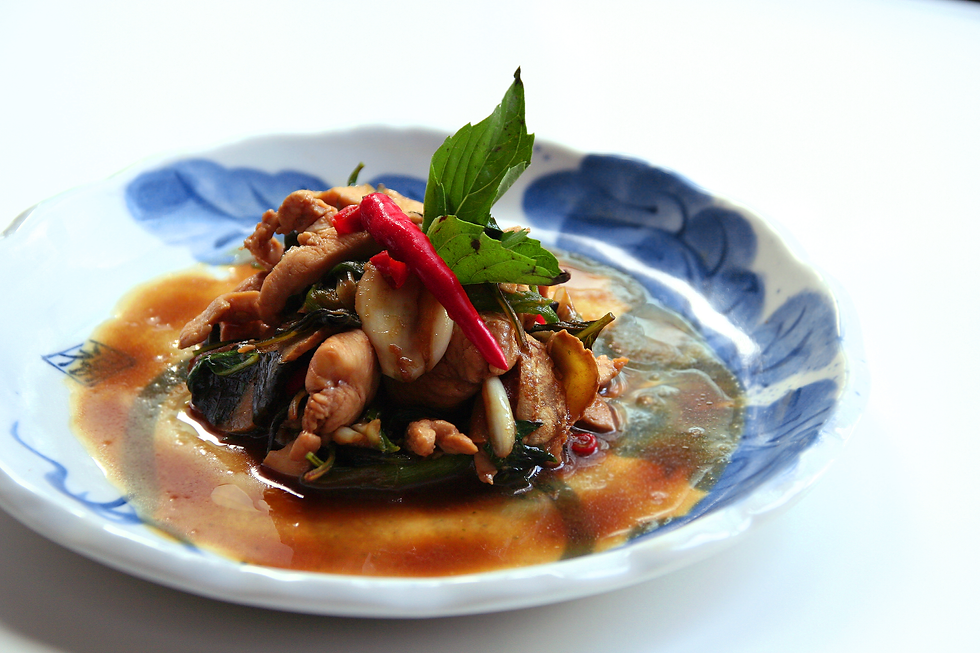
Among Jiangxi's celebrated specialties is Ningdu Spicy Sanbeiji, a regional interpretation of the famous "three-cup chicken." Unlike the sweeter Taiwanese version, Ningdu's preparation embraces the province's love affair with fresh chilies. Chopped peppers fill the wok alongside chicken, garlic, ginger, soy sauce, rice wine, and aromatic herbs, producing a dish in which the peppers become nearly equal partners to the meat. Another beloved classic, steamed pork with rice flour, transforms humble ingredients into something deeply comforting. Thin slices of pork are coated with toasted, seasoned rice flour before being steamed until the meat becomes meltingly tender and the rice coating absorbs the savory juices. The finished dish reflects one of Jiangxi cuisine's defining qualities: an appreciation for texture as much as flavor, allowing simple agricultural staples to become richly satisfying.
Jiangxi's abundant waterways also inspire some of its most memorable seafood. Poyang Lake fat fish head with red pepper showcases one of China's richest freshwater ecosystems, where large carp and other native fish have sustained communities for generations. The substantial fish head is gently cooked with generous amounts of fresh red peppers, garlic, ginger, and fermented seasonings, allowing the gelatin-rich flesh around the cheeks and collar to absorb the vibrant flavors of the broth. Rather than masking the fish, the peppers complement its natural sweetness while contributing body to the dish. Across Jiangxi, similar recipes highlight freshwater ingredients harvested from rivers, lakes, and rice paddies, illustrating how closely the province's culinary traditions remain tied to its aquatic landscapes.
For travelers willing to venture beyond China's most celebrated food capitals, Jiangxi offers a compelling reminder that culinary identity is rarely defined by fame alone. Its cuisine balances boldness with restraint, heat with depth, and preservation with freshness. Tea oil, fermented black beans, and peppers treated as everyday vegetables combine to create flavors unlike those found in neighboring Sichuan or Hunan, despite their shared affection for chili. Every bowl of rice, every fragrant braise, and every lake-caught fish reflects generations of cooks adapting to local harvests and seasonal rhythms. In Jiangxi, the story of food is ultimately the story of place—a cuisine shaped by fertile valleys, winding rivers, and enduring traditions that continue to nourish both body and cultural memory.



Comments