
The Sahara: Africa's Great Desert
The Sahara stretches across North Africa like a vast ocean of stone and sand, covering roughly 9 million square kilometers and spanning parts of more than ten countries. Often imagined as an endless sea of towering dunes, the desert is in fact a remarkably varied landscape. Massive sand seas known as ergs share the terrain with gravel plains, rocky plateaus, dry valleys, and rugged mountain ranges. Extending from the Atlantic Ocean in the west to the Red Sea in the east, the Sahara forms the world's largest hot desert and one of Earth's most iconic environments. Its immense scale shapes ecosystems, cultures, and weather patterns across an entire continent, making it one of the most influential geographic regions on the planet.

Life in the Sahara is defined by extremes. Summer temperatures in some locations regularly exceed 45°C (113°F), while surface temperatures on exposed ground can climb even higher. Yet the desert can also be surprisingly cold, especially at night when dry air allows heat to escape rapidly. Rainfall is scarce and unpredictable, with many areas receiving less than 25 millimeters of precipitation annually. Years may pass without significant rain. Powerful winds sweep across the landscape, sculpting dunes and carrying dust thousands of kilometers beyond Africa. Despite these harsh conditions, the Sahara is not lifeless. Its climate has fluctuated dramatically over time, and evidence suggests that parts of the region were once covered by grasslands, lakes, and rivers during wetter periods known as the African Humid Periods.
Beneath the broad label of "desert" lies a mosaic of ecoregions. The central Sahara contains some of the driest places on Earth, where vegetation is sparse and survival is difficult. Along the desert's margins are transitional zones that blend into neighboring environments, including the Sahel to the south and Mediterranean-influenced regions to the north. Isolated mountain ranges such as the Tibesti, Ahaggar, and Aïr Mountains create unique ecological islands where cooler temperatures and occasional rainfall support distinctive plant communities. Scattered oases, fed by underground aquifers, punctuate the desert with pockets of green. These rare sources of water have long served as vital refuges for both wildlife and human populations crossing the seemingly endless expanse.
The Sahara's wildlife demonstrates extraordinary adaptations to scarcity and heat. Fennec foxes use their large ears to help regulate body temperature, while dromedary camels can endure long journeys with minimal water. Addax antelope, desert hedgehogs, jerboas, and sand cats survive through specialized behaviors that conserve moisture and avoid daytime heat. Reptiles, including monitor lizards and horned vipers, thrive in habitats where many larger animals cannot. Migratory birds also depend on the Sahara, using oases and seasonal wetlands as critical stopping points during journeys between Europe and sub-Saharan Africa. Although populations of some species have declined because of hunting, habitat pressures, and climate change, the desert remains an important reservoir of biodiversity uniquely suited to one of Earth's harshest environments.

Human history in the Sahara reaches back thousands of years. Ancient rock art found on cliffs and cave walls depicts giraffes, cattle, and other animals that once inhabited greener landscapes. As the climate became drier, people adapted by developing pastoral lifestyles, establishing settlements around reliable water sources, and creating extensive trade networks. The Sahara eventually became a bridge rather than a barrier, linking North Africa with regions farther south. Caravans carrying gold, salt, ivory, and other goods crossed the desert along routes that connected powerful kingdoms and bustling market cities. These exchanges facilitated not only commerce but also the spread of ideas, technologies, religions, and cultural traditions across vast distances.
Today, the Sahara is home to diverse peoples whose cultures reflect centuries of adaptation to desert life. Among them are Tuareg, Amazigh, Arab, Tebu, and many other communities with distinct traditions and histories. Languages spoken across the region include Arabic, Tamasheq and other Berber languages, Tebu languages, Hausa, and numerous local tongues. While some groups continue nomadic or semi-nomadic practices, many now live in towns and cities connected by modern infrastructure. Nevertheless, traditional knowledge of navigation, water management, and survival remains deeply valued. For travelers and scientists alike, the Sahara offers more than dramatic scenery. It is a living landscape where geology, climate, wildlife, history, and human resilience combine to tell one of the most compelling stories on Earth.
Long before the Sahara became synonymous with aridity, it was a dramatically different world. Between roughly 11,000 and 5,000 years ago, a period known as the African Humid Period transformed much of North Africa into a landscape of seasonal lakes, rivers, marshes, and grasslands. Driven by shifts in Earth's orbit that strengthened African monsoon systems, rains penetrated far north of their modern limits. Crocodiles swam in lakes where dunes now stand, while herds of elephants, giraffes, antelope, and wild cattle roamed across broad savannas. Human communities flourished along shorelines and waterways, leaving behind stone tools, pottery, and remarkable rock art. Yet this green Sahara was not permanent. As monsoon patterns gradually weakened, rainfall declined over centuries. Lakes shrank, grasslands retreated, and populations increasingly concentrated around dependable sources of water, marking the beginning of one of the most significant environmental transformations in human history.

The transition from wetland to desert was neither sudden nor uniform. Some regions dried rapidly, while others retained pockets of fertility for centuries. Communities adapted by developing new strategies for survival, including livestock herding and seasonal migration. During the Bronze Age, the Sahara became home to a variety of pastoral cultures whose economies revolved around cattle, sheep, and goats. Rock paintings and engravings from the central Sahara depict herders tending animals, participating in ceremonies, and traveling across landscapes that were already becoming more challenging. These societies maintained networks of exchange that stretched across considerable distances, linking scattered populations through trade and cultural contact. As environmental pressures increased, many groups migrated toward the Nile Valley, the Mediterranean coast, and the Sahel, contributing to broader demographic and cultural changes throughout North Africa.
By the 1st Millennium BCE, powerful civilizations along the Mediterranean began to look southward toward the desert. Among the most influential were the Carthaginians, whose city of Carthage, located in present-day Tunisia, became a major commercial power. Carthaginian merchants established trading relationships with peoples living along the Sahara's northern fringes and sought access to valuable resources from regions beyond the desert. Although the immense interior remained largely mysterious to Mediterranean observers, caravan routes gradually expanded. Knowledge of oases, wells, and desert pathways became increasingly important as merchants, explorers, and local intermediaries connected distant communities. Through trade, ideas and technologies moved alongside goods, laying foundations for more extensive trans-Saharan networks in later centuries.
The Roman Empire inherited many of these connections after defeating Carthage and incorporating North Africa into its territories. Roman influence reached deep into the desert margins through military outposts, fortified settlements, and trading centers. Garrisons guarded frontier zones while merchants exchanged manufactured goods for gold, exotic animals, ivory, and other products arriving from farther south. Roman engineers developed sophisticated systems for managing scarce water resources, supporting agriculture in otherwise challenging environments. Yet Rome's authority rarely extended far into the central Sahara itself. Instead, the empire relied on cooperation with indigenous peoples who possessed generations of knowledge about desert travel. The Sahara remained both a frontier and a bridge, facilitating exchanges between Mediterranean societies and the diverse cultures beyond their borders.

Beginning in the 7th Century CE, the rise of Islam transformed the Sahara more profoundly than any political empire had before. Muslim armies and traders carried the new faith across North Africa, where it gradually became intertwined with existing cultures and commercial networks. Over the following centuries, trans-Saharan trade expanded dramatically. Camel caravans, capable of crossing immense distances between oases, linked cities such as Sijilmasa, Timbuktu, Gao, and Agadez. Gold from West Africa moved north, while salt, textiles, books, and manufactured goods traveled south. Along these routes, Islam spread through commerce, scholarship, and diplomacy. Mosques, schools, and centers of learning emerged across the desert and its borders, helping create a shared intellectual world that connected North Africa with the wider Islamic civilization stretching from Spain to Central Asia.

During the Early Modern Era, from roughly the fifteenth through eighteenth centuries, the Sahara remained a vital crossroads despite the rise of maritime trade around Africa's coasts. Powerful states such as the Songhai Empire, as well as numerous regional kingdoms and desert confederations, continued to benefit from trans-Saharan commerce. Tuareg and other nomadic groups often controlled key caravan routes, providing protection and guidance through difficult terrain. European exploration of the interior remained limited, and much of the Sahara retained an aura of mystery in foreign accounts. Yet beneath that reputation lay a complex world of traders, scholars, herders, and oasis communities whose lives were shaped by centuries of adaptation to an ever-changing environment. The Sahara was no empty wasteland but a dynamic cultural landscape, connecting continents and civilizations across one of the planet's most formidable regions.
To understand the ecology of the Sahara, one must first appreciate its immense physical diversity. Covering an area nearly as large as the United States, the desert extends across North Africa from the Atlantic Ocean to the Red Sea and from the Mediterranean coast southward to the Sahel. Contrary to popular imagery, sand dunes occupy only a portion of the landscape. Vast gravel plains known as regs, barren rock plateaus called hamadas, dry riverbeds, salt flats, volcanic fields, and isolated mountain ranges together create a mosaic of habitats. Some dune systems, including those of the Grand Erg Oriental and Grand Erg Occidental, rise hundreds of meters above the surrounding terrain. Elsewhere, towering massifs such as the Tibesti Mountains in Chad and the Ahaggar Mountains in Algeria interrupt the horizon, creating cooler, wetter refuges that support life far different from that of the surrounding desert.
Ecologists divide the Sahara into several distinct ecoregions, each shaped by differences in elevation, rainfall, and geology. The central Sahara Desert ecoregion is among the driest places on Earth, characterized by sparse vegetation and vast expanses of exposed rock and sand. Around its margins lie transitional zones where desert conditions gradually give way to more productive environments. To the south, the Sahara merges with the semi-arid Sahel, a belt of grasslands and shrublands that experiences seasonal rainfall. In the north, Mediterranean influences bring slightly cooler temperatures and occasional winter precipitation. Mountain regions form ecological islands, supporting plant and animal communities that cannot survive elsewhere in the desert. Oases, fed by underground aquifers and ancient groundwater reserves, create additional pockets of biodiversity, serving as critical habitats for wildlife and as lifelines for human settlements.
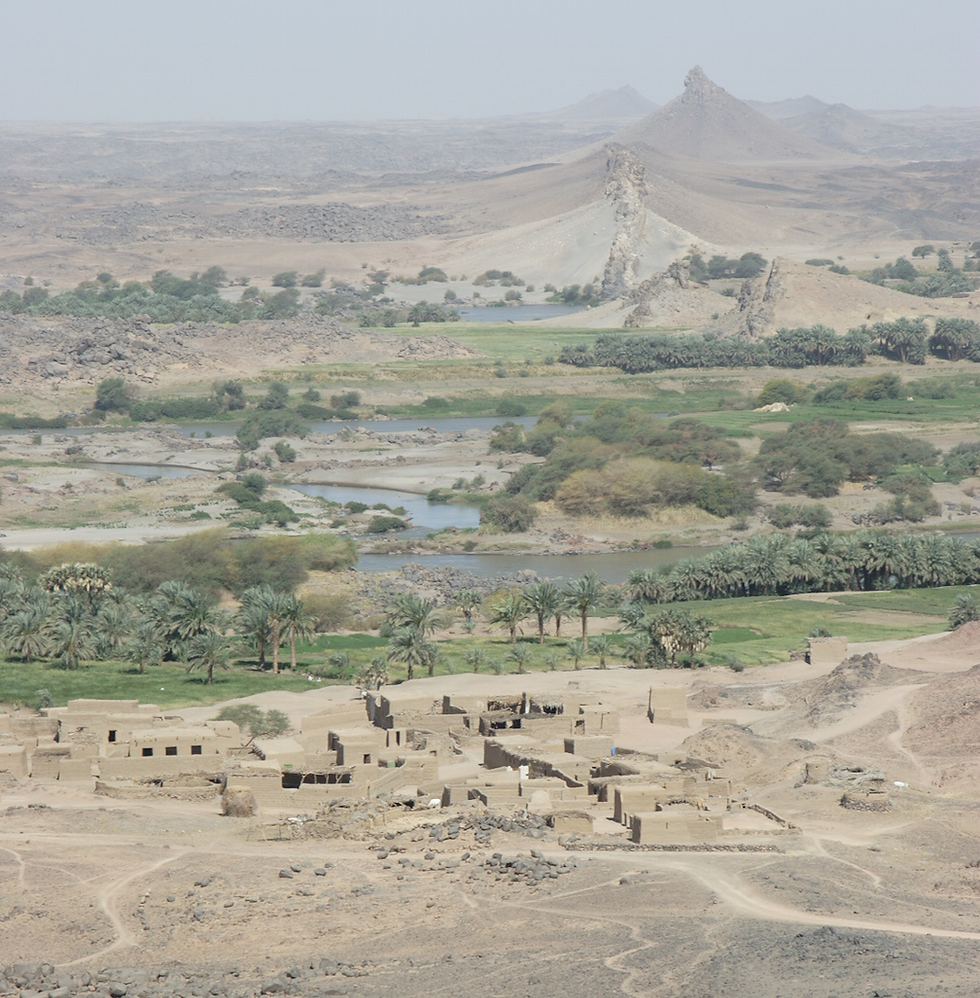
The Sahara's climate is defined by extremes. Summer daytime temperatures frequently exceed 40°C (104°F), while some locations record highs above 50°C (122°F). Under clear skies, however, heat dissipates rapidly after sunset, and nighttime temperatures can drop dramatically. In winter, temperatures in elevated regions occasionally fall below freezing. Rainfall is exceptionally scarce and highly unpredictable. Much of the central desert receives less than 25 millimeters of precipitation annually, and some areas may go years without measurable rain. When storms do occur, they can trigger sudden floods through normally dry river channels known as wadis. Strong winds play a major role in shaping the landscape, transporting vast quantities of sand and dust across continents. Saharan dust regularly crosses the Atlantic Ocean, influencing ecosystems as distant as the Amazon rainforest by delivering nutrient-rich minerals.
One of the most significant environmental challenges affecting the Sahara today is desertification. Although deserts naturally expand and contract over long timescales, human activities can accelerate land degradation along the desert's margins. Overgrazing, deforestation, unsustainable farming practices, and increasing pressure on limited water resources can reduce vegetation cover and expose soils to erosion. Climate change may further intensify these pressures by altering rainfall patterns and increasing temperatures across North Africa. The greatest impacts are often felt in the Sahel, where communities depend heavily on fragile ecosystems for agriculture and livestock grazing. Conservation programs, reforestation efforts, and sustainable land management initiatives seek to slow environmental degradation and improve resilience in regions vulnerable to expanding aridity.
Despite its harsh conditions, the Sahara supports a surprising variety of plant life. Vegetation is concentrated in areas where water is available, whether from seasonal rainfall, groundwater, or mountain runoff. Drought-resistant species dominate the landscape, including acacias, tamarisks, desert grasses, and thorny shrubs adapted to conserve moisture. Many plants possess deep root systems that reach underground water sources, while others survive by remaining dormant until rare rains trigger rapid growth and flowering. Date palms thrive in oases and have long been essential to human communities, providing food, shade, and materials for construction. In mountain refuges, cooler conditions allow a greater diversity of species to persist, including plants that are relics of wetter climatic periods in the Sahara's past.
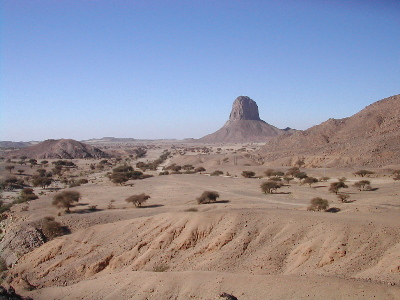
Animal life in the Sahara reflects millions of years of adaptation to scarcity and heat. Mammals such as the fennec fox, sand cat, and addax antelope survive by conserving water and avoiding daytime temperatures. Dromedary camels, introduced thousands of years ago, remain among the desert's most iconic inhabitants, capable of traveling great distances between water sources. Reptiles, including horned vipers, monitor lizards, and geckos, thrive in environments where few larger animals can endure. Numerous insects and arachnids occupy specialized ecological niches, while migratory birds rely on oases and seasonal wetlands during journeys between Europe and Africa. Though many species face threats from habitat loss, hunting, and climate change, the Sahara remains a remarkable example of life's resilience. Across its dunes, mountains, and hidden oases, a complex web of organisms continues to flourish in one of Earth's most demanding environments.
The Sahara has never been merely a backdrop to human history. Its shifting climate and formidable landscapes have helped shape the movement of people, ideas, and languages across an enormous portion of Africa. As the once-greener Sahara gradually dried between roughly 8,000 and 4,000 years ago, communities adapted by following reliable sources of water toward the Nile Valley, the Niger River basin, Mediterranean coastal regions, and the Sahel. These migrations contributed to the spread and diversification of language families that today include Afroasiatic, Nilo-Saharan, and Niger-Congo languages. Linguists and archaeologists continue to debate the precise routes and timelines involved, but many agree that environmental change in the Sahara played an important role in redistributing populations and creating new cultural landscapes across North Africa and beyond.
Languages preserve traces of these ancient adaptations. Words associated with cattle herding, seasonal migration, water management, and desert travel appear across multiple linguistic traditions, hinting at long histories of contact between neighboring peoples. In the Sahara itself, Berber languages—often referred to collectively as Amazigh languages—developed alongside Arabic and a variety of other regional tongues, reflecting centuries of trade and cultural exchange. The desert encouraged communication across great distances while simultaneously isolating communities in mountain refuges and oasis settlements. As a result, linguistic diversity flourished. Even today, a journey across the Sahara can reveal a remarkable patchwork of dialects, oral traditions, and storytelling practices shaped by both connection and separation in one of the world's most demanding environments.

The drying of the Sahara also influenced the development of belief systems, though the exact relationships remain difficult to reconstruct. As populations moved toward the Nile, they encountered and contributed to cultural traditions that would eventually become part of ancient Egyptian civilization. Archaeological evidence shows that some symbols, animal imagery, and ritual practices found in prehistoric Saharan rock art resemble themes later present in Egyptian religion. This does not mean that Egyptian mythology emerged directly from a single Saharan source. Rather, many scholars view ancient Egypt as the product of numerous cultural influences converging in the Nile Valley, including traditions carried by peoples whose ancestors had once lived in wetter regions of the Sahara. The desert's environmental transformation therefore helped create conditions in which diverse ideas could meet and evolve.

Farther west, similar processes unfolded along the Niger River. Communities migrating from increasingly arid regions settled in areas where seasonal floods supported agriculture, fishing, and trade. Over generations, local religious traditions developed around rivers, rain, fertility, ancestors, and powerful spiritual beings associated with the natural world. While it would be misleading to draw a direct line from prehistoric Saharan beliefs to the mythologies of later Nigerian societies, environmental migration likely contributed to the mixing of cultures from which many traditions emerged. Across West Africa, stories about water spirits, sacred landscapes, and the relationship between human communities and ecological forces reflect experiences shaped by both abundance and scarcity. Rivers became not only sources of life but also central features in cultural memory.
Within the Sahara itself, the landscape continues to influence how people interpret the world around them. For nomadic and semi-nomadic communities, knowledge of stars, winds, dunes, and seasonal changes remains deeply important. Oral traditions often emphasize endurance, hospitality, patience, and respect for the environment—qualities essential for survival in a place where resources can be limited and distances immense. The desert's vast horizons inspire stories of journeys, hidden places, and spiritual encounters. Oases are frequently viewed not simply as physical refuges but as symbols of renewal and continuity. Across generations, cultural knowledge has been passed through poetry, song, proverbs, and storytelling, preserving ways of understanding the landscape that written records alone cannot capture.
Today, modern technologies connect many Saharan communities to global networks, yet the desert still shapes daily life in profound ways. Sandstorms influence travel, drought affects livelihoods, and water remains a precious resource. Climate change is creating new uncertainties, echoing environmental challenges that have shaped the region for millennia. At the same time, languages, myths, and cultural practices continue to reflect the enduring relationship between people and place. The Sahara is often described as empty, but its human history tells a different story. Across thousands of years, the desert has acted as both obstacle and pathway, encouraging migration, preserving memory, and inspiring worldviews rooted in adaptation to one of Earth's most powerful landscapes.
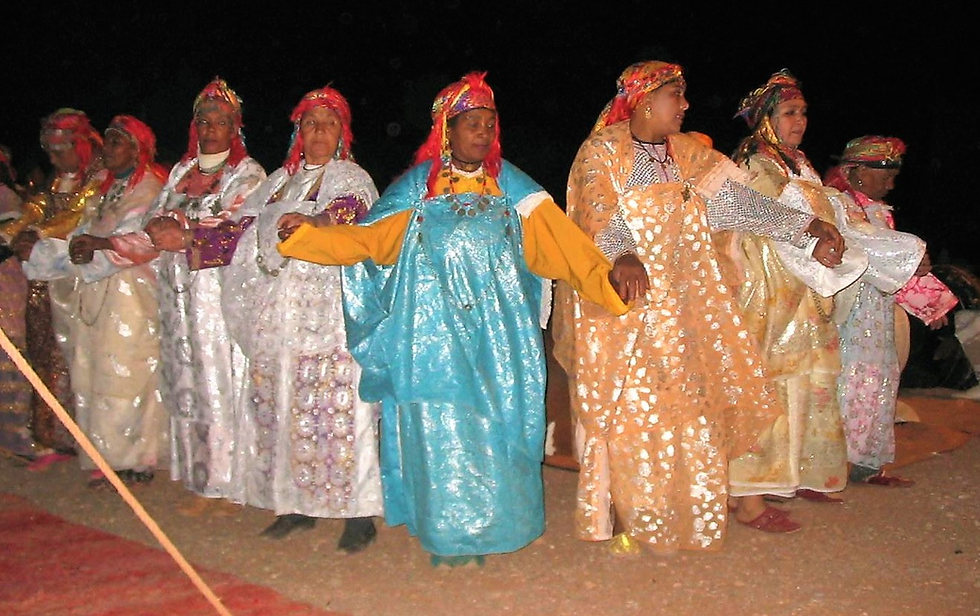
Today, the Sahara is shared by a diverse constellation of nations, peoples, and cultures whose histories are intertwined with the desert's rhythms. Stretching across parts of Morocco, Algeria, Tunisia, Libya, Egypt, Mauritania, Mali, Niger, Chad, and Sudan, the Sahara crosses modern political boundaries that are relatively recent compared with the region's ancient patterns of movement and exchange. National capitals and major cities often lie outside the desert's harshest environments, yet the Sahara remains central to the identity, economy, and imagination of these countries. Mineral extraction, oasis agriculture, tourism, trade, and pastoralism all connect modern states to the desert landscape. At the same time, governments continue to grapple with the challenges of managing vast territories where populations may be widely dispersed and where traditional patterns of mobility do not always align neatly with modern borders.
Among the Sahara's most recognizable peoples are the Tuareg, a collection of Amazigh-speaking communities whose territories span portions of Mali, Niger, Algeria, Libya, and Burkina Faso. Known historically as caravan traders, pastoralists, and guides, Tuareg societies developed sophisticated knowledge of navigation, water sources, and seasonal grazing routes. Their indigo-dyed garments earned them the nickname "the Blue People of the Sahara," though their cultural identity extends far beyond distinctive clothing. Tuareg poetry, music, craftsmanship, and oral traditions remain important expressions of community life. While many Tuareg now live in towns and cities or participate in national economies, elements of nomadic heritage continue to shape cultural values, social organization, and relationships with the desert environment.
The Amazigh peoples of North Africa represent another major cultural presence within the Sahara and its surrounding regions. Across Morocco and Algeria, Amazigh communities maintain languages and traditions that predate both Arabization and European colonial rule. In desert settlements, mountain villages, and oasis towns, Amazigh cultural practices reflect centuries of adaptation to local landscapes. Farther east, communities such as the Tebu of Libya, Chad, and Niger have long occupied some of the Sahara's most remote regions. Renowned for their expertise in desert travel and survival, the Tebu maintain extensive social networks across national borders. Other groups, including the Sahrawi people of Western Sahara and neighboring areas, have developed cultural traditions closely tied to pastoralism, camel herding, and life in one of the world's driest environments.

Arab communities form another major component of Saharan society. Beginning with the spread of Islam and continuing through centuries of migration and cultural exchange, Arabic languages and identities became deeply embedded throughout the region. In countries such as Mauritania, Libya, Egypt, Sudan, and parts of Algeria and Chad, Arab cultural influences are evident in language, architecture, cuisine, music, and religious life. Yet the Sahara's cultures rarely fit into simple categories. Many communities possess mixed ancestries and layered identities shaped by generations of interaction among Amazigh, Arab, African, and other populations. The desert has historically functioned less as a dividing line than as a corridor through which peoples, goods, and ideas have traveled, creating societies characterized by both diversity and connection.
Life in the Sahara continues to revolve around the management of scarce resources. Oasis communities cultivate date palms, grains, vegetables, and fruit using irrigation systems refined over centuries. In places such as Egypt's Western Desert, Algeria's oasis towns, and Morocco's desert valleys, agriculture transforms pockets of groundwater into productive landscapes surrounded by arid terrain. Elsewhere, pastoralists move herds of camels, goats, sheep, and cattle between seasonal grazing areas, following ecological patterns that may vary from year to year. Fishing communities inhabit portions of the Nile, while traders and transport workers maintain routes linking desert settlements with regional markets. Increasingly, education, telecommunications, renewable energy projects, and tourism provide additional economic opportunities, connecting remote communities to broader national and global systems.
Yet despite modernization, the Sahara remains an ecosystem that demands adaptation and cooperation. Water scarcity, drought, desertification, and climate change continue to shape everyday decisions about where people live, work, and travel. Traditional ecological knowledge—understanding weather patterns, locating groundwater, reading landscapes, and managing livestock—remains valuable even as satellite technology and modern infrastructure become more widespread. Across the Sahara, cultural traditions reflect an enduring relationship with the desert itself. Whether among Tuareg caravan descendants, Amazigh oasis farmers, Tebu pastoralists, Arab traders, Nile communities, or countless other groups, the Sahara is not simply a place of survival. It is a homeland whose cultures have been molded by centuries of resilience, mobility, and intimate knowledge of one of Earth's most extraordinary environments.
The Sahara stretches across North Africa like an ocean of stone and sand, covering more than 9 million square kilometers and spanning eleven countries. From space, it appears as a vast golden expanse, but on the ground it reveals a surprisingly varied landscape of towering dunes, rocky plateaus, volcanic mountains, and hidden oases. Although often imagined as an empty wilderness, the Sahara has a rich history that reaches back thousands of years. Ancient rock art scattered across its cliffs depicts giraffes, cattle, and thriving communities, evidence that this now-arid region was once far greener. Over centuries, the desert became a crossroads of trade, linking sub-Saharan Africa with the Mediterranean world through networks of caravans that carried salt, gold, and ideas across the sands.
Life in the Sahara exists in delicate balance with one of Earth’s harshest climates. Temperatures can soar above 50°C (122°F) during the day before plunging dramatically after sunset. Rainfall is scarce and unpredictable, yet a remarkable array of plants and animals has adapted to survive here. Hardy acacia trees sink roots deep into the ground in search of water, while desert grasses emerge quickly after rare storms. Among the Sahara’s wildlife are fennec foxes with oversized ears that help release heat, agile gazelles capable of traveling long distances without water, and reptiles specially adapted to shifting sands. These species form part of a fragile ecosystem shaped by extreme conditions and remarkable resilience.
Water is the lifeblood of the desert. Oases, fed by underground aquifers, create islands of green where date palms flourish and communities have gathered for centuries. These pockets of fertility support agriculture and provide critical stopping points for travelers. Seasonal wetlands and mountain ranges also offer refuge for wildlife, demonstrating that even the world’s largest hot desert contains hidden habitats. Scientists continue to study these environments to better understand how life adapts to drought, heat, and environmental change.
Today, millions of people call the Sahara home. Nomadic and semi-nomadic groups such as the Tuareg have long navigated its vast distances, maintaining cultural traditions shaped by mobility and trade. Alongside them, farmers, merchants, and city dwellers contribute to a diverse human landscape. Despite modern challenges, including climate change and resource pressures, the people of the Sahara continue to demonstrate ingenuity and endurance, sustaining vibrant cultures in a place many once believed impossible to inhabit.


Comments