
The Greatest Humorist the United States Ever Produced
Twain in the laboratory of Nikola Tesla, early 1894
Mark Twain, born Samuel Langhorne Clemens on November 30, 1835, in Florida, Missouri, is one of America's most celebrated and influential writers. Known for his sharp wit, vivid storytelling, and insightful social commentary, Twain earned the title "the father of American literature" and remains a defining figure in the nation's literary and cultural history. Twain grew up in Hannibal, Missouri, a port town on the Mississippi River, which later served as the setting for some of his most famous works. As a young man, he worked in various trades, including as a printer, riverboat pilot, miner, and journalist. His time on the Mississippi deeply influenced his perspective and writing, especially his understanding of human nature, social inequality, and the American experience.
He adopted the pen name "Mark Twain", a riverboat term meaning two fathoms (12 feet) deep, a safe depth for navigation. This alias reflected his connection to river life and became synonymous with his literary voice. Twain's breakthrough came in 1865 with the short story "The Celebrated Jumping Frog of Calaveras County", which brought him national attention. He followed it with travel narratives like "The Innocents Abroad" (1869), which humorously chronicled his experiences in Europe and the Holy Land, and "Roughing It" (1872), based on his time in the American West. However, Twain is best known for his two classic novels: "The Adventures of Tom Sawyer" (1876) and "Adventures of Huckleberry Finn" (1885).
Tom Sawyer is a nostalgic, light-hearted tale of childhood mischief along the Mississippi. In contrast, Huckleberry Finn is a darker, more complex work that explores themes of race, freedom, and morality through the journey of a young boy and an escaped enslaved man named Jim. The novel’s use of dialect, social critique, and unflinching look at racism made it a landmark in American literature—though also controversial and often challenged in schools for its language and subject matter. Twain’s later works, such as "A Connecticut Yankee in King Arthur’s Court" (1889) and "The Mysterious Stranger" (published posthumously), reflect a growing cynicism about humanity, technology, and organized religion. These writings suggest Twain’s evolving worldview, shaped by personal losses, financial troubles, and disillusionment with American society.
Though Twain experienced financial hardship—partly due to failed investments—he regained stability through public speaking tours. He was a masterful orator, using humor and satire to entertain audiences worldwide. He was also an outspoken critic of imperialism, racism, and political hypocrisy, aligning himself with progressive ideas in his later years. Twain died on April 21, 1910, just one day after Halley’s Comet passed by Earth—something he famously predicted would mark both his arrival and departure. His legacy endures through his novels, essays, and speeches, which continue to resonate with readers and scholars alike.

Before Mark Twain became a literary icon, he was a journalist and travel writer, honing his craft through sharp observation, humor, and keen social insight. These early experiences not only shaped his writing style but also laid the foundation for the voice that would later define classic American literature. Twain’s travelogues and journalism provided him a platform to comment on the world, blending fact with satire in a way that made his work accessible, insightful, and entertaining. Twain began his writing career in the 1850s as a typesetter and contributor at his older brother Orion’s newspaper, The Hannibal Journal, in Missouri. These early newspaper contributions were mostly humorous sketches and anecdotal observations that showed his developing wit and storytelling ability. However, it was not until he moved west that his journalistic career truly took off.
In 1861, Clemens traveled to Nevada Territory to try his luck as a silver miner, but when mining didn’t pan out, he turned to journalism. He began writing for the Territorial Enterprise, a Virginia City newspaper, where he adopted the pen name Mark Twain. At the Enterprise, Twain gained popularity for his satirical columns, which skewered local politics, mining culture, and frontier life. His ability to blend humor with criticism made his pieces standout in the rough and tumble media landscape of the American West. Twain’s first major national success came from a short story titled “The Celebrated Jumping Frog of Calaveras County”, published in 1865. Originally written as a humorous sketch for the New York Saturday Press, it was picked up by newspapers across the country and marked the beginning of Twain’s national literary reputation.
Encouraged by this success, Twain began writing travel narratives, which proved to be both popular and lucrative. His first major travelogue, "The Innocents Abroad" (1869), chronicled his journey through Europe and the Holy Land as part of a group of American tourists. Written originally as dispatches for the Alta California newspaper, the book was a humorous and often irreverent account of the clash between American attitudes and Old World traditions. Twain’s tone in The Innocents Abroad was fresh and skeptical, mocking both foreign customs and the naiveté of his fellow American travelers. His critical but humorous eye appealed to a growing U.S. readership that was beginning to explore the world beyond its borders. The book became a bestseller and established Twain as a major literary figure. He followed this success with "Roughing It" (1872), a semi-autobiographical account of his travels in the American West, including his time in Nevada, Utah, and California. Like The Innocents Abroad, Roughing It combined personal adventure with commentary on society, often using exaggeration and irony to make larger points about human nature and American culture.
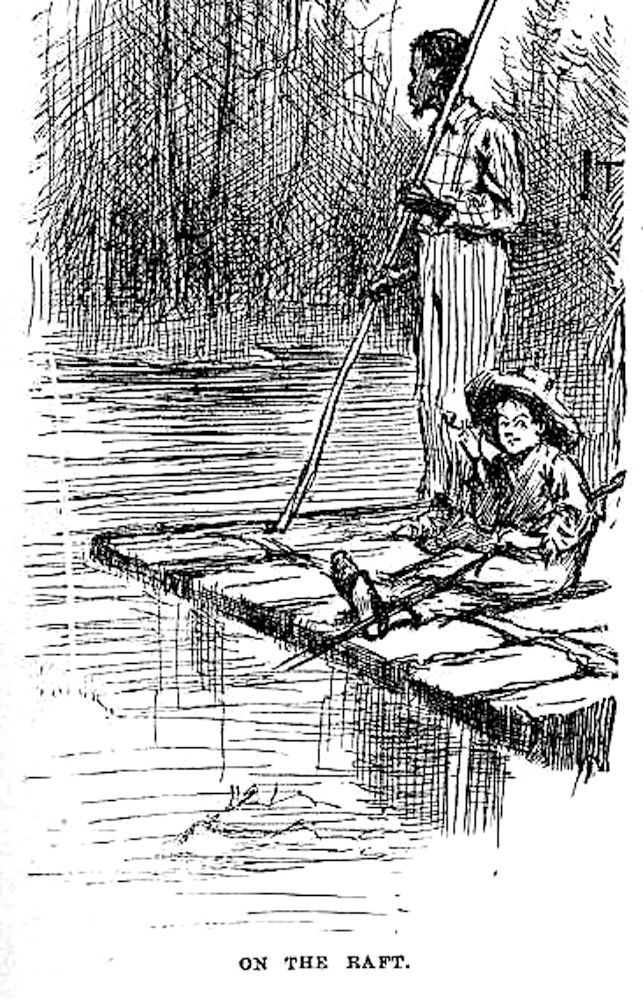
Mark Twain’s The Adventures of Tom Sawyer (1876) and Adventures of Huckleberry Finn (1885) are two of the most celebrated novels in American literature. Though often grouped together, these books differ significantly in tone, theme, and purpose. Together, they offer a vivid portrait of life along the Mississippi River in the mid-19th century and showcase Twain’s gift for combining humor, social commentary, and unforgettable characters. The Adventures of Tom Sawyer is a nostalgic and often humorous tale of childhood in the fictional town of St. Petersburg, Missouri, based on Twain’s own hometown of Hannibal. The story follows Tom Sawyer, a mischievous and imaginative boy who dreams of adventure. Whether he's tricking his friends into painting a fence, running away to become a pirate, or uncovering buried treasure, Tom embodies the carefree spirit and cleverness of youth.
While the novel is light in tone, it also touches on darker elements such as murder, superstition, and social expectations. A key plot line involves Tom witnessing Injun Joe commit a murder in a graveyard and his later struggle to do the right thing by testifying. Despite the risks, Tom’s actions ultimately portray a coming-of-age journey where innocence is tested by real-world consequences. Though Tom Sawyer was written for a general audience, including children, Twain infused it with satirical insights into adult society. The book critiques rigid schooling, religious hypocrisy, and small-town pretensions, all while maintaining a tone of playful nostalgia.
Often considered Twain’s masterpiece, Adventures of Huckleberry Finn is a more mature and serious novel. It picks up where Tom Sawyer leaves off but focuses on Huck Finn, Tom’s best friend and the town’s outcast. Disillusioned by the “civilized” world, Huck runs away from home and floats down the Mississippi River with Jim, an enslaved man escaping bondage. What begins as an adventure story becomes a powerful social critique of slavery, racism, and American morality. Huck’s moral development is central to the novel. He wrestles with the values society has taught him—particularly the idea that helping a runaway slave is wrong—versus what his own conscience tells him. In one of the novel’s most famous moments, Huck decides, “All right, then, I’ll go to hell,” choosing to help Jim despite believing he is damning himself. Twain’s use of dialect, regional speech, and the first-person narrative from Huck’s perspective lends authenticity and emotional depth to the story. Though praised for its literary brilliance, the novel has also been controversial due to its use of racial slurs and portrayal of Black characters. Nonetheless, many scholars see it as a profound critique of slavery and racism in 19th-century America.

Following the publication of Adventures of Huckleberry Finn in 1885—often considered his literary masterpiece—Mark Twain entered a new phase of writing marked by greater cynicism, philosophical reflection, and dark satire. These later works reveal a man increasingly disillusioned with human nature, politics, imperialism, and organized religion, all of which he explored with biting wit and growing skepticism. One of Twain’s most significant post-Huckleberry Finn novels was A Connecticut Yankee in King Arthur’s Court (1889). This time-travel satire sends a 19th-century American engineer named Hank Morgan back to medieval England. Initially optimistic about bringing modern technology and democratic values to a feudal society, Morgan's efforts end in chaos and destruction. The novel is often read as a critique of technological arrogance, romanticized history, and imperialism. Its tone shifts from humorous to tragic, foreshadowing the more somber direction Twain's writing would take.
In The Tragedy of Pudd’nhead Wilson (1894), Twain returns to themes of race and identity. Set in a Missouri town, the story revolves around a mixed-race slave who switches her baby with her master’s white child, leading to a dramatic exploration of race, nature versus nurture, and social injustice. The novel uses courtroom drama and a clever plot twist involving fingerprint evidence, but its tone is far darker and more pessimistic than Twain’s earlier works. Twain’s shorter works and essays from this period also reflect his disillusionment with society. In "The Man That Corrupted Hadleyburg" (1899), he satirizes small-town hypocrisy and the illusion of moral superiority. The townspeople, who pride themselves on their incorruptibility, are easily deceived when tempted by a stranger’s offer of money. The story exposes the fragile nature of virtue when placed under real-world pressures.
Toward the end of his life, Twain turned inward, exploring philosophical and spiritual questions. His posthumously published works such as Letters from the Earth and The Mysterious Stranger express deep skepticism toward religion and humanity. The Mysterious Stranger, in particular, presents a bleak view of existence, with a mysterious, godlike character revealing that life is an illusion and moral laws are human inventions. These writings were controversial and withheld from publication during Twain’s lifetime due to their anti-religious tone. Despite—or perhaps because of—his darker outlook, Twain’s later works retain his signature wit, narrative skill, and sharp observation. They offer profound insight into the complexities of human behavior and societal flaws, and while they lack the buoyant energy of Tom Sawyer, they reveal a matured, more contemplative Twain grappling with the contradictions of modern life.

Mark Twain remains one of the most influential and widely read authors in American literature, but his works have often encountered controversy, censorship, and complex relationships with publishers. Twain’s bold social commentary, use of dialect, and unflinching portrayal of issues like race, class, and religion led to both acclaim and backlash during his lifetime and beyond. One of Twain’s most censored and debated works is Adventures of Huckleberry Finn (1885). While the novel is now hailed as a literary masterpiece, it was immediately controversial upon publication. Its use of racial slurs and portrayal of slavery and Black characters, particularly Jim, sparked criticism. Some 19th-century critics found the novel vulgar, citing Huck’s rough speech and anti-authoritarian attitude. Schools and libraries began banning the book as early as the 1880s, and it remains one of the most frequently challenged books in the United States today. Despite—or because of—its controversy, Huckleberry Finn brought Twain significant commercial success. However, Twain often struggled with publishers over how his works were edited, printed, and promoted. He was an ambitious entrepreneur and, at times, took control of the publication process. In 1884, Twain co-founded his own publishing company, Charles L. Webster & Co., named after his nephew by marriage. Through this venture, he published Huckleberry Finn and Ulysses S. Grant’s Memoirs, the latter of which was a major commercial hit and helped finance Grant’s family after the president’s death.
However, Twain’s publishing efforts were not always successful. His company eventually failed due to poor management and the costly publication of an unsuccessful biography of Pope Leo XIII. The collapse of the firm in the 1890s contributed to Twain’s financial troubles, forcing him to go on global lecture tours to pay off his debts. Twain was also ahead of his time in confronting religious and political orthodoxy, which led to further censorship concerns. For example, his essay collection Letters from the Earth—a biting critique of organized religion and human folly—was withheld from publication during his lifetime. Twain’s daughter Clara and others close to him feared the book’s content would damage his public image. It was finally published posthumously in 1962, decades after his death in 1910.
In addition, his novella The Mysterious Stranger, which questions morality, free will, and God, was also suppressed and heavily edited before its posthumous release. Modern scholars have since reconstructed a more authentic version of the text closer to Twain’s original intent, highlighting how editorial decisions sometimes diluted or altered his philosophical depth. Throughout his career, Twain walked a fine line between literary innovation and public acceptability. His battles with censorship and publishers reveal a writer committed to challenging norms—even when doing so cost him commercial opportunities or public favor. These tensions continue to frame how Twain is read and taught today.
U.S. soldiers and insurrecto prisoners, Manila, 1899
Over the course of his life, Twain's political views evolved significantly—from a young man shaped by the Southern culture of slavery to a fierce critic of imperialism, racism, organized religion, and political hypocrisy. His politics, though not always easy to categorize, were rooted in a deep skepticism of power, a commitment to individual conscience, and a belief in justice and human dignity. In his early years, Twain was influenced by the racial and political attitudes of Missouri, a slave state. However, as he matured, particularly through travel and exposure to global issues, he developed into a progressive thinker. Twain’s writing, particularly Adventures of Huckleberry Finn, reflects this shift. In the novel, he critiques slavery and racial prejudice through Huck’s moral awakening and his friendship with Jim, an enslaved man. Though Twain used dialect and racial slurs typical of the period, his underlying message was radical for its time: Black people were fully human and morally equal.
Twain’s most forceful political stance came in the late 1890s and early 1900s, when he became an outspoken opponent of American imperialism. The turning point was the Spanish-American War (1898) and the subsequent Philippine-American War, where the U.S. took control of overseas territories under the guise of liberation. Twain saw this as a betrayal of American democratic ideals. In essays such as "To the Person Sitting in Darkness" (1901), he savaged U.S. military actions abroad and condemned the hypocrisy of claiming to spread freedom while engaging in conquest. In 1901, Twain joined the Anti-Imperialist League, an organization that opposed U.S. expansionism in places like the Philippines, Cuba, and Puerto Rico. He wrote blistering critiques of colonialism, arguing that imperial powers exploited and dehumanized the very people they claimed to "civilize." He famously remarked, “I am an anti-imperialist. I am opposed to having the eagle put its talons on any other land.”
Twain also criticized organized religion, particularly when it aligned itself with oppressive political forces. In Letters from the Earth, published posthumously due to its controversial nature, he mocked biblical literalism and the idea of a benevolent God permitting suffering and injustice. While not an atheist, Twain was deeply skeptical of religious institutions and often viewed them as tools of control rather than moral guidance. Domestically, Twain supported labor rights, criticized wealth inequality, and mocked political corruption. He had little faith in politicians, once quipping, “Suppose you were an idiot. And suppose you were a member of Congress. But I repeat myself.” He championed freedom of speech, civic responsibility, and moral courage, often through satire.

Mark Twain stands as a towering figure in American literature and culture. Revered for his wit, honesty, and deep insights into human nature, Twain left behind a legacy that extends far beyond his novels. His influence can be seen in literature, journalism, social commentary, education, and even American identity itself. At the core of Twain’s legacy is his literary genius. His most famous novels, The Adventures of Tom Sawyer (1876) and Adventures of Huckleberry Finn (1885), revolutionized American fiction. Huckleberry Finn, in particular, is often cited as the “great American novel” for its authentic use of regional dialect, complex portrayal of race, and powerful exploration of freedom and morality. With Huck and Jim, Twain created characters that remain symbols of conscience, resistance, and friendship. His use of humor and satire to critique society became a blueprint for future American writers like Ernest Hemingway, William Faulkner, and Kurt Vonnegut.
Twain also pioneered a new American voice—colloquial, democratic, and uniquely reflective of the country’s diverse population. Before him, much of American literature had imitated European forms and diction. Twain’s stories, rich with the rhythms of everyday speech, helped define a truly American style of storytelling. He showed that literature could be both artistically sophisticated and widely accessible. Beyond literature, Twain’s legacy includes his role as a social critic and public intellectual. He spoke out against racism, slavery, imperialism, and corruption with remarkable courage for his time. His fierce opposition to the Philippine-American War and Western colonialism, his support for civil rights, and his criticism of organized religion and government hypocrisy reflect a commitment to justice and truth that resonates today. Twain used satire not just for humor but as a weapon against cruelty and dishonesty.
Twain’s life also became a symbol of the American experience. He embodied the rise from humble beginnings to global fame, having grown up in a small Missouri town and eventually becoming one of the most recognized figures of his age. He toured the world as a lecturer and was a household name in Europe and America alike. Despite financial failures and personal tragedies, Twain maintained an independent voice and intellectual integrity that inspired both his contemporaries and future generations. In education, Twain’s works continue to be studied for their literary merit and historical insight. Though Huckleberry Finn has faced bans and censorship, it also remains a cornerstone of American classrooms for its complex themes and bold narrative style. Twain’s legacy sparks ongoing conversations about freedom of speech, race, and how literature should reflect uncomfortable truths.



Comments