
Silenced Homeland: The Struggle of the Uyghurs in Modern China
- Sep 12, 2025
- 15 min read
In the far western reaches of China, across the rugged expanse of the Taklamakan Desert and the soaring Pamir Mountains, live the Uyghurs, a Turkic-speaking Muslim people whose history traces back over a millennium. Their culture is a mosaic of Central Asian, Persian, and Islamic traditions, visible in the domes of Kashgar’s mosques, the rhythms of the dutar lute, and the bustling stalls of ancient Silk Road bazaars. For centuries, the Uyghurs have seen their homeland—today called the Xinjiang Uyghur Autonomous Region—as more than a territory; it is the cradle of their language, faith, and identity. Yet in the twenty-first century, the very existence of this culture stands under intense pressure.
The People’s Republic of China views Xinjiang through a different lens. Rich in natural resources and strategically located, the region is central to Beijing’s Belt and Road Initiative, the vast infrastructure project linking China to global markets. For Chinese leaders, Xinjiang is not only a geographic crossroads but also a political flashpoint. Authorities have long emphasized the need for “stability,” pointing to sporadic outbreaks of unrest and separatist sentiment as justification for sweeping security measures. Over time, the government’s pursuit of order has hardened into a campaign that international observers describe as one of the most severe examples of repression in the modern era.
Reports from human rights organizations and eyewitness testimonies paint a stark picture. Since 2017, hundreds of thousands—and by some estimates, more than a million—Uyghurs and other Muslim minorities have been detained in what China calls “vocational training centers.” Former detainees describe indoctrination sessions, forced renunciations of faith, and physical mistreatment. Beyond the camps, communities endure pervasive surveillance, with facial-recognition cameras on street corners and police checkpoints slicing through neighborhoods. Allegations of forced labor, restrictions on religious practices, and the erasure of Uyghur-language education have amplified concerns that Beijing’s policies aim not only to control but to assimilate an entire people.

Inside China, the state maintains that its policies in Xinjiang are necessary to combat extremism and promote economic opportunity. Yet outside its borders, growing numbers of governments and advocacy groups have condemned the measures as violations of fundamental rights. The Uyghur diaspora, scattered from Istanbul to Washington, raises its voice in protest, determined to keep alive the memory of a culture at risk. Their struggle is a reminder of how political power and cultural survival intersect on one of the world’s great frontiers, where the future of an ancient people now hangs in the balance.
The roots of today’s conflict lie in centuries of contested sovereignty across Central Asia. The Uyghurs emerged as a distinct people during the 8th century, when the Uyghur Khaganate rose on the Mongolian steppes. After its collapse, many Uyghurs migrated southward into the Tarim Basin, where they blended with Indo-European and Persian-speaking populations along the Silk Road. Over time, they adopted Islam, shaping a culture deeply tied to trade, scholarship, and faith. Their oases—Turpan, Kashgar, and Hotan—became waypoints for travelers and merchants, places where Islamic calligraphy adorned madrasas and the aroma of spiced lamb and fresh naan wafted through markets. This history has left the Uyghurs with a strong sense of rootedness, their identity tied not only to religion but also to the deserts and mountains of Xinjiang.
Yet geography also made them vulnerable. From the Qing dynasty in the 18th century, imperial Chinese forces launched campaigns to conquer the region, viewing it as a bulwark against Central Asian powers. Han settlers were introduced in small numbers, and the Qing imposed harsh military control, sparking repeated uprisings by Uyghurs and other Muslim groups. With the fall of the dynasty in 1911, the Republican era saw a power vacuum in Xinjiang, where local warlords alternately courted Moscow and Beijing. Twice, Uyghur leaders declared short-lived East Turkestan republics, reflecting aspirations for sovereignty. These moments of independence, however fleeting, cemented Uyghur national consciousness, even as they exposed the people to cycles of violent repression and reconquest.

The Communist victory in 1949 brought Xinjiang firmly under the control of the People’s Republic of China. Officially designated an “autonomous region,” Xinjiang in practice remained tightly managed by the central government. Han migration into the region accelerated, encouraged by Beijing’s policies and the expansion of state farms and military garrisons. Over the decades, Uyghurs found themselves increasingly outnumbered in their own cities, where Mandarin became the language of power and opportunity. Tensions simmered, erupting in episodes of unrest, which the government framed as terrorism or separatism. Each uprising prompted harsher crackdowns, widening the divide between the Uyghurs and the Han majority.
By the early 21st century, this cycle had hardened into systematic control. Economic development in Xinjiang often bypassed Uyghurs, enriching Han migrants while displacing traditional livelihoods like farming and herding. Religious expression, once tolerated, came under scrutiny, with mosques surveilled and Islamic dress discouraged. Beijing’s rhetoric shifted from integration to securitization, portraying Uyghurs less as a cultural community than as a potential threat to national unity. Against this backdrop, the large-scale detentions and surveillance of the past decade represent not an abrupt rupture, but the culmination of a long historical trajectory in which conquest, migration, and distrust gradually eroded the Uyghurs’ autonomy and deepened their sense of cultural siege.
In the early 2000s, Beijing escalated its approach to governing Xinjiang through what became known as the “Strike Hard Campaign Against Violent Terrorism.” Officially launched in 2014, this initiative followed years of sporadic clashes, including high-profile incidents that Chinese authorities attributed to Uyghur separatists. Under the campaign, security forces were given sweeping powers to monitor, detain, and prosecute individuals deemed suspicious. Police presence multiplied in cities and villages, while high-tech surveillance networks—facial recognition systems, data collection, and smartphone tracking—began to blanket the region. Although Beijing framed the program as necessary to safeguard lives, rights groups argued that it blurred the line between genuine counterterrorism and the wholesale suppression of cultural and religious identity.

By 2017, the scope of state control deepened with a series of new regulations targeting Uyghur life at its most intimate levels. Laws restricted “extremist” practices, a term that encompassed wearing headscarves, growing long beards, or refusing to consume alcohol. Reports also surfaced of forced sterilizations and limits on Uyghur birth rates, adding fears of demographic engineering to the existing pressures of assimilation. Thousands of mosques were closed or demolished, while Uyghur-language education was sharply curtailed in favor of Mandarin. The state’s “vocational training centers”—detention facilities that Uyghurs and former detainees describe as indoctrination camps—expanded rapidly, reshaping entire communities as families were split apart, livelihoods lost, and cultural traditions criminalized under the banner of security.
Alongside these measures, propaganda became a powerful instrument of control. State media emphasized themes of harmony, prosperity, and national unity, portraying Xinjiang as a land transformed by development and stability. Carefully choreographed videos showed Uyghurs smiling in new factories, singing patriotic songs, or expressing gratitude for government assistance. International journalists were invited on guided tours of select facilities, where detainees rehearsed polished testimonies about acquiring valuable job skills. On social media platforms, pro-Beijing voices countered criticism with slick campaigns branding Xinjiang as an idyllic destination for tourism and investment. Behind these narratives, however, independent investigations and satellite imagery painted a different picture: expanding detention centers, erased neighborhoods, and cultural sites reduced to rubble.
These policies and narratives reveal the dual face of the Chinese state in Xinjiang—harsh repression underpinned by a polished exterior of progress. For Uyghurs, the daily reality is one of constant surveillance, curtailed freedoms, and the erasure of cultural touchstones, even as the government insists it is building peace and opportunity. The tension between official rhetoric and lived experience underscores the broader struggle in Xinjiang, where identity and power collide in a contested landscape. It is here, amid deserts, mountains, and fortified cities, that one of the world’s most pressing human rights challenges continues to unfold.

The most searing allegations surrounding Xinjiang center on the vast network of detention facilities that has taken shape since 2017. Estimates suggest that more than a million Uyghurs and other Muslim minorities have been confined in what Beijing calls “vocational training centers.” Former detainees describe a different reality: locked dormitories, overcrowded cells, and relentless political indoctrination. Some speak of deaths in custody, often shrouded in secrecy, with families left without answers. Reports of torture—ranging from prolonged solitary confinement to physical beatings—underscore the severity of the conditions inside, painting a portrait of institutions less focused on education than on breaking cultural and spiritual resistance.
For Uyghur women, the weight of state intervention has taken particularly intimate forms. Multiple investigations have documented cases of compulsory sterilization, contraception, and pregnancy terminations imposed on Uyghur women, part of a broader strategy to curb population growth in the region. Survivors recount being threatened with detention if they refused procedures or having intrauterine devices implanted against their will. These practices have fueled international accusations that Beijing is pursuing demographic engineering—an attempt to reduce Uyghur numbers while encouraging the growth of the Han population in Xinjiang. The erosion of family structures through these measures compounds the trauma of communities already fractured by detention and surveillance.
Indoctrination is another central feature of life under the campaign. In detention centers, detainees report being forced to memorize Chinese Communist Party slogans, denounce their faith, and sing patriotic songs for hours each day. Beyond the camps, Uyghur children separated from their families have been placed in state-run boarding schools, where instruction is in Mandarin and Islamic practices are prohibited. This drive to instill loyalty to the state is coupled with the economic exploitation of Uyghur labor. Evidence has emerged of Uyghurs being transferred from detention centers into textile factories, cotton fields, and electronics plants under coercive conditions. Global supply chains, from fast fashion to consumer electronics, have been linked to these programs, raising difficult questions for international businesses and consumers alike.
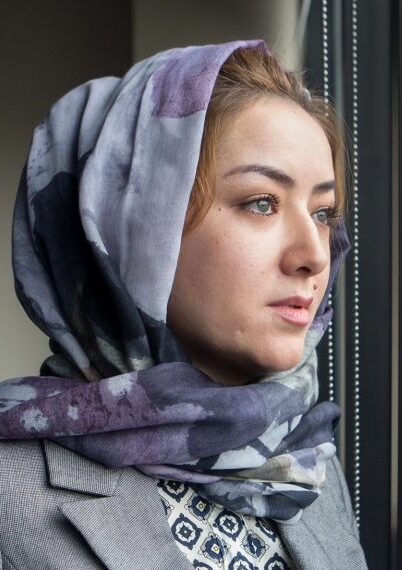
Perhaps the darkest accounts to emerge involve sexual violence inside detention centers. Survivors recount systematic sexual torture, including assaults by guards, forced nudity, and invasive procedures designed to humiliate and control. These testimonies, though often impossible to independently verify due to restricted access, resonate with broader patterns of abuse that align with reports of torture and coercion elsewhere in Xinjiang. Together, these violations—mass detention, indoctrination, forced labor, sterilization, and sexual violence—paint a chilling picture of a people subjected to one of the most far-reaching campaigns of state control in the modern era, where every facet of life is bent toward erasure or submission.
In Xinjiang today, surveillance extends far beyond locked compounds or street checkpoints—it permeates nearly every aspect of daily life. Uyghurs live under a web of biometric monitoring, with authorities collecting fingerprints, DNA samples, and iris scans during mandatory health checks. These data points are fed into vast databases alongside voice recordings and behavioral profiles, creating what analysts describe as one of the most intrusive security architectures in the world. In Kashgar and Urumqi, facial-recognition cameras track movements through markets and mosques, while QR codes affixed to homes allow officials to quickly scan and register residents’ identities. For Uyghurs, a simple walk to the store is accompanied by a constant reminder that they are being watched, categorized, and assessed.
The technological backbone of this system is the Integrated Joint Operations Platform (IJOP), a state-run database that aggregates information from surveillance cameras, police checkpoints, and digital communications. Algorithms flag “suspicious” behavior—such as traveling abroad, downloading religious materials, or even using encrypted messaging apps—triggering visits from police or, in some cases, detention. Phones are routinely inspected for banned content, with spyware apps installed to track usage and contacts. Satellite imagery has confirmed the expansion of these facilities and checkpoints, providing independent corroboration of what Uyghurs describe as living in an open-air prison. For many families, the digital scrutiny is as suffocating as the physical presence of armed patrols, leaving little space for private or spontaneous expression.
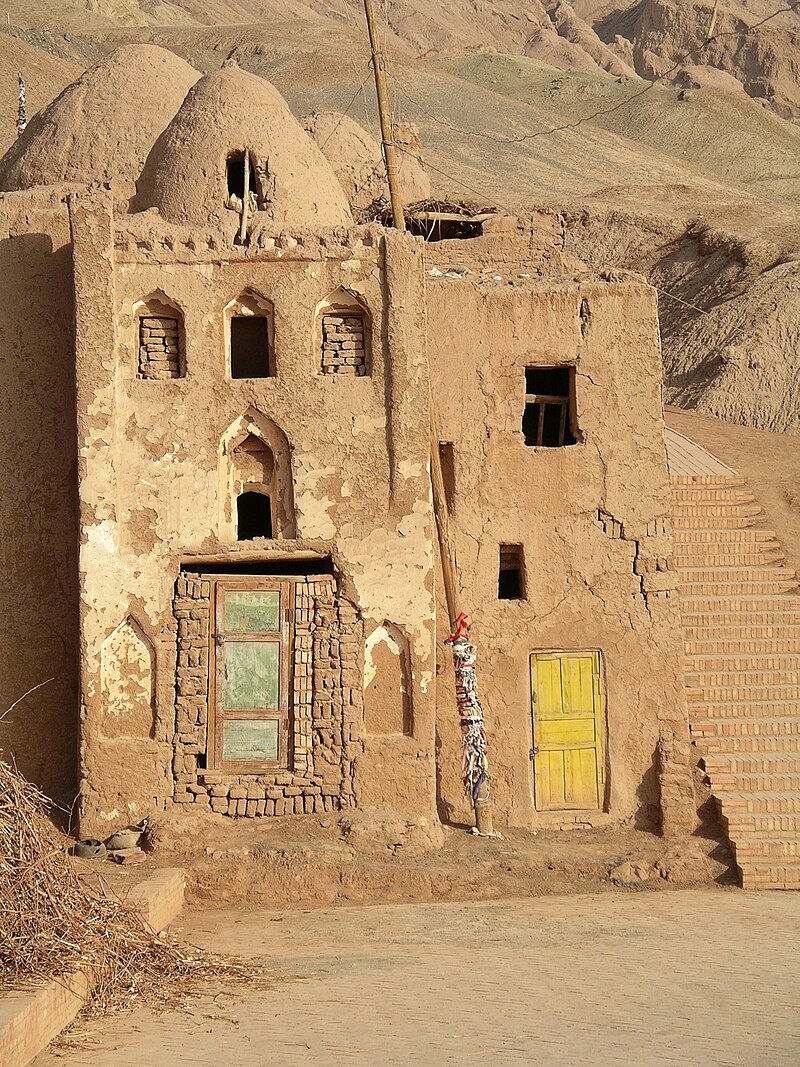
Surveillance also extends beyond China’s borders, ensnaring the Uyghur diaspora. Exiles in Turkey, Europe, and the United States report receiving threatening messages via WeChat, pressuring them to remain silent or provide information about relatives still in Xinjiang. Chinese officials have been accused of harassing Uyghurs abroad by coercing family members back home, using them as leverage to secure compliance. International reports highlight cases of Uyghurs being tracked through digital tools, including spyware embedded in mobile devices and social media monitoring campaigns. This transnational reach means that for many Uyghurs, exile does not equate to freedom, but instead to a new arena of vigilance and fear.
Beijing defends its surveillance systems as essential tools in the fight against terrorism and separatism, emphasizing the region’s reduced incidents of violence. Yet the scale and sophistication of the technology suggest a broader ambition: not only to ensure public safety, but to engineer political loyalty and cultural conformity through relentless observation. In Xinjiang, cameras, biometric scanners, and data algorithms converge to create a society where privacy has evaporated, and where every Uyghur life is mapped, monitored, and ultimately controlled. For the global community, these practices raise urgent questions about how emerging technologies can serve as instruments of both progress and oppression.
The cultural fabric of the Uyghur people, woven over centuries along the Silk Road, has been among the most visible casualties of state policy in Xinjiang. Mosques that once anchored communities with daily prayer and religious instruction have been shuttered, demolished, or converted into cultural exhibition halls stripped of their original function. Educational centers where Uyghur children once learned in their own language now emphasize Mandarin and Communist Party ideology, reducing space for Uyghur literature, poetry, and history. Even cemeteries have not been spared—satellite images and local testimonies reveal ancestral burial grounds leveled to make way for development projects, erasing tangible links to family heritage. In each case, the state’s narrative of modernization collides with the Uyghurs’ lived reality of cultural dispossession.

Academic life has also been profoundly disrupted. Uyghur intellectuals, from university professors to poets and historians, have faced detention or disappearance under charges of “separatism” or “extremism.” Their absence reverberates across communities, silencing voices that once preserved and advanced Uyghur culture. The detention of scholars like Ilham Tohti, who advocated for dialogue and autonomy rather than independence, illustrates how even moderate perspectives have been swept up in the crackdown. The result is a vacuum of cultural leadership, leaving a younger generation with fewer role models to guide them in navigating the balance between identity and survival.
Everyday customs, too, have come under scrutiny. Traditional wedding ceremonies, with their vibrant dances, music, and Islamic blessings, have been curtailed or stripped of their religious elements. Clothing styles once emblematic of Uyghur identity—colorful dresses, doppa skullcaps, or long beards—are discouraged, with authorities equating them to signs of extremism. Even the intimate act of naming a newborn has been regulated: certain Islamic names, such as Muhammad or Medina, are banned, replaced by names deemed more “acceptable” by state authorities. These interventions penetrate deeply into family life, reshaping cultural expressions that once bound communities together across generations.
The cumulative effect of these measures is a pervasive sense of cultural siege. As physical landmarks vanish, traditions are altered, and intellectual voices are silenced, many Uyghurs fear the gradual erosion of their identity. Yet in exile communities abroad—in Istanbul’s teahouses, in Washington’s advocacy centers, in Europe’s diaspora neighborhoods—the rituals continue. Families celebrate weddings with traditional dances, scholars publish in exile, and parents teach children Uyghur names and prayers. These acts of preservation underscore a paradox: while persecution within China threatens the survival of Uyghur culture, it also strengthens the resolve of communities abroad to protect and pass on their heritage against the currents of erasure.
International observers have struggled to capture the full scope of the abuses against the Uyghur people, but the terminology of human rights law provides some of the starkest assessments. Several governments, including the United States, have formally labeled the Chinese government’s actions in Xinjiang as genocide, citing systematic efforts to suppress Uyghur births, mass detentions, and the erasure of cultural and religious practices. Others have hesitated to adopt the term, preferring the language of “crimes against humanity,” which emphasizes widespread and systematic violations—imprisonment, torture, forced labor, and family separations—without necessarily proving the intent to destroy a people in whole or in part. The debate underscores the complexity of documenting abuses in a region tightly sealed from independent access, where state narratives dominate public discourse.
Some scholars argue that what is unfolding is best described as cultural genocide or ethnocide: the deliberate destruction of Uyghur traditions, language, and religion without necessarily eliminating the people themselves. From banning Islamic names for newborns to demolishing mosques and cemeteries, the policies appear designed to erode the distinctiveness of Uyghur identity, replacing it with loyalty to the Chinese state and assimilation into Han cultural norms. The detention of poets, academics, and musicians adds further weight to this interpretation, suggesting that the campaign seeks to silence the cultural guardians of Uyghur heritage. By this reading, the genocide may not be measured solely in lives lost but in the obliteration of memory, belief, and expression.
Allegations have also surfaced of even grimmer practices. Investigative reports and testimonies have pointed to forced organ harvesting, echoing accusations previously directed at abuses against other detained groups in China. While definitive evidence remains difficult to obtain, the claims add a disturbing layer to the broader picture of human rights violations. More widely acknowledged are the hallmarks of crimes against humanity: torture, sexual violence, forced sterilization, and indoctrination carried out on a scale that implicates state machinery at the highest levels. These abuses collectively reflect a campaign less about policing extremism and more about reshaping an entire community through coercion.

Many experts frame the policies in Xinjiang as a form of settler colonialism, where the influx of Han Chinese migrants, backed by state infrastructure and economic incentives, displaces indigenous populations. Uyghurs find themselves increasingly marginalized in their ancestral homeland, with land, jobs, and urban spaces dominated by newcomers. This pattern, seen historically in other colonized regions, deepens the sense of dispossession while binding Xinjiang ever more tightly to Beijing’s political and economic orbit. For the Uyghurs, the struggle is not only about surviving repression but about resisting the slow-motion erasure of their existence as a people tied to a particular land, culture, and history.
The international response to the persecution of the Uyghurs has been marked by a mix of condemnation, cautious diplomacy, and economic entanglement. Several Western governments, including the United States, Canada, and members of the European Union, have imposed sanctions on Chinese officials linked to policies in Xinjiang, citing violations of human rights and crimes against humanity. Legislative measures such as the Uyghur Forced Labor Prevention Act in the United States now restrict imports of goods suspected to be produced through coerced Uyghur labor, particularly cotton, tomatoes, and solar panel components. These steps reflect a growing recognition of the scale of abuses, yet they also highlight the difficulty of confronting a global power whose economic influence stretches across continents.
At the same time, China has mounted a vigorous counter-campaign. Beijing rejects accusations of abuse, insisting its policies in Xinjiang are aimed at combating extremism and fostering development. It has rallied support from dozens of countries in Asia, Africa, and the Middle East, many of which depend heavily on Chinese investment and trade. At the United Nations, this divide is visible in dueling letters: one group of states condemning China’s actions, another defending them as legitimate counterterrorism measures. The split underscores how global geopolitics often shape human rights debates, with economic ties and strategic alliances influencing the positions that governments take on sensitive issues.
Corporations have found themselves entangled in the controversy as well. Investigations have revealed links between Uyghur forced labor and global supply chains feeding industries from fashion to electronics. International brands have faced scrutiny over whether their cotton, yarn, or assembly-line products were sourced in part from Xinjiang, where coercive labor transfers are common. Some companies have pledged to cut ties with the region, yet the opacity of supply networks makes full disengagement difficult. Others have faced backlash in China for even hinting at concerns, balancing between consumer markets at home and mounting criticism abroad. For businesses, the Uyghur crisis has become a test case in the ethics of globalization—how to reconcile profit with principles in a world of interwoven economies.
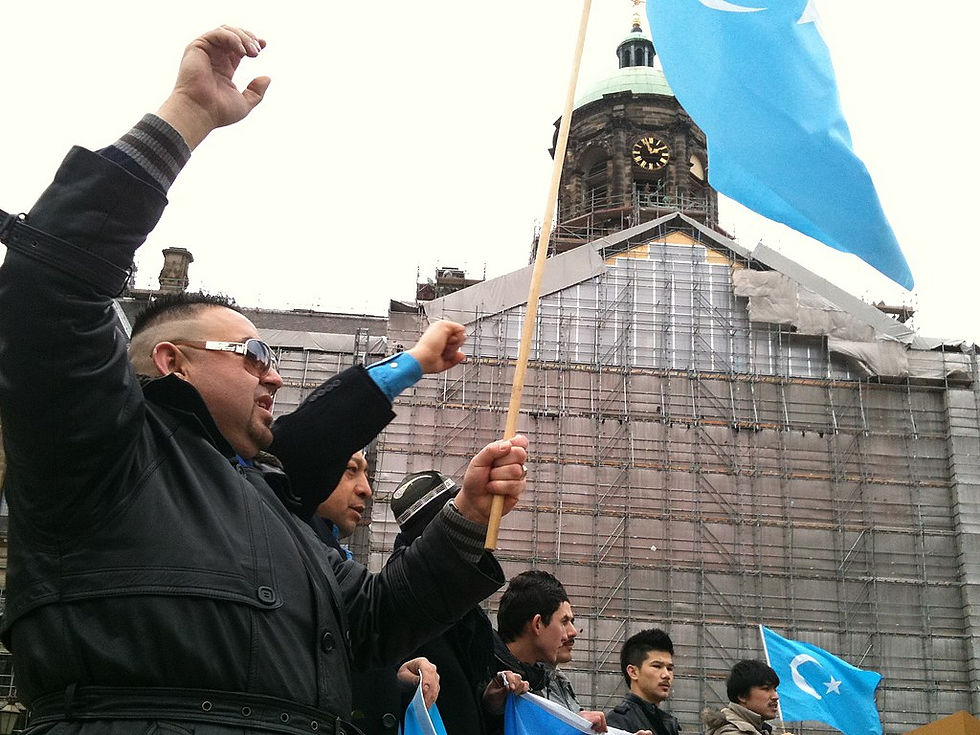
Meanwhile, Uyghur diaspora communities continue to advocate for stronger action, pressing governments and corporations alike to treat the crisis with urgency. Protests, reports, and testimonies have kept international attention focused on a region otherwise tightly controlled and opaque. Their efforts amplify the voices of those who cannot speak freely within Xinjiang, turning personal accounts into calls for accountability. The world’s response remains uneven, but the visibility of the Uyghur struggle ensures that questions of human rights, trade, and global responsibility cannot easily be set aside. In this way, the plight of the Uyghurs has become not only a regional issue but a mirror of the moral choices confronting the international community.
China’s leadership has consistently denied allegations of abuse in Xinjiang, framing international criticism as politically motivated. Officials describe the detention centers as “vocational training schools” aimed at teaching job skills and deradicalization, not imprisonment. State media tours of select facilities show classrooms of smiling Uyghurs learning Mandarin or practicing trades, presenting an image of progress and opportunity. On the world stage, Beijing insists its policies have brought stability to a once-restive region, pointing to a decline in violent incidents as proof of success. These narratives are reinforced by carefully curated propaganda campaigns portraying Xinjiang as prosperous, harmonious, and modern—an oasis of unity under Communist Party leadership.

Yet the gap between official accounts and the lived experiences reported by survivors is stark. Former detainees and exiled Uyghurs describe indoctrination, abuse, and the erasure of their culture, directly contradicting Beijing’s claims. Independent journalists and human rights organizations argue that the denial itself is part of a broader strategy to control the narrative, restricting outside access while amplifying state-approved voices. The Chinese government’s strong diplomatic pushback—sanctioning foreign officials, expelling researchers, and branding critics as biased—reflects its determination to shape global perception. In this climate, truth becomes a contested terrain, where competing stories vie for legitimacy across international forums.
For Uyghurs themselves, the future remains uncertain, but resilience endures. Communities in exile—from Istanbul to Berlin, Sydney to Washington—work tirelessly to preserve their heritage through cultural centers, advocacy groups, and digital archives. Uyghur musicians perform traditional songs abroad, writers publish in exile, and young activists raise awareness on social media platforms, ensuring their culture and struggle remain visible. These efforts not only safeguard identity but also galvanize international solidarity, reminding the world that behind policy debates and statistics are families, traditions, and lives worth defending. The diaspora thus plays a vital role as both guardian of culture and voice of resistance.
The path forward will likely be shaped by the intersection of global politics, technological surveillance, and the persistence of Uyghur communities. While Beijing shows no sign of loosening its grip, the continued documentation of abuses, coupled with international advocacy, keeps the issue alive on the global stage. For the Uyghurs, survival is not merely about enduring repression but about asserting identity in the face of erasure. Their fight for human rights carries echoes of countless struggles across history, where marginalized peoples, despite immense pressure, find ways to preserve memory, demand justice, and envision a future where their voices are not silenced.


Comments