
Public Afterlife: Death, Memory, and Bulgaria’s Necrologs
- Jan 27
- 12 min read
On the stone walls of apartment blocks, along iron fences outside churches, and beside the doors of neighborhood shops, faces look out at passersby across Bulgaria. They are formal portraits—men in dark jackets, women carefully posed, eyes steady and composed. Beneath each image, a name, a date, and a brief message of remembrance. These paper notices, known as nekrolog (plural nekrolozi), are not advertisements or political flyers but quiet announcements of death and memory. In Bulgaria, mourning does not retreat into private spaces alone; it enters the street, inviting the entire community to pause, remember, and acknowledge a life that has ended.

To understand Bulgarian necrologs is to understand something essential about Bulgarian culture itself—a society shaped by village life, extended families, and enduring local bonds. For centuries, Bulgarians lived in close-knit communities where births, marriages, and deaths were shared experiences. Even today, in cities like Sofia, Plovdiv, or Veliko Tarnovo, echoes of this communal rhythm remain. The necrolog reflects a worldview in which identity is relational: a person is known not only as an individual, but as a parent, spouse, neighbor, coworker, and friend. Public remembrance reinforces the idea that death affects not just a family, but an entire social fabric.
Bulgaria’s funeral customs are deeply influenced by Eastern Orthodox Christianity, which has shaped spiritual life in the region for more than a millennium. In Orthodox belief, death is not an ending but a passage—an entry into a different state of existence where the soul continues its journey toward God. Prayer for the dead is considered an act of love and responsibility, one that can aid the soul in the afterlife. This theological framework places emphasis on remembrance, ritual, and continuity, values that are visibly embodied in the practice of posting necrologs long after the funeral has passed.
Unlike obituaries in newspapers, Bulgarian necrologs are tangible, physical objects designed to be encountered unexpectedly. Printed on paper—often white, cream, or pale gray—they feature a centrally placed photograph, framed by simple lines or a thin black border. The text is restrained and formulaic, yet emotionally resonant: “Forever in our hearts,” “Gone, but not forgotten,” or “With endless sorrow from your family.” Dates of birth and death anchor the notice in time, while religious symbols, such as a cross, quietly signal faith without spectacle.
Necrologs are not posted only once. In Bulgarian tradition, remembrance unfolds in stages, marked by specific intervals after death—forty days, six months, one year, and sometimes many years beyond. Each anniversary may be accompanied by a newly printed necrolog, reaffirming the bond between the living and the dead. These moments align with Orthodox memorial services, when prayers are offered for the soul and food is shared in remembrance. The repetition is intentional: memory is not static but renewed, strengthened through ritual acts that resist forgetting.

The act of posting a necrolog is both practical and symbolic. It informs neighbors and acquaintances who may not have heard of the death, particularly in urban environments where extended families are scattered. At the same time, it serves as a public declaration of grief. In a culture where emotional restraint is often valued, the necrolog allows sorrow to be expressed without words spoken aloud. The photograph does the work of presence, momentarily returning the deceased to the spaces they once inhabited—streets they walked, corners they passed every day.
Eastern Orthodox theology emphasizes the interconnectedness of the living and the dead, a belief that finds subtle expression in the necrolog tradition. The dead are not removed from society; they remain part of it, remembered through prayer, ritual, and image. Lighting a candle, saying a name, or stopping to read a notice becomes an act of participation in a shared spiritual economy. Even strangers may whisper a brief prayer upon seeing a necrolog, acknowledging a life they never knew but still honoring its passage.
In contemporary Bulgaria, necrologs exist alongside digital memorials and social media announcements, yet they persist with remarkable resilience. Their continued presence speaks to the power of physical space in mourning. Paper weathers, fades, curls at the edges; it is vulnerable, like memory itself. Some notices remain posted for weeks, others for months, slowly disappearing as rain and sun take their toll. Their impermanence mirrors the fragility of life, reinforcing the message that remembrance requires attention and care.
For visitors, the sight of necrologs can be startling, even unsettling—a confrontation with death in everyday life. But for Bulgarians, they are familiar markers of continuity. They teach younger generations how to grieve, how to remember, and how to belong. In a society shaped by historical upheaval—Ottoman rule, socialism, economic transition—rituals like necrologs offer stability. They root individuals in a lineage of shared customs, linking present lives to past generations through simple, repeated acts.

Ultimately, Bulgarian necrologs are less about death than about relationship. They affirm that a life mattered, that it was seen, known, and woven into the lives of others. In public spaces where the living hurry past, these quiet notices ask for a moment of stillness. They remind communities that memory is a collective responsibility—and that even in a modern, fast-moving world, there is room on the wall for grief, faith, and the enduring presence of those who came before.
Death in Bulgaria is met not with delay, but with urgency shaped by faith, climate, and tradition. In many communities, burial takes place within twenty-four hours of death, a practice rooted in both Orthodox custom and practical necessity. Historically, the absence of modern embalming and the realities of warm summers made swift burial essential. Yet the custom endured even as technology advanced, reflecting a deeper belief that the soul’s passage should not be prolonged by excessive intervention. The deceased is prepared quickly, allowing ritual to guide the family from shock toward acceptance.
Preparation for burial begins almost immediately after death, often within the home or a hospital setting. Family members gather, joined by close friends, to perform quiet acts of care—washing the body, dressing it in formal clothing, and placing religious items nearby. A small cross, an icon, or a prayer card may rest in the hands of the deceased. These moments are intimate and solemn, governed less by spectacle than by responsibility. In Bulgarian culture, tending to the dead is not delegated entirely to professionals; it remains, at least in part, a familial duty.
Funeral ceremonies traditionally take place inside an Eastern Orthodox church, where ritual provides a structured language for grief. The interior is heavy with incense, candle smoke curling toward domed ceilings painted with saints and biblical scenes. An Orthodox priest officiates the service, chanting prayers that speak of resurrection, forgiveness, and eternal life. The cadence of the liturgy, unchanged for centuries, situates personal loss within a broader spiritual narrative. Death is acknowledged not as chaos, but as part of an ordered, sacred cosmology.

Music plays a distinct and poignant role in Bulgarian funerals. In many regions, a small band accompanies the ceremony, performing slow, mournful melodies that draw on local folk traditions. The sound of brass or wind instruments carries beyond church walls, signaling to the surrounding community that a funeral is taking place. These musicians do not perform for entertainment; they translate grief into sound, giving form to emotions that words cannot carry alone. Their presence reinforces the communal nature of mourning, transforming private sorrow into shared experience.

The procession from church to cemetery is often brief but symbolically charged. Pallbearers—usually male relatives or close friends—carry the coffin by hand, a final physical act of service to the deceased. The route may pass familiar streets, shops, or courtyards, allowing neighbors to step outside, cross themselves, or offer quiet condolences. In rural villages, this journey binds the living landscape to the ritual of farewell, as though the land itself bears witness to the passing of one of its own.
Bulgarian coffins are typically simple, constructed from plain wood and adorned with minimal decoration. This simplicity is not merely aesthetic but economic. For much of Bulgaria’s population, especially older generations, financial resources are limited. Lavish funerals are neither expected nor admired. Instead, dignity is expressed through restraint. The modest coffin underscores a cultural understanding that respect for the dead lies in prayer and remembrance, not in material display. In death, as in life, excess is viewed with skepticism.
At the graveside, the priest continues the rites, offering final prayers as earth is prepared to receive the body. Family members may place flowers, handfuls of soil, or small tokens atop the coffin before it is lowered. Tears are common, but so is composure. Public displays of grief are present yet controlled, shaped by long-standing norms that value endurance. The cemetery itself—often perched on hillsides or at the edge of towns—becomes a space of ongoing connection rather than final separation.
Following burial, mourners typically gather for a memorial meal, either at home or in a modest restaurant. Food plays a central role in this transition from ritual to reflection. Wheat dishes, bread, and wine are shared, echoing Orthodox symbols of life, death, and resurrection. This meal is not celebratory, but it is sustaining, reminding participants that life continues and that community persists. Stories about the deceased are exchanged, weaving memory into the social fabric through conversation.
Economic hardship has shaped Bulgarian funeral practices in subtle but enduring ways. Under socialism and in the difficult decades that followed, families learned to navigate loss with limited means. State involvement once standardized many aspects of burial, reinforcing simplicity and uniformity. Even today, as market economies introduce new options, many Bulgarians resist commercialization of death. A modest funeral is seen as honest, aligning with values of humility and equality before God.
Together, these practices—swift burial, sacred ritual, communal music, and material restraint—form a coherent philosophy of death in Bulgaria. They reflect a culture that confronts mortality directly, without embellishment, yet with profound reverence. In the presence of incense, prayer, and simple wood, Bulgarians affirm that dignity does not depend on wealth, and that remembrance is sustained not by monuments alone, but by ritual acts repeated across generations. Death, here, is not hidden away; it is met with faith, community, and a quiet resolve to remember.
As a Bulgarian funeral moves beyond the church walls and toward the cemetery, the procession itself becomes a final journey shared between the living and the dead. In towns and villages alike, close family members often walk beside the hearse, their pace slow and deliberate. This act is not symbolic alone; it is a visible declaration of devotion, a way of ensuring that the deceased is not left to travel alone. The road becomes a liminal space, suspended between life and death, where grief unfolds step by measured step.
Along the route, everyday life briefly yields to ritual. Cars stop, pedestrians pause, and shopkeepers step outside, many crossing themselves in quiet acknowledgment. In smaller communities, the procession may pass nearly every home the deceased once knew, creating a shared moment of recognition. The walk beside the hearse reinforces a core Bulgarian value: death is not an event to be hidden or hurried past. Instead, it is integrated into the rhythms of public life, where respect is shown through stillness and attention.

The destination of these processions is almost always a grave rather than a crematorium. In Bulgaria, burial remains the overwhelming preference, shaped by Eastern Orthodox teachings that emphasize the sanctity of the body. The physical remains are viewed as integral to the person’s spiritual identity, destined for resurrection at the end of time. Cremation, while legal and slowly increasing in urban centers, is still often regarded with hesitation, seen by many as a rupture from tradition and theological continuity.
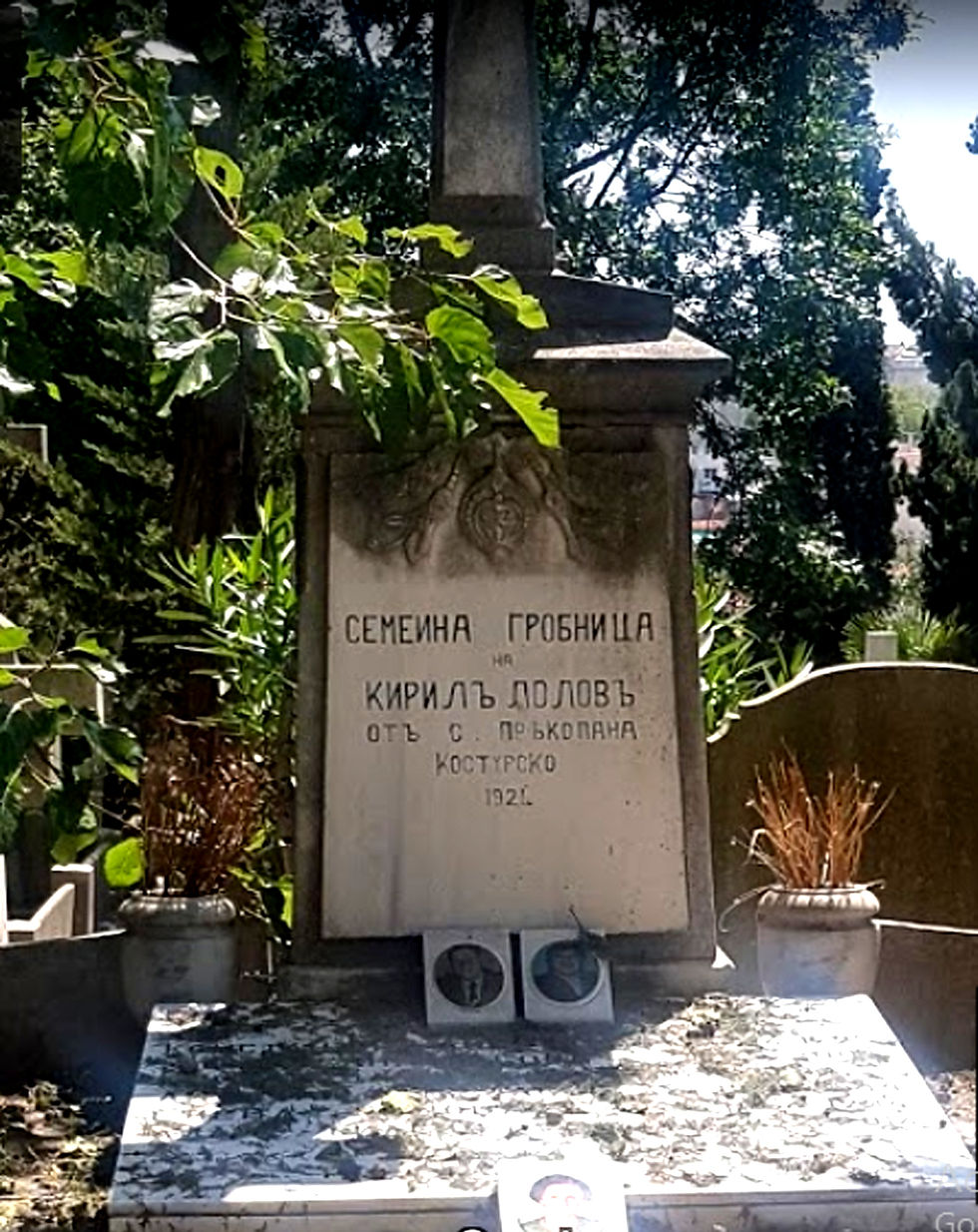
This preference for burial also reflects cultural attitudes toward permanence and place. Graves anchor the dead within the landscape, offering a fixed point for memory and ritual. Families visit cemeteries not only on anniversaries but during major religious holidays, tending graves and renewing offerings. In this way, burial creates an enduring relationship between the living, the deceased, and the land itself. The cemetery becomes a parallel community, inhabited by generations who continue to shape family identity.
Offerings of food and wine are central to Bulgarian mourning practices, both during and after the funeral. At the graveside, family members may pour wine onto the earth or leave small portions of bread, fruit, or sweets. These gestures echo ancient customs predating Christianity, later absorbed into Orthodox practice. The offerings symbolize sustenance for the soul and hospitality extended beyond death, reinforcing the belief that bonds of care do not end with burial.
Candles are among the most visible offerings left for the deceased. Lit and placed carefully at the grave, they represent prayer made tangible, their flames carrying intentions upward. Alongside candles, families often leave personal items—clothing, scarves, or small household objects—chosen to reflect the identity of the deceased. Money may also be placed, sometimes tucked discreetly near the headstone. These offerings are not abandoned; they are replaced or renewed by family members during significant memorial intervals, ensuring that remembrance remains active.

The Orthodox calendar structures grief through time, marking key moments when the living return to the grave. Forty days after death holds particular importance, believed to be a period during which the soul completes its journey and faces judgment. Additional memorials at six months and one year reaffirm the family’s role in supporting the soul through prayer and presence. On these days, offerings are refreshed, candles relit, and necrologs reposted, knitting ritual and remembrance into a continuing cycle.
After funeral rites and cemetery rituals conclude, families gather once more to eat bread and pray together. This post-funeral meal is modest but symbolically rich. Bread, often homemade or purchased fresh, is broken and shared, its simplicity reflecting humility and continuity. Prayer offered before eating reconnects the group to faith, framing nourishment as both physical and spiritual. The act of eating together restores a sense of order after the disorientation of loss.
Wine often accompanies this meal, poured sparingly and shared among mourners. A portion may be set aside in memory of the deceased, a quiet acknowledgment of their absence at the table. Conversation unfolds slowly, mixing silence with stories. Laughter may surface unexpectedly, not as disrespect, but as evidence of life asserting itself. In Bulgarian culture, grief does not exclude warmth; it accommodates it, allowing remembrance to coexist with resilience.
Through procession, burial, offerings, and shared meals, Bulgarian funeral practices articulate a worldview in which death is neither denied nor dramatized. Instead, it is approached with steady ritual, grounded in faith and sustained by community. Walking beside the hearse, tending the grave, renewing offerings, and breaking bread together all affirm a single truth: the dead remain woven into the lives of the living. In Bulgaria, remembrance is not confined to a single day—it is a journey walked repeatedly, across time, with care and intention.
In Bulgaria, mourning is not confined to the days immediately following a funeral. It unfolds in measured phases, guided by custom, faith, and an understanding of grief as a process rather than an event. For the family of the deceased, this period begins with outward signs of loss that signal to the community a shift in daily life. Clothing becomes a language of sorrow, and time itself takes on a different weight, marked by remembrance rather than routine.
Traditional mourning attire in Bulgaria is austere and deliberate. Close family members often dress entirely in black, avoiding jewelry, bright colors, or decorative accessories. The simplicity is intentional, stripping away adornment to reflect the gravity of loss. This visual restraint serves both personal and social functions: it allows mourners to inhabit grief without explanation, and it invites quiet understanding from others. In villages and urban neighborhoods alike, black clothing announces mourning without words.
The duration of this mourning period varies by family and region but often extends for forty days, sometimes longer. During this time, celebratory activities are avoided. Weddings, parties, and music are set aside, creating a pause in social life. This withdrawal is not isolation but reverence—a recognition that joy and loss cannot occupy the same space at once. Mourning is given its own time, protected from interruption, allowing grief to be acknowledged fully.
At the heart of this period lies a deeply held belief rooted in Eastern Orthodox tradition: that the soul remains on earth for forty days after death. During this time, it is said to visit all the places the person knew in life—their home, their workplace, the streets they walked, the fields or courtyards where memories were made. This belief imbues ordinary spaces with sacred significance, transforming the landscape into a map of remembrance. For the living, it offers comfort in imagining the departed lingering gently among familiar surroundings.
The fortieth day marks a turning point in the mourning cycle. On this day, families gather for a second memorial service, often held at a church or graveside. Prayers are offered for the soul’s onward journey, acknowledging its transition from the earthly realm to the divine. This service is quieter than the funeral itself, attended primarily by close relatives and friends. It represents both an ending and a release—a moment when grief begins to loosen its grip.
Following the memorial service, families often share a modest meal, echoing earlier funeral traditions. Bread, wheat dishes, and wine once again appear, reinforcing continuity between life, death, and faith. The repetition of these foods is intentional, grounding memory in sensory experience. Each shared meal becomes a ritual bridge, linking the past to the present and reaffirming the bonds that persist even as mourning evolves.
Throughout these phases, necrologs continue to play a quiet but powerful role. Hung on walls, fences, and building entrances, they serve as mementos rather than announcements alone. Each posted image preserves a moment of recognition, reminding passersby of a life recently present among them. Unlike permanent gravestones, necrologs are fragile, designed to exist in public view yet subject to time and weather. Their presence affirms that memory, too, is vulnerable and requires care.
Families do not remove necrologs when mourning officially ends. Instead, they allow nature and circumstance to decide their fate. Rain softens ink, sunlight fades faces, and wind loosens paper from stone. This gradual disappearance mirrors the shifting texture of grief itself—never erased, but altered. The necrolog’s slow decay becomes a metaphor for remembrance transitioning from the public realm to the private heart.
For Bulgarians, these customs collectively offer structure to sorrow. They guide families through loss without demanding closure or finality. Mourning is acknowledged as cyclical, revisited on anniversaries and religious holidays, when black clothing may return and necrologs may be reposted. In this way, grief remains integrated into life rather than segregated from it. The dead are remembered not as distant figures, but as ongoing presences woven into family and community narratives.
Taken together, Bulgaria’s mourning traditions reveal a culture that confronts death with clarity, humility, and continuity. Through black garments, ritualized time, beliefs about the soul’s journey, and the quiet persistence of necrologs, Bulgarians articulate a relationship with loss that is neither hurried nor hidden. In allowing memory to fade naturally—like paper worn by rain—they accept impermanence without surrendering meaning. Mourning, here, is not an end, but a passage: one that honors the dead while teaching the living how to endure, remember, and remain connected.


Comments