
Paradise of the Pacific
- Apr 28, 2025
- 15 min read
Updated: May 20, 2025
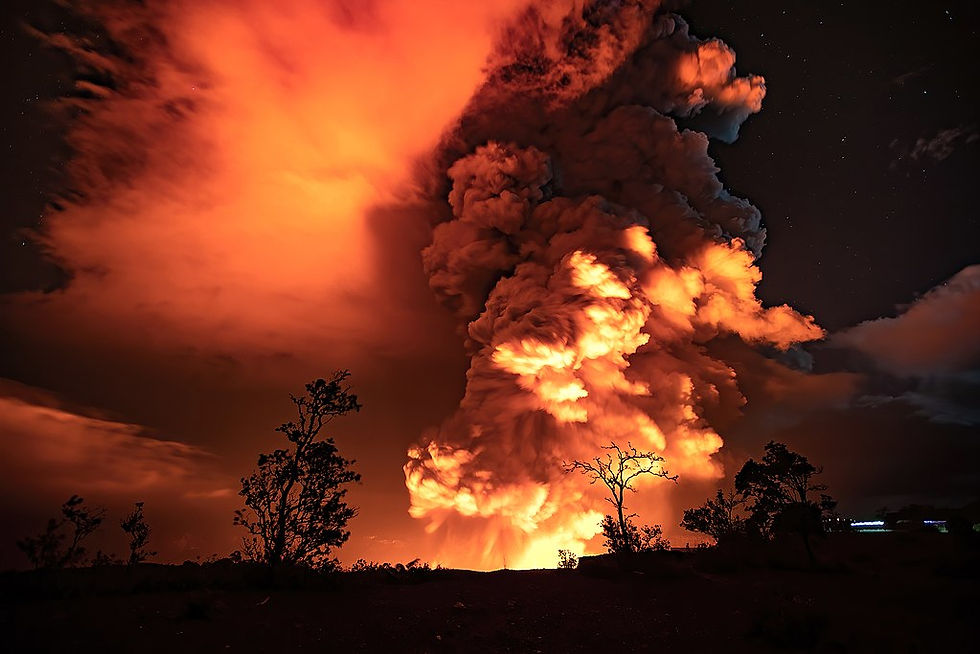
Lava entering the Pacific Ocean at Hawaiʻi Volcanoes National Park in April 2005, ever increasing th
The Hawaiian Islands, located in the central Pacific Ocean, are one of the most ecologically unique and biologically diverse places on Earth. Formed by volcanic activity over millions of years, the islands’ isolation—more than 2,000 miles from any major landmass—has led to the development of a rich and fragile ecosystem characterized by a high rate of endemism, meaning that many species found in Hawaii exist nowhere else in the world. The islands’ ecology is shaped by their varied climate zones, topography, and volcanic origin. Ranging from tropical rainforests and dry shrublands to alpine deserts and coastal dunes, Hawaii supports a mosaic of habitats within a relatively small area. Elevation changes from sea level to over 13,000 feet (on Mauna Kea) create microclimates that foster distinct ecological niches.
One of Hawaii’s most remarkable ecological features is its native flora and fauna, much of which evolved in isolation after being transported by wind, water, or birds. For example, native Hawaiian birds such as the ‘i‘iwi and ‘apapane (honeycreepers) evolved from a single ancestral finch species into dozens of forms adapted to different habitats and food sources. Similarly, plant species like the silversword and the koa tree reflect millions of years of adaptive radiation—a process by which species diversify rapidly to fill ecological roles. Hawaii's marine ecosystems are equally impressive. The islands are surrounded by coral reefs that support over 7,000 species, including monk seals, sea turtles, spinner dolphins, and countless types of fish and invertebrates. Many of these marine organisms are also endemic or rare, and the coral reefs play a crucial role in maintaining coastal biodiversity and protecting shorelines from erosion.
Despite its natural beauty, Hawaii's ecology is extremely vulnerable. The arrival of Polynesians around 1,500 years ago and later European colonists in the late 18th century introduced invasive species, agriculture, and habitat destruction that severely disrupted native ecosystems. Pigs, goats, rats, and non-native plants such as miconia and fountain grass have spread across the islands, outcompeting or destroying native species and altering natural fire regimes. Today, many native Hawaiian species are endangered or extinct. Hawaii has the highest number of endangered species in the United States, largely due to habitat loss, invasive species, and diseases such as avian malaria, which has decimated native bird populations. Conservation efforts are ongoing, including habitat restoration, captive breeding programs, and efforts to control or eradicate invasive species. Protected areas such as Haleakalā National Park and the Papahānaumokuākea Marine National Monument serve as critical refuges for biodiversity.
In conclusion, the ecology of the Hawaiian Islands is a striking example of evolution in isolation and biodiversity in a contained system. However, this same isolation makes its ecosystems highly susceptible to disturbance. Balancing conservation with human activity is one of the major ecological challenges facing Hawaii today. Protecting this natural heritage is not only crucial for Hawaiians but also for global biodiversity.

The Hawaiian archipelago consists of 137 islands, but only eight are considered major islands, and of those, seven are inhabited. These islands—Hawai‘i (the Big Island), Maui, O‘ahu, Kaua‘i, Moloka‘i, Lāna‘i, Ni‘ihau, and Kaho‘olawe—each have distinct geological features, cultural histories, and ecological significance. Together, they form the U.S. state of Hawaii, the only state composed entirely of islands and located in the central Pacific Ocean. The largest and youngest of the islands, Hawai‘i Island is nearly twice the size of all the other islands combined. It is geologically active, home to Mauna Loa (the world’s largest volcano by volume) and Kīlauea, one of the most active volcanoes on Earth. The island features a range of ecosystems—from black sand beaches and lava deserts to lush rainforests and alpine tundra on Mauna Kea, which, when measured from base to summit, is taller than Mount Everest. The Big Island is also a center for astronomy, agriculture (notably coffee and macadamia nuts), and native Hawaiian culture.
Known as the “Valley Isle,” Maui is the second-largest island and a popular tourist destination. It is famous for the Haleakalā Crater, the scenic Road to Hāna, and world-renowned beaches. Maui was formed by two volcanoes, with a central isthmus connecting them. It supports rich biodiversity and agricultural activity, including sugarcane and pineapple (though these industries have declined). Maui also offers important whale-watching sites and marine reserves.
O‘ahu is the most populous island and home to Honolulu, the state capital and largest city. Known as the “Gathering Place,” O‘ahu is the political, economic, and cultural heart of Hawaii. It is the site of Pearl Harbor, Waikīkī Beach, and numerous historical and educational institutions. While heavily urbanized, O‘ahu also features mountain ranges, rainforests, and popular surf spots on the North Shore. Called the “Garden Isle,” Kaua‘i is the oldest of the main islands and is known for its lush landscapes and dramatic geography. Iconic features include the Nā Pali Coast, Waimea Canyon, and Mount Wai‘ale‘ale, one of the wettest places on Earth. Kaua‘i has preserved more of its natural environment and traditional Hawaiian culture than some of the other islands, making it a haven for nature lovers and conservationists.
Moloka‘i is known for its strong Native Hawaiian identity and rural lifestyle. It is less developed and receives fewer tourists than other islands. Notable features include Kalaupapa National Historical Park, a former leper colony, and Hālawa Valley, one of the island’s oldest settlements.
Once a major pineapple plantation, Lāna‘i is now largely owned by private investors and caters to luxury tourism. It has a small population, with attractions like Shipwreck Beach and the Garden of the Gods. Ni‘ihau is privately owned and access is restricted. It is known as the “Forbidden Island” and is home to a small community of Native Hawaiians who speak the Hawaiian language and live largely off the land. Kaho‘olawe is uninhabited and was used for military training until 1990. It is now undergoing restoration and is considered sacred by many Native Hawaiians.

Beyond the eight major islands of the Hawaiian archipelago lies a chain of smaller, lesser-known landforms collectively referred to as the minor islands of Hawaii. These islands, atolls, shoals, and islets stretch northwest from Niʻihau to Kure Atoll, forming a long arc known as the Northwestern Hawaiian Islands. While mostly uninhabited and remote, these minor islands play an important role in Hawaii’s natural heritage, ecological balance, and cultural legacy. The Northwestern Hawaiian Islands include Nihoa, Necker (Mokumanamana), French Frigate Shoals, Gardner Pinnacles, Maro Reef, Laysan, Lisianski Island, Pearl and Hermes Atoll, Midway Atoll, and Kure Atoll, among others. These islands extend over 1,200 miles and are part of the Papahānaumokuākea Marine National Monument, one of the largest marine conservation areas in the world.
Ecologically, the minor islands are some of the most pristine environments in the Pacific Ocean. Although small and often barren in appearance, they support extraordinary biodiversity, including many endemic species of birds, plants, and marine life. Seabirds such as albatrosses, boobies, terns, and frigatebirds breed in large numbers here, free from the predation and human disruption found on the main islands. The islands are also important breeding grounds for the endangered Hawaiian monk seal and green sea turtles. Midway Atoll, the most famous of the minor islands, has both ecological and historical significance. Located near the western end of the chain, Midway was the site of the pivotal Battle of Midway during World War II, where U.S. forces defeated the Japanese navy in 1942. Though no longer a military base, Midway remains a national wildlife refuge and a key site for research and conservation.
Other islands, like Nihoa and Necker, hold deep cultural and archaeological importance. These islands contain ancient Hawaiian shrines and artifacts, indicating that early Polynesians traveled and likely lived or conducted ceremonies there. Despite their current uninhabited status, they are considered sacred by Native Hawaiians and are often referenced in traditional chants and stories as part of the ancestral homeland. Due to their isolation and fragile ecosystems, the minor islands face unique environmental challenges. Climate change and rising sea levels threaten the low-lying atolls with submersion and habitat loss. Additionally, marine debris, particularly plastic waste, accumulates on their remote beaches, harming wildlife. Efforts are underway by conservation groups and the U.S. government to monitor, protect, and restore these critical habitats.
The Hawaiian archipelago is best known for its lush, volcanic islands, but it also includes a diverse and ecologically vital network of atolls and coral reefs, especially within the Northwestern Hawaiian Islands. These formations, which include atolls, reefs, shoals, and pinnacles, are among the most pristine and biologically productive marine environments in the world. They provide critical habitat for wildlife, protect coastlines, and offer insights into climate and ocean health.
An atoll is a ring-shaped coral reef, island, or series of islets that encircle a lagoon, usually formed over submerged volcanic islands. In Hawaii, several such structures exist, most notably in the Papahānaumokuākea Marine National Monument, which covers over 580,000 square miles of ocean and includes a number of remote atolls and reefs.
One of the best-known atolls in Hawaii is Midway Atoll, located near the northwestern end of the archipelago. Midway is composed of three small islets—Sand Island, Eastern Island, and Spit Island—surrounded by a barrier reef and shallow lagoon. Historically significant as the site of the 1942 Battle of Midway, it is now a protected wildlife refuge. Midway’s coral reefs support hundreds of marine species and serve as a breeding ground for over three million seabirds, including the Laysan albatross and black-footed albatross. Another notable atoll is Kure Atoll, the northernmost coral atoll in the world. It is particularly sensitive to climate change and sea-level rise, which threaten its low-lying land and delicate reef ecosystems. Despite its remoteness, Kure is ecologically significant and houses rare seabirds, Hawaiian monk seals, and green sea turtles. Like Midway, it is managed as a wildlife sanctuary and marine reserve.
Pearl and Hermes Atoll, French Frigate Shoals, and Maro Reef are additional examples of Hawaiian atolls and reef systems. French Frigate Shoals is the largest coral reef system in Hawaii and includes a crescent-shaped reef, several small islands, and a lagoon. It is a key habitat for endangered species such as the Hawaiian monk seal and green sea turtle, and serves as a nursery for numerous fish species. Maro Reef, unlike traditional ring-shaped atolls, is a more complex and fragmented coral structure. Its reefs spread out in a pattern that resembles the petals of a flower. Maro Reef is ecologically important for its high coral diversity and serves as a hotspot for marine life. These atolls and reefs are under constant environmental pressure. Coral bleaching caused by warming oceans, ocean acidification, plastic pollution, and rising sea levels all pose significant threats. However, because of their protected status within the Papahānaumokuākea Marine National Monument, these reefs and atolls are better preserved than many others globally.

The Hawaiian Islands are a geologic marvel—an isolated volcanic archipelago in the central Pacific Ocean that provides scientists with a unique window into the Earth's inner workings. The geology of Hawaii is primarily shaped by volcanic activity, as the islands were formed by a hotspot beneath the Pacific tectonic plate. This hotspot continues to drive geological processes that shape the landscape today. A hotspot is a stationary area of intense heat in the Earth’s mantle that creates magma. As the Pacific Plate slowly moves northwest over this hotspot, magma rises through the crust, forming underwater volcanoes that eventually break the surface and become islands. Over millions of years, this process has created the Hawaiian island chain, stretching from the Big Island in the southeast to Kure Atoll in the northwest. The further northwest the islands are, the older and more eroded they tend to be, while the southeastern islands are younger and more geologically active.
The Big Island of Hawaii is the youngest and most geologically dynamic island, home to Mauna Loa and Kīlauea, two of the most famous volcanoes in the world. Mauna Loa is the largest volcano on Earth by volume, while Kīlauea is one of the most active. Volcanic eruptions have continuously reshaped the island, forming new land and altering ecosystems. A third massive volcano, Mauna Kea, is dormant but notable for its height—when measured from its base on the seafloor, it is taller than Mount Everest. The islands display two main types of volcanic rock: pāhoehoe (smooth, ropy lava) and ‘a‘ā (rough, jagged lava). These lava flows are key features in the geological record, offering clues about eruption patterns and island growth over time.
Over time, as an island moves away from the hotspot, volcanic activity ceases, and erosion begins to dominate. Rain, wind, and waves gradually wear down the volcanic rock, forming lush valleys, deep canyons, and rugged coastlines. The island of Kaua‘i, the oldest of the main islands (around 5 million years old), is a prime example. Its dramatic cliffs, such as those along the Nā Pali Coast, and its vast Waimea Canyon, often called the “Grand Canyon of the Pacific,” are products of long-term erosion. Beneath the islands lie extensive lava tubes, dikes, and rift zones, which serve as channels and weaknesses where magma once moved. These underground features contribute to the volcanic hazards that remain a concern on the younger islands. Earthquakes, lava flows, and landslides are part of Hawaii’s geological reality. An underwater volcano, Lo‘ihi, located southeast of the Big Island, is the next island in formation. Though still submerged, it offers a glimpse of Hawaii's future geological development.
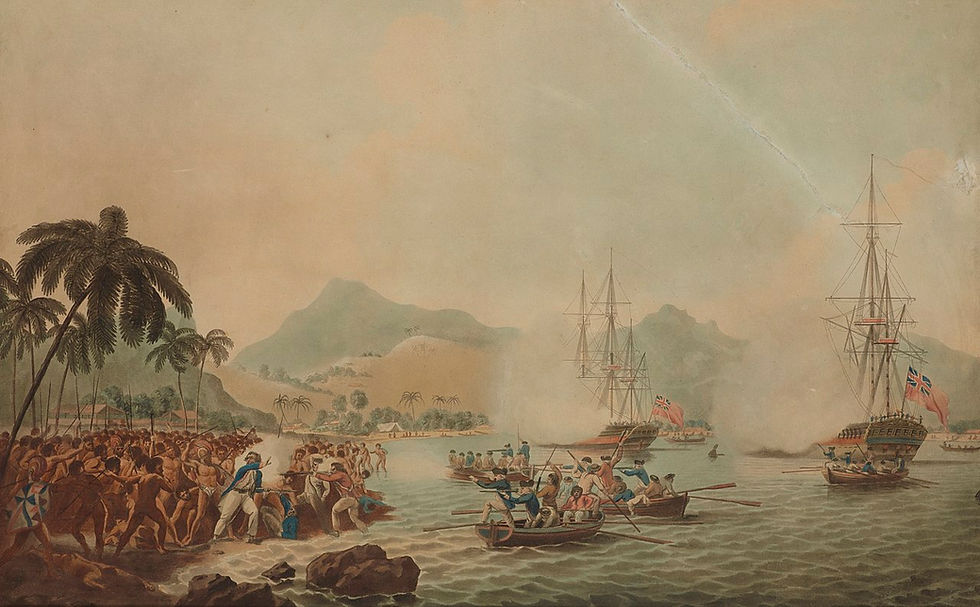
From its early settlement by Polynesian voyagers to its modern status as the 50th state of the United States, Hawaii’s story is one of resilience, cultural blending, and contested sovereignty. Hawaii was first settled by Polynesians over 1,000 years ago, likely from the Marquesas Islands and later from Tahiti. These skilled navigators used stars, ocean currents, and wind patterns to sail thousands of miles across the Pacific Ocean in double-hulled canoes. Once settled, they established a complex society based on chiefdoms (ali‘i), strict social hierarchy, and a religious system known as kapu, which governed daily life through a set of sacred laws and taboos.
For centuries, the islands existed as separate, often warring, chiefdoms until the late 18th century. The arrival of Captain James Cook in 1778 marked Hawaii’s first contact with Europeans. Cook's voyages introduced Western goods, firearms, and diseases that would drastically impact Native Hawaiian society. Cook himself was killed in 1779 at Kealakekua Bay during a conflict with Hawaiians. In the years following European contact, Kamehameha the Great, a chief from the island of Hawai‘i, used warfare and diplomacy to unify the Hawaiian Islands under a single kingdom by 1810. This marked the beginning of the Kingdom of Hawaii, which enjoyed international recognition and established diplomatic relations with major world powers.
The 19th century brought rapid change. Christian missionaries from New England arrived in the 1820s and had a profound effect on Hawaiian society. They introduced Western education, Christianity, and written language, leading to the first Hawaiian-language newspapers and schools. At the same time, Westerners gained increasing control over Hawaii’s economy, especially through the sugar industry, which became the islands’ dominant export and drew laborers from China, Japan, the Philippines, Portugal, and other countries, creating Hawaii’s multicultural population. By the late 19th century, American and European business interests wielded significant power in Hawaii. In 1893, these interests—backed by the U.S. military—overthrew Queen Liliʻuokalani, the last monarch of Hawaii, in a coup d’état. The monarchy was abolished, and in 1898, Hawaii was annexed by the United States without a public vote or the consent of the Native Hawaiian people.
In 1959, Hawaii became the 50th U.S. state, following a statehood vote in which a large majority supported joining the Union. Since then, Hawaii has grown into a major center for tourism, military strategy, and multiculturalism, but the legacy of colonization remains contentious. In recent decades, there has been a cultural and political revival among Native Hawaiians seeking greater recognition, land rights, and sovereignty. Movements to preserve the Hawaiian language, traditional practices, and sacred lands—such as those on Mauna Kea—reflect ongoing efforts to reclaim and protect Indigenous identity and autonomy.
The terrestrial flora and fauna of Hawaii are among the most unique and biologically distinct in the world. Because the Hawaiian Islands are the most isolated archipelago on Earth—over 2,000 miles from the nearest continent—the plants and animals that arrived here evolved in isolation, resulting in an exceptionally high rate of endemism, where species are found nowhere else on Earth. This isolation, however, also makes Hawaii’s ecosystems extremely fragile and vulnerable to disturbance. Hawaii’s native plant life began with seeds carried by wind, water, or birds. Over millions of years, these pioneer species evolved into over 1,000 species of native flowering plants, of which nearly 90% are endemic. Some of the most iconic include:
ʻŌhiʻa lehua (Metrosideros polymorpha): A highly adaptable tree found in nearly every terrestrial habitat in Hawaii, from coastal lava flows to high-elevation rainforests. It plays a critical ecological role and is sacred in Hawaiian culture.
Koa (Acacia koa): A large native tree known for its beautiful hardwood and ecological significance in upland forests.
Silverswords (Argyroxiphium spp.): Striking, silver-leaved plants adapted to harsh alpine conditions, found only on high volcanic slopes such as Mauna Kea and Haleakalā.
Hawaii also has native ferns, mosses, and shrubs that occupy a variety of niches in cloud forests, drylands, and montane zones. However, over time, the introduction of invasive plant species like miconia and fountain grass has outcompeted many natives, altering fire regimes and damaging ecosystems. Hawaii's native terrestrial animals are fewer in number but equally remarkable. Because of its isolation, Hawaii originally had no native land mammals, amphibians, or reptiles (except one bat species). Instead, its fauna evolved from the limited species that made it to the islands, especially birds and insects.
Birds: Hawaii was once home to over 100 unique bird species, many of them forest-dwelling honeycreepers that evolved from a single ancestral finch. Species like the ʻiʻiwi, ʻapapane, and ʻakiapōlāʻau developed specialized beaks and behaviors to exploit different food sources. Sadly, more than half of Hawaii’s native bird species are now extinct, and many others are critically endangered due to habitat loss, introduced predators (like rats and cats), and diseases such as avian malaria.
Insects and Arthropods: Hawaii is home to thousands of endemic insects, including happy-face spiders, drosophila fruit flies, and giant Hawaiian cane spiders. Many of these insects evolved in very specific habitats and are highly specialized.
Mammals: The only native land mammal is the Hawaiian hoary bat (ʻōpeʻapeʻa), which likely arrived by air. All other land mammals—like mongoose, pigs, goats, and deer—were introduced by humans and have since become invasive, damaging native habitats.
Due to habitat destruction, invasive species, and disease, Hawaii is often referred to as the “extinction capital of the world.” Conservation efforts are ongoing, including habitat restoration, fencing to exclude ungulates, captive breeding, and programs to reintroduce native plants and animals.

The Hawaiian Islands are surrounded by one of the most diverse and unique marine ecosystems in the world. Isolated in the central Pacific Ocean, Hawaii’s marine environments include coral reefs, deep-sea habitats, coastal lagoons, and open-ocean ecosystems that support thousands of species—many of which are found nowhere else on Earth. The marine biology of Hawaii reflects both the richness of tropical waters and the ecological sensitivity that comes with geographic isolation. Hawaii's coral reefs are the foundation of its marine biodiversity. Stretching along the coasts of the main islands and especially abundant in the Northwestern Hawaiian Islands, these reefs provide essential habitat for fish, invertebrates, and algae. Hawaiian coral reefs support over 7,000 marine species, including more than 1,250 endemic species—organisms that evolved in Hawaii and are found nowhere else.
Corals themselves are living animals, and in Hawaii, the dominant types are hard corals such as Porites and Montipora. These form the structural basis of reef systems, which shelter species ranging from colorful reef fish like the humuhumunukunukuāpua‘a (Hawaiian triggerfish) to octopuses, eels, urchins, and crustaceans. Hawaii's waters are also home to several species of marine mammals, including the endangered Hawaiian monk seal (Neomonachus schauinslandi), one of the rarest seal species in the world. Monk seals haul out on remote beaches in the Papahānaumokuākea Marine National Monument, a vast protected area in the Northwestern Hawaiian Islands.
Another iconic marine mammal is the humpback whale, which migrates from Alaskan feeding grounds to Hawaiian waters each winter to breed and give birth. These whales are often seen around the islands of Maui, Moloka‘i, and Lāna‘i, and are the focus of ecotourism and conservation efforts. Sea turtles, especially the green sea turtle (honu) and the hawksbill turtle, are also integral to Hawaiian marine life. Green sea turtles are frequently seen in shallow coastal waters, feeding on seagrasses and algae, and often basking on beaches.
Beyond the reefs, Hawaii’s pelagic zones and deep-sea habitats are equally diverse. The islands are surrounded by deep ocean trenches, seamounts, and underwater volcanoes such as Lo‘ihi, which serve as biological hotspots. Deep-sea organisms—like bioluminescent fish, giant squid, and deep-sea corals—live in these regions, though much remains to be studied. Open-ocean predators, such as tiger sharks, tunas, dolphins, and manta rays, roam the pelagic waters. These species play key roles in maintaining ecological balance but are also vulnerable to overfishing and habitat disruption.
Hawaii’s marine ecosystems face increasing threats, including coral bleaching caused by rising ocean temperatures, marine debris, overfishing, and coastal development. Invasive species like the roi (peacock grouper) have disrupted native fish populations, and coral reefs have suffered from disease and pollution. In response, conservation initiatives such as marine protected areas, sustainable fishing regulations, and community-based reef management are working to preserve Hawaii’s marine biodiversity for future generations.
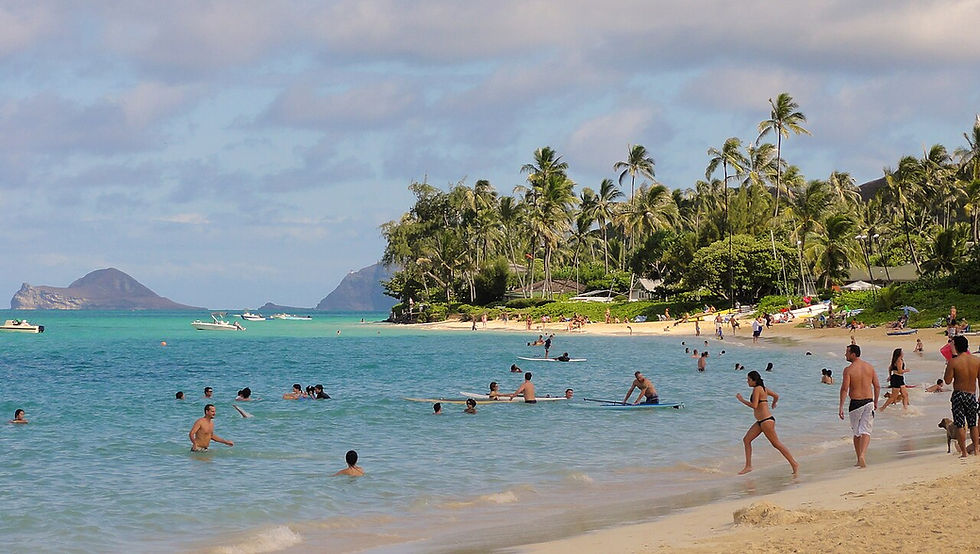
The climate of Hawaii is unique, shaped by the islands' location in the central Pacific Ocean and their dramatic changes in elevation and topography. Although Hawaii is often associated with warm, sunny beaches, the state actually contains 11 of the 13 world climate zones, ranging from tropical rainforests to alpine deserts. This diversity creates a wide variety of microclimates that support rich ecosystems and distinct weather patterns across the islands. Hawaii has a generally tropical climate, with two main seasons:
Kau (summer) from May to October
Hooilo (winter) from November to April
Temperatures are mild and stable year-round, with average coastal temperatures ranging from 78°F (26°C) in winter to 85°F (29°C) in summer. Temperature variation is more influenced by elevation than by season. For example, while the coast may be warm, the summits of Mauna Kea and Mauna Loa on the Big Island can experience freezing temperatures and even snow in winter. One of the most defining features of Hawaii’s climate is the stark contrast in rainfall patterns, influenced primarily by trade winds and orographic lift. The northeast trade winds, which blow almost year-round, bring moist air from the ocean. When this air hits the windward (northeastern) slopes of the islands, it rises and cools, causing heavy rainfall.
As a result, areas like Hilo on the Big Island and Mount Waiʻaleʻale on Kauaʻi—one of the wettest places on Earth—receive over 300 inches (7,600 mm) of rain annually. In contrast, the leeward (southwestern) sides of the islands, which are sheltered from the trade winds, are much drier, often receiving less than 20 inches (500 mm) of rain per year. This creates dramatic differences in vegetation and land use over short distances. Thanks to the varying elevation and rainfall, Hawaii hosts a wide range of climate zones, including:
Tropical rainforest (e.g., Hilo, Hana)
Tropical savanna (e.g., Honolulu)
Arid desert (e.g., Kaʻū Desert)
Temperate and alpine (e.g., Mauna Kea summit)
This climatic diversity supports equally varied ecosystems—from lush forests and waterfalls to dry grasslands and volcanic rock deserts. Hawaii is already experiencing the effects of climate change, including: rising sea levels, threatening coastal communities and beaches, coral bleaching, caused by warming ocean temperatures, changing rainfall patterns, affecting water supply and agriculture, and more frequent and intense storms and droughts. In response, Hawaii has become a leader in sustainability efforts, committing to 100% renewable energy by 2045 and taking action to protect natural resources through reforestation, coastal management, and clean energy initiatives.


Comments