
Maniacs of Maho Beach

There are beaches in the Caribbean that promise tranquility, beaches where the loudest sound is the soft collapse of a wave onto powdered sand. Maho Beach, on the Dutch side of Sint Maarten, is not one of them. Maho is a beach where conversations are interrupted by screaming jet engines, where cocktails tremble in plastic cups, and where tourists voluntarily press themselves against a chain-link fence while a two-hundred-ton aircraft attempts to rearrange the atmosphere directly overhead. It is less a tropical paradise than a carefully managed lapse in judgment.
The first time you see a jet descend toward Princess Juliana International Airport, your brain rejects the evidence before it. The aircraft appears too low, absurdly low, so low that it seems to be making an emergency landing directly onto the beach. Then it gets lower still. People raise their phones triumphantly, grinning as though they are participating in a communal act of madness. A Boeing 747 can pass scarcely more than a few dozen feet above the heads of swimmers. The landing gear hangs down like some mechanical underbelly from a science-fiction film, and for a brief moment everyone on the sand understands exactly how small a human being truly is.
The beach itself is tiny, squeezed against the runway by geography and by the sort of planning decisions that can only happen on small islands where everyone appears to know someone important. Sint Maarten, after all, is half Dutch and half French, which sounds charming until you actually stop to think about it. The island is roughly thirty-seven square miles, yet somehow two European powers looked at this little volcanic speck in the Caribbean centuries ago and decided, yes, this requires an international border. One side uses euros and French wine; the other side leans into casinos and Dutch administrative pragmatism. You can cross from one nation to another while searching for a decent place to park your scooter.
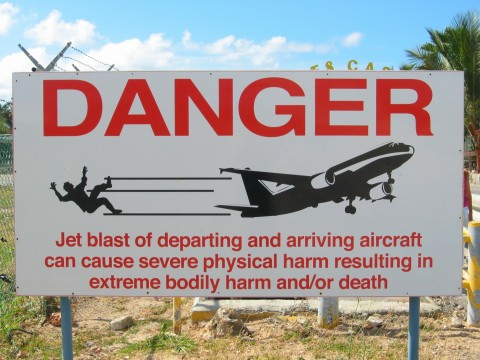
And despite this geopolitical absurdity—or perhaps because of it—the island has developed a talent for embracing wonderfully questionable ideas. Most beaches discourage proximity to jet engines. Maho turned it into a tourist attraction. Bars advertise flight arrival times as though they are happy hour specials. Visitors gather at the famous fence behind the runway to experience “jet blast,” which is a deceptively cheerful phrase meaning “standing directly behind an aircraft engine powerful enough to move furniture, vehicles, and occasionally people.” The warning signs posted nearby are written with the exhausted specificity of lawyers who have seen too much: severe injury or death may occur.
The remarkable thing is that the signs exist because people apparently required clarification. Human beings looked at a roaring jet engine and thought: perhaps I should hold onto this fence while the plane accelerates. And so the island authorities were eventually forced to explain, in printed form, that getting blasted by hurricane-force exhaust may not be conducive to long-term wellness. Videos online show tourists tumbling spectacularly across pavement, coolers cartwheeling into ditches, and beach towels disappearing into the Caribbean trade winds like surrender flags from a doomed army.
Nature, meanwhile, occasionally reminds everyone that Maho Beach is balanced on a very fragile edge. Hurricanes have repeatedly battered Sint Maarten with astonishing violence. Hurricane Irma in 2017 shredded buildings, flattened homes, and transformed entire sections of the island into landscapes resembling war zones. The beach bars vanished. Aircraft hangars crumpled. For a time, there were genuine fears that tourism—the island’s economic bloodstream—might never fully recover. Yet somehow Maho survived, because there will apparently always be travelers willing to sit beneath descending aircraft while drinking rum punches.
The strange resilience of the place becomes part of its charm. Sint Maarten rebuilds because it must. The island lives from tourism, from cruise ships unloading pale visitors in floppy hats, from honeymooners, gamblers, divers, and aviation enthusiasts who treat Maho Beach as sacred ground. There is something deeply Caribbean about this refusal to surrender. Hurricanes come; roofs disappear; airports flood; and then someone opens a beach bar again and starts grilling snapper two weeks later while discussing the next storm season with philosophical exhaustion.
By sunset, Maho Beach begins to feel almost normal. The sea glows orange, music drifts from nearby bars, and children collect shells at the waterline. Then another aircraft appears beyond the horizon, descending impossibly low, and everyone instinctively looks upward again. Cameras rise. Drinks pause halfway to mouths. The engines roar louder and louder until the entire beach vibrates beneath your feet. In most places on Earth, this would be considered a terrible idea. On Sint Maarten, it is just another afternoon at the beach.


Comments