
Historical Civilizations: Dutch Cape Colony
- 1 day ago
- 2 min read
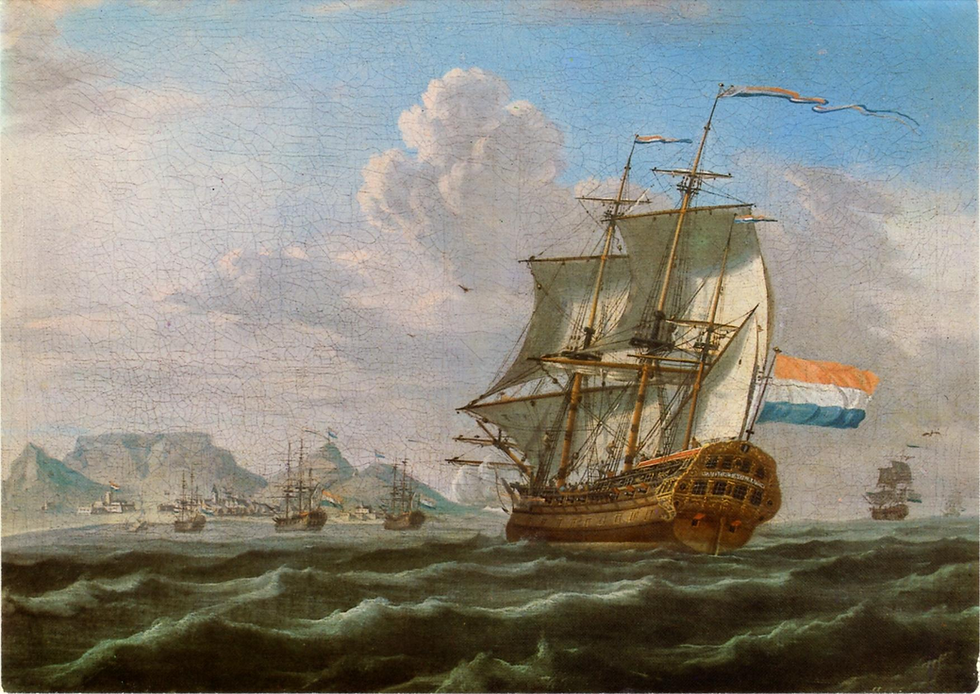
Imagine sailing halfway around the world in the 1600s, carrying spices, silk, tea, and other valuable goods. For Dutch merchants, the long journey between Europe and Asia was part of a giant trading network controlled largely by the Dutch East India Company, or VOC. In 1652, the VOC established a settlement at the Cape of Good Hope, at the southern tip of Africa. The Cape was not originally meant to become a huge colony. Instead, it was designed as a “refreshment station,” where ships could stop for fresh food, water, and repairs on their journeys between the Netherlands and Asian ports. But as more Europeans arrived, the settlement grew—and so did the Dutch presence in southern Africa.
The land around the Cape was already home to Indigenous Khoi communities, who had lived in the region for generations. The Dutch quickly depended on Khoi people for livestock, food, and knowledge of the landscape. But these relationships were often unequal and became increasingly tense as Dutch settlers took more land for farms and grazing. Competition over cattle, water, and territory led to conflicts between the settlers and Khoi communities. Diseases introduced by Europeans also devastated Indigenous populations. Some Khoi people worked for Dutch households and farms, while others resisted the expanding colony. The story of the Cape was therefore not simply one of European settlement—it was also a story of Indigenous people adapting to, resisting, and enduring a rapidly changing world.
As the colony expanded, some settlers were allowed to leave the VOC's direct employment and become free burghers, farming their own land. Other Dutch-speaking farmers gradually moved farther into the interior. These traveling farmers became known as trekboers, from an Afrikaans word meaning “to trek” or travel. They moved with wagons and livestock, searching for new grazing land. Their expansion brought them into increasing contact—and conflict—with Khoi and San communities. Over time, a distinct Cape society developed, combining Dutch traditions with African and Asian influences. Enslaved people brought from places including Indonesia, South Asia, Madagascar, and other parts of Africa also became an important part of the colony's population and culture.
The Dutch Cape Colony remained under VOC control for more than a century, but European wars eventually changed its fate. During the French Revolutionary Wars, Britain feared that France might gain control of the Cape and use it to threaten British trade routes to Asia. British forces captured the colony in 1795, briefly returning it to Dutch control in 1803 before Britain seized it again in 1806. In 1814, the Netherlands formally ceded the Cape to Britain. The Dutch era had ended, but its legacy remained—in the Afrikaans language, architecture, farming traditions, place names, and the complicated multicultural society that developed in southern Africa. The Cape had begun as a tiny stopover for merchant ships; it became the starting point for a much larger and often turbulent history.


Comments