
Historic Civilizations: Byzantine Empire
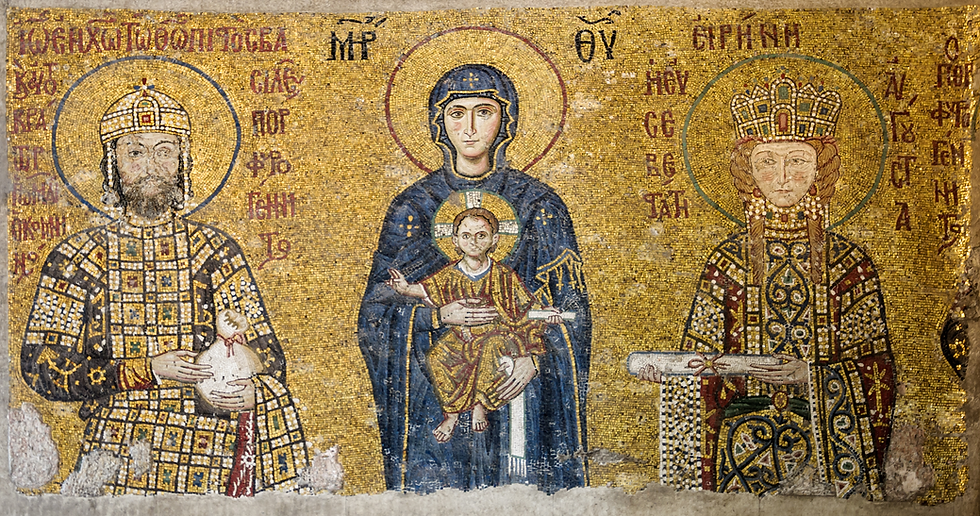
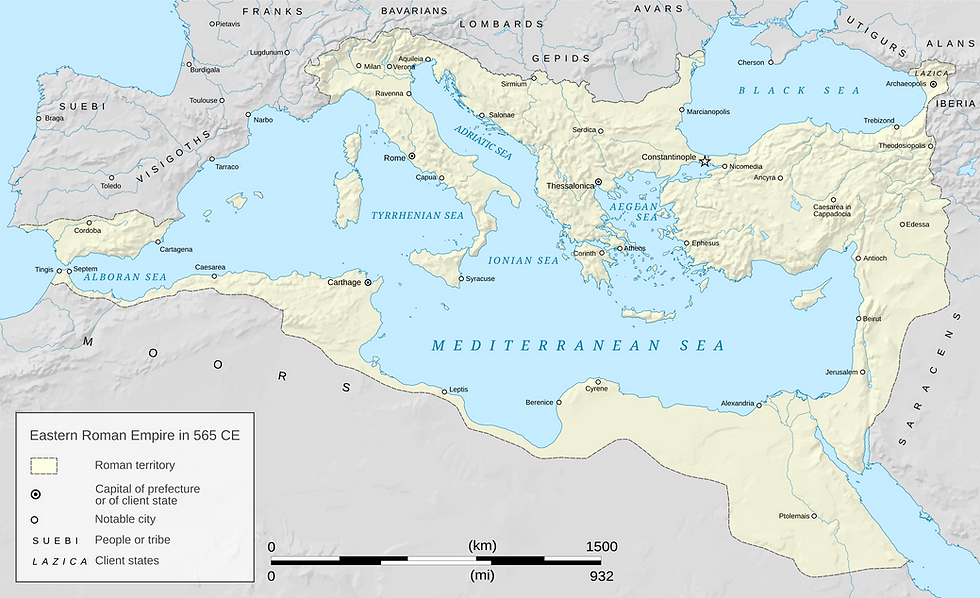
The Byzantine Empire was a powerful civilization that lasted for more than 1,000 years. It began when the eastern half of the Roman Empire continued after the western half fell in 476 CE. Its capital was Constantinople, a busy city located between Europe and Asia. The empire reached its height under Emperor Justinian I in the 500s, when armies reclaimed lost lands and builders created magnificent structures such as Hagia Sophia. Over the centuries, the empire faced invasions, wars, and economic challenges. In 1453, Constantinople was captured by the Ottoman Empire, bringing the Byzantine Empire to an end.
Food was an important part of life in the Byzantine Empire. Most people ate simple meals based on bread, vegetables, beans, and olive oil. Farmers grew crops such as wheat, barley, grapes, olives, figs, and lentils. Vineyards and olive groves covered many parts of the countryside. Fish was common, especially in coastal regions, while wealthier families could enjoy more meat. Honey was often used to sweeten foods because sugar was rare. Markets in cities offered spices, fruits, and other goods brought by merchants traveling across the empire’s trade routes.
Farms formed the backbone of the Byzantine economy. Many families worked small plots of land, growing crops and raising animals. Sheep and goats were especially common because they could graze on rocky hillsides. Cattle were used for plowing fields, while chickens provided eggs and meat. Pigs were also raised in some regions. Farmers carefully followed the seasons, planting and harvesting crops while tending their animals. Successful harvests helped feed towns and cities, while trade allowed extra food and products to move across the empire.
Religion and politics were closely connected in Byzantine society. Most people followed Eastern Orthodox Church, and religious beliefs influenced many aspects of daily life. Emperors were seen as God’s representatives on Earth and often worked closely with church leaders. Religious ceremonies, holidays, and traditions played important roles in communities. Political decisions could affect religious practices, and disagreements over beliefs sometimes led to conflict. The empire’s leaders used both government authority and religious influence to help maintain order and unity.
Daily life varied depending on a person’s social class. Commoners often spent their days farming, fishing, crafting goods, or trading in markets. Children helped their families and learned skills needed for adulthood. In cities, merchants sold products from across Europe, Asia, and Africa. Wealthier citizens lived in larger homes and had access to better food and education. Royal families and nobles enjoyed luxurious clothing, fine foods, and grand palaces. However, even emperors faced heavy responsibilities, including managing the government, leading armies, and responding to threats from enemies.
The Byzantine Empire left a lasting legacy that can still be seen today. Its scholars preserved important knowledge from ancient Greece and Rome, helping future generations learn from the past. Its artists created beautiful mosaics, while its architects designed impressive churches and public buildings. The empire also helped spread Christianity and influenced laws, culture, and trade across many regions. Although the Byzantine Empire collapsed more than 500 years ago, its achievements continue to fascinate historians and young explorers interested in one of history’s most remarkable civilizations.


Comments