
Gods, Heroes, and the Cosmos: Unveiling the Mythology of the Maya
- Oct 30, 2025
- 17 min read
The mythology of the ancient Maya, one of Mesoamerica’s most sophisticated civilizations, is a world of complex gods, spirits, and stories that shaped every facet of their lives. Central to this mythology is the belief that the cosmos was a vibrant and dynamic entity, where life and death, creation and destruction, were in constant interplay. At the heart of Maya mythology are the gods of the Popol Vuh, the sacred text of the K'iche' Maya, who govern everything from the underworld to the celestial realms. These gods, such as Itzamná, the creator god, and Kukulkán, the feathered serpent, symbolize the forces of nature and the cycles of life, rain, and agriculture. For the Maya, mythology was not merely a collection of stories but a means of understanding the universe itself.
Maya myths are deeply intertwined with their agricultural practices. Their gods were seen as protectors of crops, especially maize, which was considered sacred. The myth of the Hero Twins, Hunahpu and Xbalanque, is a foundational narrative that reflects themes of resurrection and renewal, vital concepts for a culture reliant on seasonal cycles. The twins’ journey to the underworld, Xibalba, and their subsequent triumph over death and darkness symbolized the cycles of planting and harvesting, as well as the Maya’s belief in the eternal struggle between light and dark.
Ceremonies and rituals were the living expressions of these myths. Priests and rulers, seen as intermediaries between the gods and the people, would perform complex rituals, including sacrifices, to ensure balance and favor from the gods. Through their rich mythology, the Maya understood themselves not only as part of a spiritual world but as active participants in a divine narrative that transcended the mortal realm.

Maya cosmology, as revealed in the Popol Vuh, offers a remarkable understanding of the universe as a layered, interconnected system of realms. At its core is the belief in three main realms: the heavens, the earth, and the underworld, each with its own distinct characteristics and deities. The heavens, or Balam Na, were inhabited by powerful gods like Itzamná, the creator god, and his consort, Ix Chel, the moon goddess. These gods governed the forces of creation, order, and light. In contrast, the earth was a domain of balance, governed by gods associated with agriculture, fertility, and the cycles of nature. Below, the underworld, Xibalba, was a dark and treacherous place inhabited by gods of death and decay, where the souls of the dead journeyed after their mortal lives.
The Popol Vuh narrates the Maya’s creation story and their cosmological beliefs in intricate detail. The text reveals how the gods created humanity in several stages, starting with beings made of clay, then wood, and finally, maize—the sacred crop that represented the Maya’s deep connection to the earth. The Hero Twins, Hunahpu and Xbalanque, are central figures in this narrative, embodying the struggle between life and death, good and evil. Their journey to Xibalba, where they outwit the death gods, illustrates the eternal cycle of life, death, and rebirth that governed Maya thought and rituals. Their triumph marked not just the return of light, but the renewal of life itself.
Maya cosmology and the Popol Vuh highlight a profound worldview in which the universe is a dynamic, ever-evolving entity. The Maya believed that human actions—particularly through rituals and offerings—could influence the cosmos, ensuring harmony and favor from the gods. The cycle of creation and destruction was not a distant, abstract concept but a tangible reality that shaped daily life. For the Maya, understanding their place within this cosmic order was essential, as it allowed them to navigate the complexities of both the spiritual and material worlds.

According to Maya mythology, the creation of humankind is a story of divine experimentation and a profound connection to the earth. The Popol Vuh recounts the gods’ initial attempts to create beings who could worship and honor them, a fundamental purpose in Maya belief. The first beings were made of clay, but these fragile creations could neither move nor speak, and thus, they were abandoned. The second attempt involved beings fashioned from wood. These creatures could walk and talk, but they lacked souls and failed to properly honor the gods. In response, the gods destroyed them in a great flood, clearing the way for a more successful creation.
The third and final attempt involved the use of maize, the sacred crop central to the Maya’s survival. In this version of creation, the gods used maize dough to form the first true humans—beings endowed with intelligence, speech, and the ability to praise the gods. This new creation, made from the very substance that nourished the Maya people, symbolized a profound bond between humanity and nature. Maize was not only the physical sustenance for the Maya but also a spiritual one, grounding them in their identity and purpose. It was this maize-based creation that was deemed worthy to inhabit the earth and engage in the cosmic dance of life, death, and renewal.
In Maya thought, humankind’s creation was not a one-time event but a process intricately tied to cycles of growth and decay. The idea that humans were made from maize reflects an intimate connection between people and the earth. It also underscores the cyclical nature of existence—the belief that life is nourished, transformed, and sustained by the very elements of nature. This myth emphasizes the Maya understanding that humankind’s fate was interwoven with the land, with nature’s rhythms, and with the divine forces that shaped their world.

Maya mythology is populated with a pantheon of fearsome monsters, each embodying forces of chaos, destruction, and death. Among the most prominent of these are the jaguars, which held a significant place in Maya cosmology. The jaguar was not merely a powerful predator but a symbol of the underworld, where the forces of darkness resided. In Maya thought, the jaguar was seen as a spiritual guardian of the night, a creature that roamed the shadows and bridged the realms of the living and the dead. Jaguars were associated with both war and death, embodying the dangerous and unpredictable nature of the cosmos itself. Their power and ferocity were revered, but also feared, as they represented the unknown forces lurking in the dark corners of existence.
In addition to jaguars, Maya mythology includes deities of disease and affliction, often personified as monstrous figures who brought suffering to humankind. These gods, such as the terrifying Ah Puch, the god of death, and his allies in the underworld, were thought to cause illness, decay, and misfortune. Ah Puch, often depicted with skeletal features and the smell of decay, was particularly associated with the destructive power of death and disease. His role as a bringer of pestilence was a reminder to the Maya of the constant threat of suffering, and of the need to appease the gods through offerings and rituals to ward off misfortune.
These monsters and deities of disease represented the fragile balance between life and death, good and evil, that governed Maya cosmology. The Maya understood the forces of nature as both creative and destructive, recognizing that their existence was sustained by appeasing both benevolent and malevolent deities. By honoring these powerful figures, through rituals, prayers, and sacrifices, the Maya sought to ensure the stability of their world and protect themselves from the dangers lurking in the unseen realms.

In Maya mythology, the story of Xbalanque's marriage to the daughter of the Earth God is a captivating tale that reflects the deep connection between the divine, nature, and the cycles of life. This myth unfolds as Xbalanque, one of the Hero Twins, seeks the hand of the Earth God’s daughter, an embodiment of fertility, growth, and sustenance. The Earth, in Maya thought, was not simply a physical space but a living, nurturing entity, and the gods' interactions with it were integral to the continuation of life itself. Xbalanque's pursuit of the Earth God’s daughter symbolizes the union between the celestial and the terrestrial, a marriage that would ensure the earth’s fertility and the cyclical renewal of nature.
The myth unfolds as a series of trials and challenges, where Xbalanque must prove his worthiness. To win the Earth goddess’s favor, he must demonstrate not only his strength and cunning but also his deep understanding of the earth’s cycles. This process of wooing and winning the goddess is symbolic of the Maya's agricultural practices, where human labor and divine favor must come together to bring forth a bountiful harvest. The Earth goddess, as a symbol of nature’s power, holds the key to the sustenance of all life. Thus, the union between Xbalanque and the Earth goddess is both a spiritual and physical act of cosmic significance, affirming the Maya belief in the interconnectedness of human existence and the natural world.
The marriage between Xbalanque and the Earth goddess also serves as an allegory for the Maya’s own relationship with the land. Just as Xbalanque wins the heart of the Earth goddess through trials, the Maya believed that they too must earn the earth’s favor through careful stewardship and rituals. The myth highlights the importance of balance, respect, and reciprocity between humankind and the earth, emphasizing that the earth is not merely a resource but a living, sacred partner in the cycle of life. This union was a cosmic affirmation of the Maya’s role as caretakers of the land, bound by divine law to protect and honor the earth that sustained them.

The origin of the Sun and Moon in Maya mythology is not confined to a single version but exists in a variety of narratives, each reflecting different aspects of the cosmos and human experience. One prominent version features two brothers, who, after enduring numerous trials in the underworld, achieve victory over the gods of Xibalba. In this version, the brothers are transformed into celestial bodies—one becoming the Sun, the other the Moon. The myth highlights the idea of duality, with the brothers’ complementary roles symbolizing the balance between light and darkness, life and death. The Sun, in this case, is associated with vigor and power, while the Moon, though less brilliant, represents wisdom and mystery, both essential forces for the Maya.
In another version, the Sun and Moon’s creation is tied to a more playful and trickster-filled myth involving monkeys. According to this version, a pair of monkeys are responsible for creating the celestial bodies. The monkeys, revered in Maya culture as symbols of mischief and intelligence, take on a divine role in shaping the world. As the story goes, the monkeys use their cleverness to outwit the gods, creating the Sun and Moon from the fruits of their schemes. The Sun is born as a powerful and radiant being, while the Moon is created as a softer, more distant companion. This version of the myth emphasizes the importance of wit, humor, and subversion in the face of greater cosmic forces.
A third version of the myth involves a youngest son, whose ascension to the sky marks the birth of the Sun. In this narrative, the boy’s mother becomes the Moon, while his older brothers, who fail in their quest to become the Sun, are transformed into pigs. This version underscores themes of familial rivalry, sacrifice, and destiny. The youngest son, often depicted as humble yet destined for greatness, rises to the heavens to bring light to the world. Meanwhile, his brothers, representing the struggles of the past, are relegated to the earth as pigs, a transformation that reflects the cyclical nature of success and failure in Maya thought. This story illustrates not only the creation of the Sun and Moon but also the interplay between fate, effort, and divine intervention, key concepts in Maya cosmology.

Interpreting Maya iconography and deciphering the myths embedded within their artwork presents significant challenges due to the complex interplay of symbolism, ritual, and historical context. Maya artwork, often found in murals, pottery, and stone carvings, is densely packed with visual language that reflects not only the Maya’s religious beliefs but also their daily lives, political struggles, and interactions with the divine. While some symbols are easily recognizable, others require a deep understanding of the Maya worldview and their sophisticated system of writing to fully comprehend. For instance, the jaguar, a recurring motif in Maya art, can symbolize both the power of kingship and the destructive forces of the underworld, depending on the context in which it appears. Thus, distinguishing between divine representation, historical events, and simple decoration becomes a matter of interpreting subtle cultural cues, which vary greatly across different regions and time periods.
The Maya codices, which are ancient books made of bark paper and painted with intricate glyphs and images, pose an even more daunting challenge for scholars. These codices, though invaluable in shedding light on the Maya’s understanding of time, astronomy, and ritual, remain partially deciphered. The glyphic script used in these codices is a combination of logograms and syllabic symbols, which makes translating texts a laborious and ongoing process. Some scholars have made significant progress in understanding certain symbols, but much remains obscure. For example, it is clear that the codices were used for recording astronomical events and divination, but the full meaning of many of the glyphs, and how they relate to the myths and stories of the gods, is still not fully understood. The difficulty of interpreting these texts is compounded by the absence of a consistent key or Rosetta Stone-like artifact to unlock their mysteries.
This challenge is further complicated by the fact that many Maya codices and artworks blend mythological elements with depictions of everyday life and historical events, making it difficult to separate the sacred from the mundane. The rulers who commissioned these works often used mythological symbols and imagery to legitimize their authority and reinforce their divine right to rule. In this sense, deciphering Maya iconography and texts requires not only linguistic and historical expertise but also a sensitivity to the symbolic nature of the artwork. Each symbol and glyph may carry multiple meanings, both literal and metaphorical, depending on its context. As researchers continue to unravel these ancient stories, the task of understanding the Maya’s rich and multifaceted culture remains an ongoing endeavor, revealing new insights with each discovery while reminding us of the complexity of ancient civilizations and their legacies.

In Maya mythology, one of the most dramatic and symbolically rich tales is that of the great crocodile, a monstrous creature representing chaos and destruction. According to the myth, the great crocodile, a vast and terrifying beast that dwelled in the waters of the earth, was ultimately defeated by the heroic forces of the gods. This struggle between the gods and the crocodile is more than just a battle between good and evil—it is a reflection of the Maya’s understanding of cosmic balance and the cyclical nature of life, death, and renewal. The crocodile, often associated with the watery, primordial chaos from which life emerged, symbolizes the destructive potential of the natural world, an untamed force that must be subdued to restore order and harmony.
The defeat of the great crocodile is also interpreted as a metaphor for a great deluge, a catastrophic flood that occurred in the distant past. This flood, which parallels the widespread flood myths found in many cultures worldwide, is seen as a pivotal event in Maya mythology. The great crocodile’s eventual defeat represents the overcoming of this destructive flood, as well as the renewal of life in its aftermath. Much like the other creation myths, where the earth and humans are reborn through trials and sacrifices, the defeat of the crocodile signals the restoration of cosmic order. The waters recede, the land emerges once more, and the Maya people are granted another chance to thrive.
In this context, the crocodile myth serves as a reminder of the powerful and unpredictable forces of nature that shaped the Maya worldview. The flood, like the crocodile itself, is both a destructive force and a necessary cleansing event. This duality reflects the Maya belief that destruction and creation are two sides of the same coin, each vital to the continuation of life. The gods’ victory over the great crocodile—and by extension, the flood—symbolizes humanity's constant struggle to restore balance with the natural world, an eternal cycle that mirrors the agricultural cycles that governed their daily lives.
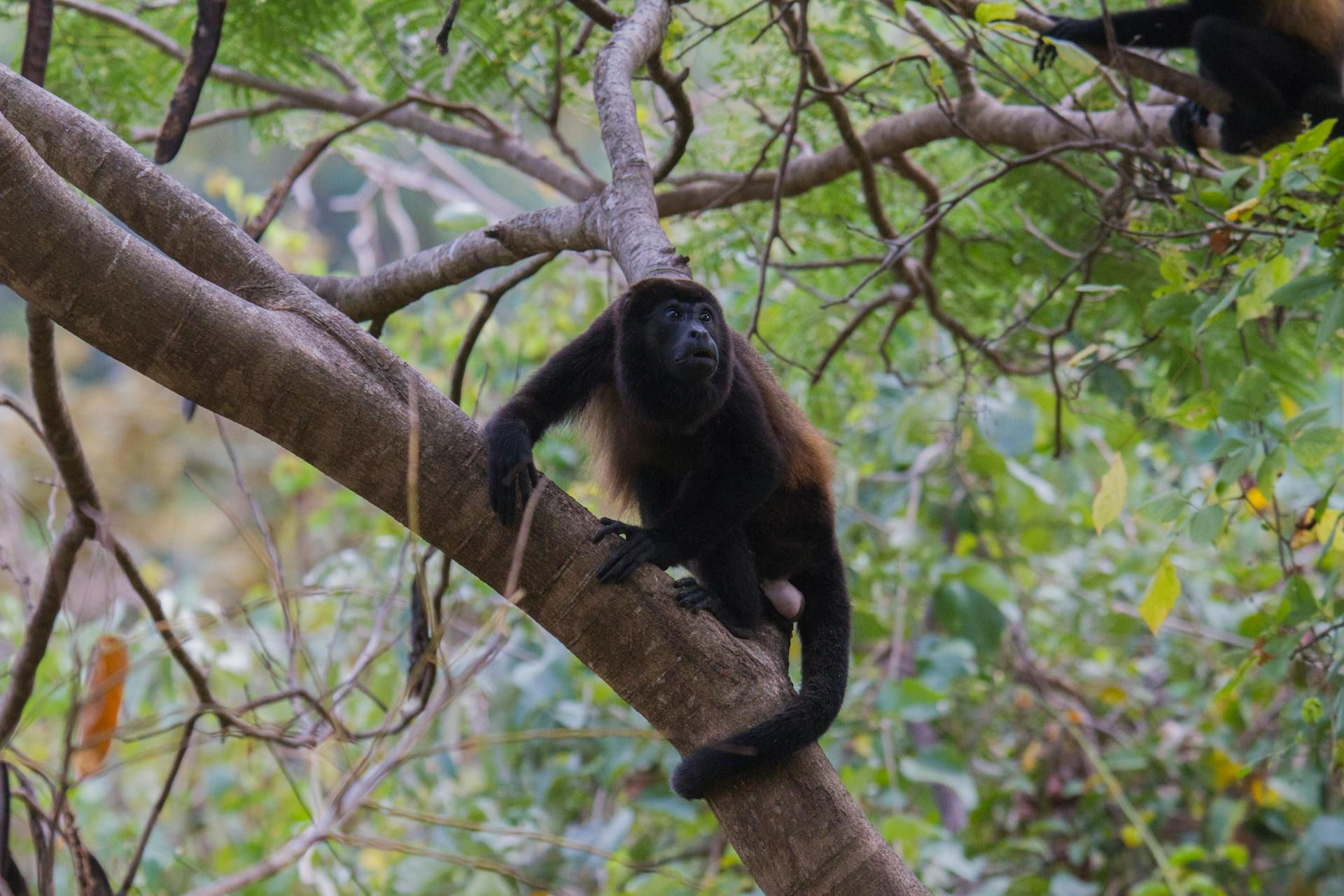


The story of the monkey brothers is one of the more playful and unconventional tales in Maya mythology, offering a unique perspective on the creation of humankind. According to this myth, two monkeys, often portrayed as mischievous tricksters, played a key role in shaping the world and the human race. In the myth, the monkeys are tasked by the gods with the creation of humanity, but their efforts take a less conventional route. The monkeys use their cunning to craft beings out of clay, much as the gods had done in earlier creation myths. However, the first humans they create are flawed—unable to speak, think, or function properly. This imperfection serves as a lesson to the gods about the importance of both skill and divine intervention in the creation process.
As the tale unfolds, the monkeys’ attempts to create life are met with failure, and the gods step in to rectify their mistakes. The first humans, made of wood, are also devoid of souls, reflecting a deeper connection between the body and spirit in Maya thought. These beings, though capable of walking and speaking, lack the vital spark of life that would allow them to worship the gods. Once again, the monkeys’ creation proves insufficient, leading to a great flood that wipes out the wooden beings, symbolizing the need for balance and harmony in creation. This catastrophic event is seen as a necessary purging, clearing the way for a more perfected form of humanity.
Ultimately, the gods step in to create humanity from maize, the sacred crop that was central to Maya life. In this version of the myth, the monkeys’ initial failures are reconciled with the divine act of creation, emphasizing the collaborative nature of human origins. Maize, revered as a life-giving substance, becomes the material for the first true humans, imbued with the ability to think, speak, and honor the gods. The monkeys, while still revered for their role in the myth, also represent the limits of human creativity without divine guidance. This story serves as a reminder of the Maya’s belief in the interconnectedness of nature, the gods, and human effort—each playing an essential role in the ongoing cycle of creation and renewal.

The myth of the Hero Twins, Hunahpu and Xbalanque, is one of the most celebrated stories in Maya mythology, embodying themes of struggle, resurrection, and cosmic balance. The twins are central figures in the Popol Vuh, where they are tasked with overcoming the forces of darkness and death in the underworld, Xibalba. The gods of Xibalba, rulers of the death realm, challenge the twins to a series of dangerous trials, each designed to test their strength, wit, and perseverance. These trials, which include tests of endurance, bravery, and cunning, symbolize the ongoing battle between life and death, with the twins representing the forces of life, light, and renewal.
The Hero Twins’ journey to Xibalba is not only a physical adventure but a spiritual one. The twins are subjected to cruel and supernatural tests, including being forced into a ball game, a common theme in Maya mythology symbolizing the struggle between opposing cosmic forces. Throughout their trials, the twins are killed, only to be resurrected, demonstrating the cyclical nature of life and death in Maya belief. Their resurrection is symbolic of the renewal of life that comes after destruction, embodying the Maya’s understanding of the world as a place of constant change, where death is merely a prelude to rebirth. The twins’ victory over the gods of Xibalba ultimately restores order and balance to the world, ensuring the continuation of life on earth.
The myth of the Hero Twins also highlights the Maya’s reverence for maize, as the twins’ victory over the death gods is seen as a victory for life itself, linked to the agricultural cycles that sustained the Maya people. After their triumph, the twins are transformed into celestial bodies, with Hunahpu becoming the Sun and Xbalanque becoming the Moon. This transformation underscores the Maya’s belief that the divine and earthly realms are deeply intertwined, and that the forces of nature are governed by divine beings who work to maintain balance and harmony. The Hero Twins, in their victory, embody the resilience of the human spirit and the eternal cycle of life, death, and rebirth that is central to Maya cosmology.

In Maya mythology, the story of the Maize Hero is integral to the cultural and spiritual fabric of the civilization, highlighting the sacred role of maize in sustaining both life and the cosmos. Often personified as a heroic figure, the Maize Hero represents not only the physical crop that nourished the Maya but also the broader cycle of death, resurrection, and renewal. In some versions of the myth, the Maize Hero is born to a virgin mother and must journey through the underworld, Xibalba, in order to confront the forces of death and chaos. This journey mirrors the agricultural cycle of planting, death of the seed, and rebirth in the form of new life, deeply resonating with the Maya’s dependence on maize for survival.
The Maize Hero’s trials in the underworld are closely tied to the death and resurrection motifs that run through Maya mythology. Much like the Hero Twins, the Maize Hero is killed by the death gods, only to be reborn. His resurrection is symbolic of the maize seed that is buried in the earth, “dying” in the soil only to emerge as new life. The maize, which is a central food source, also holds divine significance. It represents the Maya people themselves, as the belief in their creation from maize suggests that they are intrinsically connected to the land, with their survival dependent on both the spiritual and physical vitality of the crop.
The Maize Hero’s narrative is a reflection of the Maya’s agricultural practices and their understanding of the cyclical nature of existence. Through ritual and ceremony, the Maya acknowledged this divine connection to maize, offering thanks to the gods for the harvest and seeking favor for future cycles of growth. The Maize Hero is not merely a mythic figure, but a divine embodiment of the sustenance that nourished the people, and his story continues to underscore the symbiotic relationship between humanity, nature, and the gods in Maya thought.

The story of the Jaguar Slayers is a captivating and intense chapter in Maya mythology, rich with themes of courage, cosmic order, and the struggle against darkness. In this tale, two heroic figures—often depicted as warriors—set out on a perilous journey to confront the jaguar, a creature that symbolizes both earthly power and the destructive forces of the underworld. Jaguars, revered for their strength and stealth, were seen as creatures of mystery and danger, embodying the forces that threatened to disrupt the balance between life and death. In the myth, the jaguars are more than mere animals; they are agents of chaos, tied to the underworld, and their defeat represents the triumph of light over darkness.
The Jaguar Slayers' battle against the jaguars is not just a physical confrontation, but a metaphysical one, reflecting the Maya’s belief in the constant tension between opposing cosmic forces. These warriors, like the Hero Twins, are often tasked with tasks that require both strength and wit. The jaguar is not easily defeated, and the slayers must use cunning and strategy to overcome it. Their victory symbolizes the restoration of order, the defeat of chaos, and the reaffirmation of the natural cycles that govern the world. The jaguar, once a force of destruction, is transformed into a symbol of protection and power in the hands of the heroes, who harness its energy to maintain balance in the world.
The tale of the Jaguar Slayers is also deeply tied to the Maya’s relationship with the natural world. The jaguar, a powerful predator in the rainforests and jungles where the Maya lived, was more than just a part of their ecosystem—it was a symbolic figure, representing the primal forces of nature that could either sustain or destroy life. By conquering the jaguar, the slayers were seen as protecting the community from these dark forces, ensuring the well-being of both the land and the people. This myth, like many in Maya culture, reinforces the idea that the natural world must be respected, understood, and sometimes subdued, in order to maintain the cosmic harmony that sustains all life.

Maya mythology continues to hold profound significance for the contemporary Maya people, serving as a cultural touchstone that connects them to their ancient ancestors and the natural world. While modern life has brought changes to the Maya's daily existence, their myths still serve as a vital source of identity, spiritual guidance, and community cohesion. In rural Maya communities, traditional stories are passed down through generations, often through oral storytelling, songs, and rituals. These myths, which speak of creation, struggle, and harmony, remain a living part of Maya culture, offering a sense of continuity and grounding in a rapidly changing world. They help the Maya people understand their place in the universe, linking their lives to the cycles of nature and the divine forces that govern them.
In addition to oral traditions, many Maya communities have worked to keep their ancestral myths alive through artistic expression and public performances. The rich iconography of Maya mythology can be seen in murals, pottery, and sculptures, often created by modern Maya artists who draw inspiration from their heritage. These artworks are not just decorative but carry deep symbolic meaning, reminding the community of their connection to the land, the gods, and the stories that shape their worldview. Cultural festivals, which blend ritual, dance, and music, also serve as living expressions of Maya mythology, where participants reenact stories of the Hero Twins, the Maize Hero, and other figures from their mythology, ensuring these tales remain relevant and celebrated.
Modern Maya scholars and cultural activists are also playing an important role in preserving and revitalizing these ancient myths through academic research and public education. Many Maya communities are incorporating their ancestral myths into school curricula, ensuring younger generations understand the importance of their cultural heritage. This revitalization effort is essential not only for the preservation of the myths themselves but also for the strengthening of Maya identity in the face of global pressures. By keeping their mythology alive, the Maya people continue to honor their ancestors, celebrate their unique worldview, and ensure that their stories, steeped in centuries of history, remain a central part of their cultural fabric for future generations.


Comments