
Four 7th Century Irish Historical Sites Worth Visiting
Updated: May 3, 2025

Cultural heritage management is a critical aspect of archaeology in Ireland where the past and present are often intertwined. Historical sites are locations of national pride for the Republic of Ireland which spent centuries under British rule that included the Great Famine in the 1840's that saw roughly 20% of Ireland's population die from starvation and hundreds of thousands (or more by some estimates) immigrate to new countries in search of better lives. As a result of both a hard-fought independence and a world-wide diaspora, the Irish people and archaeologists in the Republic of Ireland make it a major part of their work to preserve historical sites in the country for both citizens of the Republic and for tourists interested in visiting the landscapes their ancestors once called home. Here are four incredible historical sites from 7th Century Ireland worth visiting on your next trip to the Emerald Isle.
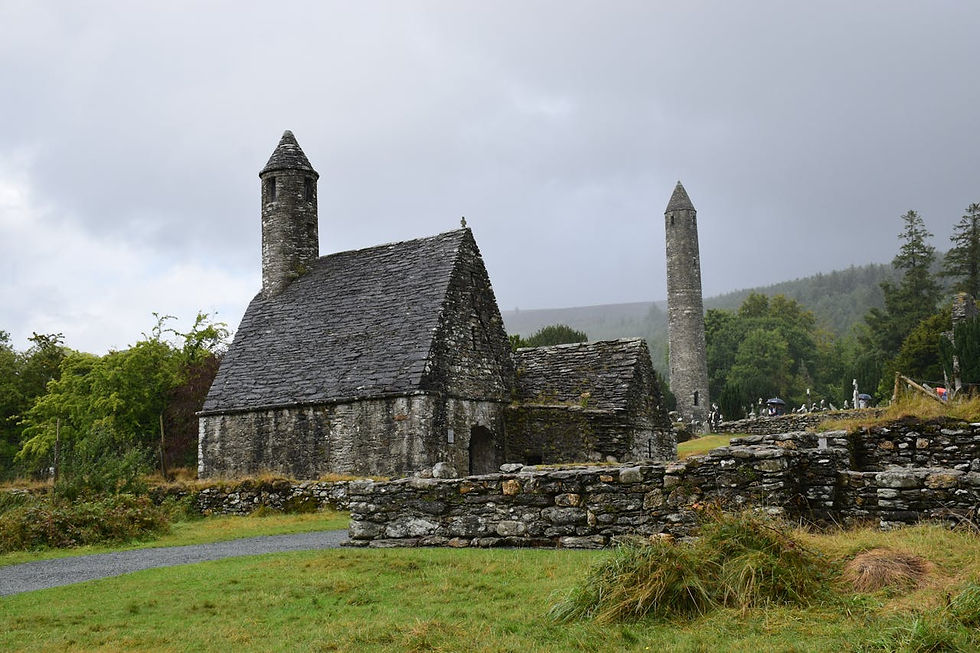
1) Glendalough
When early Christian missionaries first began converting Irish people to Catholicism, the work was conducted through early monasteries in which Catholic priests would live and operate throughout the Early Christian period Glendalough still maintains remains from a monastery first established in the 6th Century founded by Saint Kevin. The Chapel of St. Kevin remains as one of the buildings still standing in the valley where Kevin established his monastery- and was a site of pilgrimage for Early Medieval Irish looking for medical aid from the saint famous for his healing abilities. Other sites on the grounds include the monastic city's gateway, a round tower used both as a bell tower and storage facility by the monks, several individual churches, the remains of a cathedral built later in the 12th and 13th Centuries, and a priests' house. The site also includes nearby natural wonders like waterfalls, hiking trails, rock formations, and lakes- all worth t a day trip to explore.

2) Clonmacnoise
Established in 544 CE, Clanmacnoise in County Offaly is the site of another major early monastery. This monastery was first founded by Saint Ciaran along a major east-west land route where the road crossed the River Shannon. The monastery was a target for Viking raids as late as the 12th Century- which led to its disrepair, but there are still several buildings and ruins visitors can find there. These include the remains of several Early Medieval churches, two towers built later in the 12th Century, three major extant crosses, a cathedral built in the 10th Century, plus a modern interpretive center for visitors.
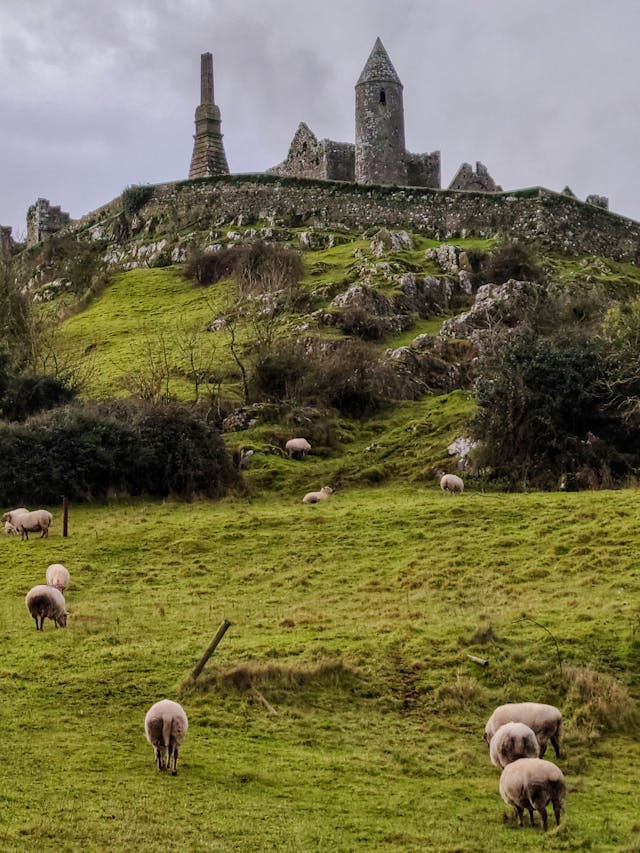
3) The Rock of Cashel
Perhaps the most famous and visited Early Medieval site in Ireland is the Rock of Cashel in County Tipperary. According to local legends, the Rock of Cashel began as the place which Saint Patrick banished Satan to after driving him out of Ireland and where Saint Patrick converted a local Irish king in the 5th Century. The later High King of Ireland Brian Boru had his crowning ceremony at Cashel in 997 before setting top work driving the Vikings out of Ireland. Most of the buildings at Cashel today come from the 11th and 12th Centuries after one of Brian Boru's descendents donated the grounds to the Church. The grounds today include the remains of a cathedral, a tower, and a major graveyard for Medieval Irish aristocrats. The site was a major battleground during the Irish Confederate Wars in which English Parliamentarians and Royalists battled across the British Isles for the future of English politics- so much of the site had been destroyed during the 17th Century, but some reconstruction work has preserved remaining structures for tourists and locals alike to enjoy.
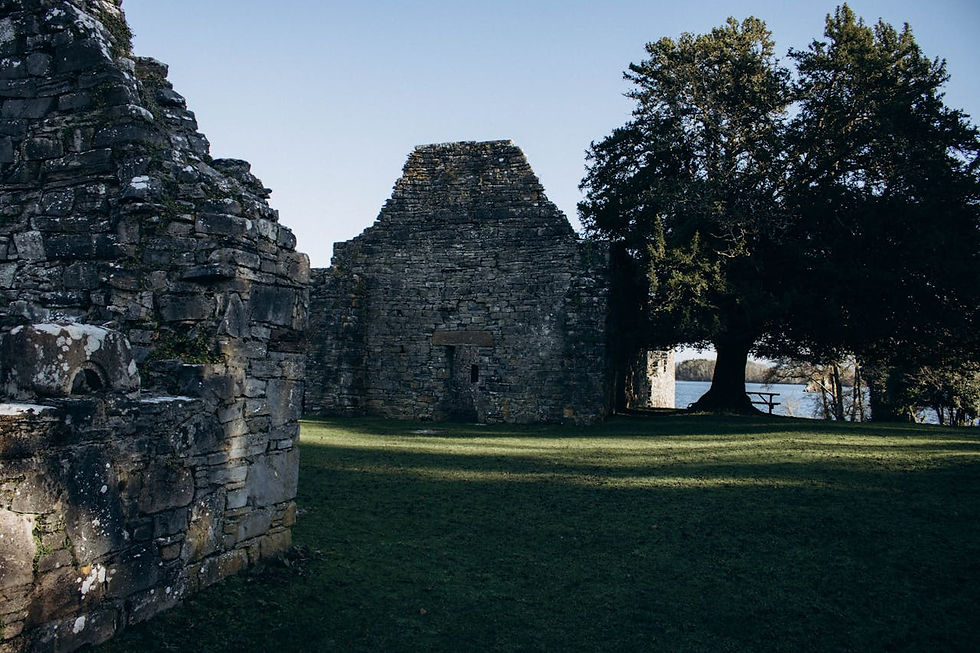
4) Innisfallen
Located on an island in Lough Leane, Innisfallen Abbey was once one of the most important sites in Early Christian Ireland. Founded by Saint Finian in 640 CE, Innisfallen Abbey was home to a group of monks who collectively published a piece of writing known as the Annals of Innisfallen- which chronicled early history in Ireland and may have given name to the lake the abbey rested on- Lough Leane which means "Lake of Learning." Most of what remains of the abbey today was first constructed in the 10th Century and other sections of the site constructed in the 12th Century.
Learn more about Early Medieval Ireland when you join us for our Legendary Ireland tour. Learn more and sign up at AnthroTours.com. Anthro International is a 501(c)3 non-profit devoted to creating free educational materials and engaging films, documentaries, television series, and more to educate audiences across the globe in topics related to history, wildlife, language, and culture. Please consider donating to our organization to support our mission.


Comments