
Egyptian Vultures


BIRDS OF PREY > VULTURES
EGYPTIAN VULTURES
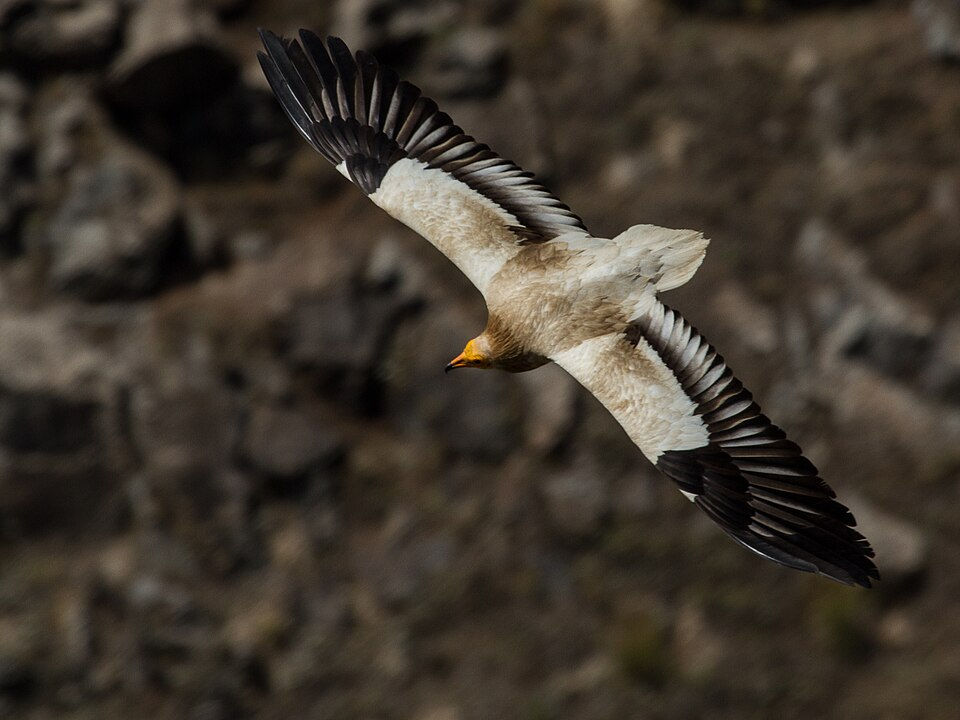
Djibouti’s Egyptian vulture is one of the most intelligent birds on the planet, one of the few species that has utilized tools just like humans. It is incredibly beautiful with spiky white feathers, a bare yellow face, and complete black eyes- it doesn't typically fit the stereotype of the American vulture. Today, it is one of the world’s most endangered scavengers, facing a rapid decline with ecological consequences for desert ecosystems. Despite its name, the Egyptian vulture is not limited to Egypt. It occupies a vast range across Southern Europe, North Africa, the Middle East, Central Asia, and the Indian subcontinent, with winter migrations into the Sahel region of Africa.
COMMON NAME: EGYPTIAN VULTURES SCIENTIFIC NAME: Neophron percnopterus TYPE: Vultures DIET: Carrion GROUP NAME: Committee AVERAGE LIFE SPAN IN THE WILD: 20-25Years SIZE: 19-28 inches WEIGHT: 3-5-5.3 pounds |
Some populations remain in one place year‑round, but many travel thousands of kilometers annually. Satellite tracking has recorded individuals flying more than 5,000 kilometers in a single migration season. Ancient civilizations, such as the Greek and Roman, revered the vultures for their intelligence, seeing them use sticks and natural tools to scavenge. The Egyptian vulture is the only vulture known to use tools. When faced with an ostrich egg, one of the toughest eggs of any animal, the vulture will use stones to hammer the shell until it cracks. They have also been observed using twigs to gather wool for their nests, showing they have an ability for problem‑solving.
What makes this bird even more fascinating is its relation to human culture. In ancient Egypt, the vulture was highly respected. It is the same bird that appeared as a hieroglyph representing the letter “A.” Their goddess Nekhbet, one of the oldest deities in the Egyptian mythology, was depicted as a white vulture. She served as the guardian of Upper Egypt, protector of childbirth, and patron of pharaohs. Her outstretched wings appear in royal iconography for centuries, a sign of divine protection. Egyptians also believed vultures were all female and reproduced without males, which, while biologically incorrect, led to the bird becoming a symbol of motherhood and creation. The Egyptians were not known for their revelations in avian reproductive sciences.
The Egyptian vulture appears in other ancient societies and has influenced traditions as well. In the Hebrew Bible, it is listed among the birds considered “unclean” for eating, a reflection of its scavenging habits, not moral judgment. In the Greco‑Roman world, it was first written about for its intelligence and its role in cleaning the environment. Aristotle described vultures as “self‑purifying,” and the Greeks repeated the belief that they were all-female, interpreting it as a mystical purity. In the Horn of Africa, including Djibouti, the bird still appears in local folklore as a cleaner that keeps villages healthy, and harming one is considered bad luck.

Egyptian vultures feed on small animals, reptiles, insects, eggs, and occasionally animal droppings. While that last one may not sound appetizing, it provides nutrients that help the birds survive harsh environments. Their scavenging habits make them essential to ecosystem health. By consuming decaying carcasses, they help prevent the spread of diseases such as anthrax and rabies. In regions where vulture populations have collapsed, researchers have documented increases in feral dog numbers and disease outbreaks. Unfortunately, the Egyptian vulture is now classified as Endangered by the International Union for Conservation of Nature. Global estimates suggest that only about 12,400 to 36,000 mature individuals remain, and the population is declining.
The causes of the decline are varied, but poisoning is the most significant. In parts of Africa and Asia, poisoned carcasses intended to kill predators like hyenas or feral dogs inadvertently kill vultures as well. In India, the veterinary drug diclofenac, harmless to cattle but lethal to vultures, killed many before it was banned. Power line collisions and electrocutions are another threat for young birds navigating migration routes. Habitat loss from development and agriculture affects their nesting and feeding sites. In some regions, vultures are also hunted for traditional medicine, which is now prohibited. These scavengers are critical to maintaining healthy ecosystems by recycling nutrients, limiting the spread of disease, and stabilizing food webs.
Without them to balance the ecosystems, the disruptance of natural life will eventually effectively disturb human life. The Egyptian vulture is a “flagship species,” meaning that protecting it helps protect other species and habitats in its range. Current action includes several international programs working to rebuild populations. In Europe, EU‑funded LIFE projects support breeding, habitat protection, and anti‑poisoning campaigns. Power companies in several countries are redesigning or insulating dangerous power lines to reduce threats to birds. Captive breeding and reintroduction efforts in places like Spain and the Canary Islands have results with some local populations beginning to recover. Perhaps there is hope for the Egyptian vultures.



Comments