
Celebrating King Kamehameha Day: Honoring Hawai‘i’s Legendary Leader and the Unification of the Islands

Before King Kamehameha I unified the Hawaiian Islands, the archipelago was divided into separate chiefdoms, each ruled by powerful aliʻi (chiefs) who frequently clashed over land, resources, and influence. Born around 1758 on the Big Island of Hawaiʻi, Kamehameha was of noble lineage and grew up during a time of intense political turbulence. His rise to power began after the death of his uncle, Kalaniʻōpuʻu, in 1782. Though Kamehameha inherited religious authority and control of the war god Kū, the island's political power went to his cousin Kīwalaʻō. Tensions between the two factions escalated into the Battle of Mokuʻōhai, where Kamehameha emerged victorious, claiming control of western Hawaiʻi and setting the stage for a broader campaign of conquest.
Over the next decade, Kamehameha solidified his power base on Hawaiʻi and began preparing to extend his rule across the other islands. He strategically formed alliances through marriage, diplomacy, and foreign expertise—most notably from Western advisors like Isaac Davis and John Young, who helped train his warriors and acquire firearms. With these advantages, Kamehameha launched invasions of Maui and Molokaʻi, winning key victories such as the Battle of Kepaniwai in 1790. Meanwhile, internal strife weakened his rivals, including Chief Kahekili of Maui and later Kalanikūpule of Oʻahu. Kamehameha’s decisive victory at the Battle of Nuʻuanu in 1795, where Oʻahu’s forces were driven over the Pali cliffs, brought most of the islands under his control. Kauaʻi, the last holdout, eventually submitted to Kamehameha peacefully in 1810. Through a combination of military strength, political savvy, and strategic alliances, Kamehameha achieved what no other chief had before: the unification of the Hawaiian Islands under a single ruler, laying the foundation for the Kingdom of Hawaiʻi.
The Battle of Mokuʻōhai was a turning point in Kamehameha’s rise, marking the beginning of his long and calculated path to unification. Taking place in 1782 near present-day Keʻei on the island of Hawaiʻi, the battle pitted Kamehameha's forces against those loyal to Kīwalaʻō, who had inherited control of the eastern part of the island. With the support of key chiefs like Keʻeaumoku and his growing cadre of warriors, Kamehameha defeated Kīwalaʻō, who was killed in the fighting. This victory not only gave Kamehameha control over western Hawaiʻi but also legitimized his leadership among rival chiefs. He quickly consolidated his power, establishing a stronghold in Kona and building up his military forces. Though he did not yet rule all of Hawaiʻi Island, the battle set the precedent for his military skill and political ambition. It was the first in a series of campaigns that would eventually transform him into Hawaiʻi’s first king.

Following his early campaigns on Hawaiʻi Island, Kamehameha sought to strengthen his military capabilities to prepare for future conquests. In 1790, one pivotal incident—the Olowalu Massacre on Maui—unintentionally played a role in shaping his rise. After the crew of the American ship Fair American was attacked at Kaʻū by a chief loyal to Kamehameha’s rival, only two men survived: Isaac Davis and John Young. Instead of executing them, Kamehameha recognized their value and spared their lives, making them his trusted military advisors. The Olowalu Massacre itself had involved a retaliatory ambush by Westerners on Maui villagers, highlighting the volatile and often violent contact between Native Hawaiians and foreigners. Kamehameha, however, saw opportunity amid this chaos. With Davis and Young’s expertise in Western weaponry, tactics, and navigation, he transformed his army, integrating muskets and cannons, and laying the groundwork for future victories like those at Kepaniwai and Nuʻuanu.
The capture of the Fair American proved to be a turning point in Kamehameha’s military evolution. Along with gaining two foreign advisors, John Young and Isaac Davis, he acquired the ship’s cache of muskets, gunpowder, and a small cannon—critical resources that would dramatically alter the balance of power among the Hawaiian chiefdoms. With Davis and Young training his warriors in European-style warfare, Kamehameha integrated these new weapons into his existing forces, developing one of the most advanced and disciplined armies in the islands. The cannon, famously named Lopaka, became a symbol of his technological advantage and was used with devastating effect in later battles, including the bloody campaign on Maui. Kamehameha’s ability to combine traditional Hawaiian warfare with Western arms and strategy gave him a decisive edge over rivals still relying solely on spears and clubs. This fusion of forces marked a major leap toward his ultimate goal: unifying the Hawaiian Islands under his rule.
Armed with superior weapons and strategic guidance from Isaac Davis and John Young, Kamehameha launched an invasion of Maui in 1790, leading to the brutal Battle of Kepaniwai in the Iao Valley. The Maui forces, led by Chief Kalanikūpule and backed by his father, the powerful Kahekili, fought fiercely to defend their homeland. However, Kamehameha’s use of muskets and cannons overwhelmed the traditional Maui warriors. The battle was so bloody that, according to oral accounts, the river running through the valley was said to be dammed with the bodies of the fallen—hence the name "Kepaniwai," meaning "the damming of the waters." Although Kahekili was not present during the battle and eventually reclaimed control of Maui, the clash signaled a shift in Hawaiian warfare. Kamehameha’s victory demonstrated the effectiveness of his modernized army and solidified his reputation as a formidable leader determined to unite the islands through force and innovation.

The 1790 Battle of East Hawai‘i was a pivotal conflict during Kamehameha I’s campaign to unify the island. As rival forces clashed fiercely near the volcanic slopes of Mauna Loa, the battle ended with Kamehameha’s victory, solidifying his growing power. Shortly after the fighting, an unexpected eruption blanketed the battlefield in thick volcanic ash. This sudden ashfall preserved the footprints of retreating warriors, leaving a unique and haunting record of the battle. The footprints—imprinted in the soft ash—reveal the desperate flight of defeated soldiers across the rugged landscape. These impressions provide invaluable archaeological insight into the movement and scale of the battle, marking one of the rare moments where natural disaster and human conflict intersect. Today, the 1790 footprints stand as a poignant reminder of the violent struggle for control of Hawai‘i Island and the resilience of its people during a transformative era in Hawaiian history.
The aftermath of the 1790 battle for East Hawai‘i left Kamehameha I in a strengthened position but with a deep awareness that to unify all the Hawaiian Islands, he needed divine favor and powerful symbols of authority. Determined to secure his rule, Kamehameha commissioned the construction of Puʻukoholā Heiau, a massive temple dedicated to the war god Kūkaʻilimoku. Built on the Kohala coast, the heiau was meant to sanctify his military campaign and legitimize his leadership. The temple’s construction was a monumental effort, requiring thousands of laborers to haul lava rocks across rugged terrain. Its completion marked a spiritual turning point, signaling Kamehameha’s commitment to unification under his rule. Puʻukoholā Heiau became both a religious center and a strategic symbol, rallying support among chiefs and warriors. This sacred site played a crucial role in Kamehameha’s eventual conquest of the island of Hawai‘i and the unification of the Hawaiian Islands under one kingdom.
Following the completion of Puʻukoholā Heiau, Kamehameha set his sights on consolidating control over the island, beginning with his strategic landing at Ka‘awaloa Bay near Ka‘ūpūlehu. This landing was crucial, as it provided a gateway to the western coast of Hawai‘i Island and allowed Kamehameha to launch further military campaigns. At Kaweha, Kamehameha’s forces established a strong foothold, using the bay’s natural harbor for resupply and reinforcement. The landing also symbolized his expanding influence and the growing support from ali‘i (chiefs) who recognized his rising power. From this vantage point, Kamehameha was able to organize raids and secure alliances that weakened rival chiefs. His presence at Kaweha not only demonstrated his tactical skill but also reinforced the spiritual authority granted by Puʻukoholā Heiau, uniting both military might and divine sanction in his quest to unify Hawai‘i under his rule.

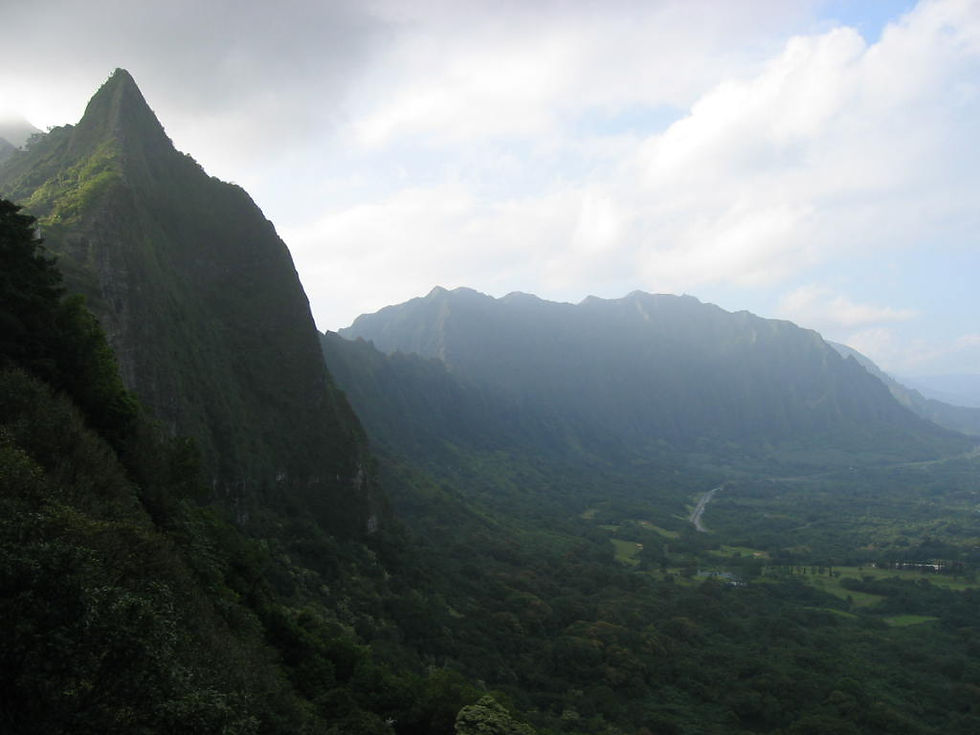
After securing Hawai‘i Island, Kamehameha turned his attention to Oʻahu, the last major stronghold resisting his unification efforts. In 1795, he led a well-prepared invasion force that landed on Oʻahu’s southern shore, strategically choosing a site near Waialua to surprise the island’s defenders. The ensuing Battle of Nuʻuanu was fierce and decisive. Kamehameha’s warriors pushed the enemy forces up the steep cliffs of the Nuʻuanu Valley, cutting off their retreat. Many fell over the cliff’s edge, marking a brutal end to the resistance. This victory was not only military but symbolic, demonstrating Kamehameha’s dominance over rival chiefs and solidifying his control over Oʻahu. The Battle of Nuʻuanu became a turning point in Hawaiian history, paving the way for the complete unification of the Hawaiian Islands under Kamehameha’s rule and establishing the foundation of the Kingdom of Hawai‘i.
Following Kamehameha’s triumphant conquest of Oʻahu, challenges to his authority persisted, including Namakeha’s rebellion. Namakeha, a chief with strong ties to the island’s old ruling factions, resisted Kamehameha’s centralization of power and sought to restore traditional local autonomy. The rebellion erupted soon after the Battle of Nuʻuanu, fueled by lingering loyalty to displaced chiefs and dissatisfaction with Kamehameha’s expanding rule. Despite Namakeha’s local support, Kamehameha’s forces quickly moved to suppress the uprising, demonstrating their superior organization and firepower, including muskets and cannons obtained through foreign contacts. The swift defeat of Namakeha’s rebellion reinforced Kamehameha’s control and discouraged further insurrections. This episode highlighted the challenges of unifying diverse island populations under one monarchy and underscored Kamehameha’s political acumen in balancing force with diplomacy. Ultimately, the quelling of Namakeha’s rebellion helped solidify the newly formed Kingdom of Hawai‘i and marked a step toward lasting stability.
Kamehameha’s initial attempt to conquer Kauaʻi and Niʻihau met with fierce resistance, as the islands’ ruler, Kaumualiʻi, skillfully defended his territory and leveraged the islands’ natural defenses. However, rather than engaging in prolonged warfare, Kamehameha chose a more strategic and diplomatic approach. Recognizing the difficulty of a full military conquest, he pursued a peaceful annexation through negotiation and alliance-building. In 1810, Kaumualiʻi agreed to become a vassal to Kamehameha, effectively ceding control of Kauaʻi and Niʻihau without further bloodshed. This diplomatic victory completed Kamehameha’s vision of a unified Hawaiian Kingdom under his leadership. The annexation not only expanded his domain but also helped stabilize the islands by avoiding destructive conflict. Through a blend of military strength and political savvy, Kamehameha secured lasting peace and unity across the Hawaiian archipelago, solidifying his legacy as the founder of the Kingdom of Hawai‘i.
The unification of the Hawaiian Islands under Kamehameha I marked a profound turning point in the archipelago’s history, ending decades of inter-island warfare and political fragmentation. After consolidating power, Kamehameha established a centralized monarchy that brought relative peace and stability to the islands, fostering an environment where Hawaiian culture, law, and governance could evolve in new ways. His reign introduced a structured legal code known as the Mamalahoe Kanawai or Law of the Splintered Paddle, which protected the rights of common people and travelers, emphasizing justice and order. The unified kingdom facilitated increased trade and contact with Western powers, which brought new technologies, weapons, and economic opportunities but also introduced challenges, including diseases and cultural changes. Kamehameha’s leadership forged a distinct Hawaiian identity that blended traditional values with emerging global influences, laying the groundwork for a sovereign nation recognized by foreign governments.
The lasting legacy of Hawai‘i’s unification resonates to this day, symbolizing both the strength and resilience of the Hawaiian people. Kamehameha’s success in uniting the islands preserved the native monarchy and cultural traditions during a period of intense global change and colonial pressure. His strategic diplomacy and military prowess are celebrated in Hawaiian history and folklore, embodying the spirit of leadership and unity. Today, monuments such as Puʻukoholā Heiau stand as tangible reminders of this pivotal era, while celebrations like Kamehameha Day honor his enduring impact. Though the Kingdom of Hawai‘i would later face overthrow and annexation, the legacy of unification continues to inspire movements for cultural revival, sovereignty, and pride among Native Hawaiians, ensuring that Kamehameha’s vision of a strong, unified Hawai‘i lives on in the hearts and minds of its people.


Comments