
Africa's First World War
- Apr 19, 2025
- 13 min read
Updated: Apr 29, 2025


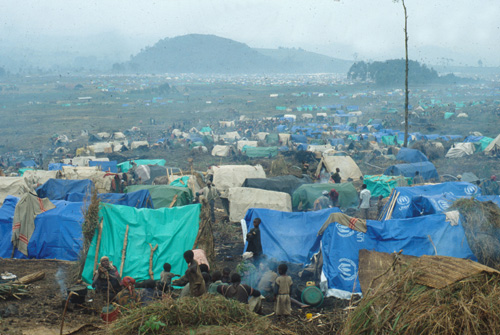
The First Congo War, fought from 1996 to 1997, was a pivotal conflict in Central Africa that led to the overthrow of longtime Zairean dictator Mobutu Sese Seko and the rise of Laurent-Désiré Kabila. This war marked the beginning of a broader regional crisis often referred to as “Africa’s World War,” due to the involvement of multiple African nations and armed groups. The origins of the conflict lay in the aftermath of the 1994 Rwandan Genocide. After the Rwandan Patriotic Front (RPF), led by Paul Kagame, seized power in Rwanda, members of the defeated genocidal regime, including the Interahamwe militia, fled to eastern Zaire (now the Democratic Republic of the Congo). These groups, along with Hutu refugees, settled in camps near the Rwandan border and began launching attacks into Rwanda, destabilizing the region. The Zairean government, under Mobutu, failed to disarm them, which was perceived as a direct threat by Rwanda and Uganda.
In response, Rwanda and Uganda backed a rebel coalition known as the Alliance of Democratic Forces for the Liberation of Congo-Zaire (AFDL), led by Laurent-Désiré Kabila. The AFDL was initially a loose alliance of anti-Mobutu factions, including Congolese Tutsis known as Banyamulenge, who had faced decades of discrimination and persecution in eastern Zaire. Rwanda, in particular, used the AFDL as a proxy force to secure its western border and neutralize Hutu militias in the region. The war began in late 1996 when the AFDL, with direct support from Rwandan and Ugandan troops, launched a military campaign in eastern Zaire. The offensive quickly gained momentum due to Mobutu’s weakened regime, rampant corruption, and the disintegration of the Zairean army. As the AFDL advanced westward, it encountered little resistance, and towns fell one by one.
During the campaign, significant human rights violations occurred, especially against Hutu refugees, including women and children. Many were killed or forced to flee deeper into the Congolese interior. The United Nations and human rights organizations later expressed concern over possible war crimes and crimes against humanity committed by the AFDL and its allies.
By May 1997, the AFDL had reached Kinshasa, the capital of Zaire. Mobutu, seriously ill and politically isolated, fled into exile. On May 17, 1997, Laurent Kabila declared himself president and renamed the country the Democratic Republic of the Congo (DRC), ending over three decades of Mobutu’s rule. However, the war did not bring lasting peace. Kabila quickly alienated his former allies, including Rwanda and Uganda, setting the stage for the Second Congo War that erupted in 1998. The First Congo War thus marked both the end of one era and the beginning of a prolonged period of conflict and instability in the region.

The 1990s marked the final chapter of Zaire, a country ruled for over three decades by Mobutu Sese Seko. Once seen as a Cold War ally of the West and a symbol of African post-independence leadership, Zaire collapsed into political decay, economic ruin, and eventual war. The decade saw the unraveling of Mobutu’s authoritarian regime due to widespread corruption, mismanagement, social unrest, and external pressures—both regional and international.
At the heart of Zaire’s decline was Mobutu’s increasingly ineffective and kleptocratic rule. Mobutu had consolidated power since 1965 through patronage networks, repression, and manipulation of ethnic divisions. By the 1990s, his grip on power weakened significantly. The end of the Cold War in 1991 meant that the U.S. and other Western nations, which had previously supported Mobutu as a bulwark against communism, began to withdraw financial and diplomatic support. Without this backing, Mobutu lost international legitimacy and economic aid, deepening the country's crisis.
Economically, Zaire was in free-fall. Rampant inflation, a decaying infrastructure, and the looting of state resources by the elite devastated the economy. Public services collapsed: schools, hospitals, and civil institutions ceased to function. The Zairean currency, the zaire, became virtually worthless, and most citizens resorted to informal markets or bartering to survive. The state itself became hollow, existing largely in name while power was exercised through corrupt networks of loyalty and coercion.
In an attempt to pacify growing unrest and demands for reform, Mobutu agreed in 1990 to transition to a multi-party democracy. However, this process was manipulated and stalled. National conferences and talks were dominated by elites loyal to the regime, and promises of reform were repeatedly broken. Political repression continued, and Mobutu maintained control over the military and key institutions, stalling any meaningful democratization. Meanwhile, ethnic tensions, particularly in eastern Zaire, were intensifying. Long-standing grievances over land ownership, citizenship, and ethnic discrimination—especially involving the Banyamulenge, Congolese Tutsis—fueled instability. The influx of Rwandan Hutu refugees and génocidaires after the 1994 Rwandan Genocide further destabilized the region. These armed elements used refugee camps as bases for cross-border attacks into Rwanda, provoking a regional crisis.
By 1996, these internal and external pressures culminated in open conflict. Rwanda and Uganda, frustrated with Zaire’s inability to deal with the security threats on its soil, backed a rebellion led by Laurent-Désiré Kabila. The resulting First Congo War was swift. Mobutu’s army, underpaid and demoralized, offered little resistance. After months of advancing through the country, Kabila’s forces reached Kinshasa in May 1997. Mobutu fled into exile, and Zaire ceased to exist, renamed the Democratic Republic of the Congo.

Ethnic tensions were a major destabilizing force in 1990s Zaire, playing a key role in the country's political collapse and the eventual outbreak of the First Congo War. Under the long rule of Mobutu Sese Seko, ethnic divisions were often exploited for political gain. As the state weakened throughout the decade, these divisions deepened, particularly in eastern Zaire, where competing claims to land, identity, and citizenship turned violent.
One of the central flash points was the status of the Banyamulenge, a Tutsi-speaking community of Rwandan origin living in the South Kivu region of eastern Zaire. Although many Banyamulenge had lived in the region for generations, their Zairean citizenship was constantly questioned by the government and local communities. During periods of political instability, they were often scapegoated and excluded from political and economic life. Tensions flared in the early 1990s when Zairean politicians and local leaders launched campaigns to expel Banyamulenge communities, branding them as foreign "invaders."
Mobutu’s regime, facing mounting opposition and dwindling legitimacy, used such ethnic divisions to manipulate local politics. In many cases, the government backed indigenous groups against minority populations like the Banyamulenge to gain popular support. This tactic, however, only worsened communal violence and created long-standing grievances. In regions like North and South Kivu, conflict over land ownership, political power, and resource control turned violent, as multiple ethnic groups—such as the Hunde, Nande, Hutu, and Tutsi—competed in an increasingly lawless environment. The situation was further exacerbated by the 1994 Rwandan Genocide, which triggered a massive refugee crisis. Over a million Rwandan Hutu refugees, including armed members of the former regime and the genocidal Interahamwe militia, fled into eastern Zaire. The sudden influx of refugees strained local resources and further inflamed ethnic tensions, particularly between Hutu and Tutsi populations. Armed groups emerged on all sides, and the eastern provinces became militarized zones where communal violence, looting, and massacres were common.
Local militias—some aligned with Mobutu's regime, others acting independently—exploited the chaos. In response, the Banyamulenge and other Tutsi groups began to organize for self-defense. With backing from Rwanda and Uganda, these groups later became the nucleus of Laurent-Désiré Kabila’s rebel force, the AFDL (Alliance of Democratic Forces for the Liberation of Congo-Zaire), which overthrew Mobutu in 1997. Ethnic tensions in Zaire during the 1990s were not just local issues but part of broader regional dynamics. The porous borders, shared ethnic identities across nations, and the collapse of state authority in Zaire turned the conflict into a regional security crisis. The inability or unwillingness of Mobutu’s regime to resolve these tensions—choosing instead to manipulate them—contributed directly to the country’s disintegration.


The Rwandan Genocide, one of the most horrific atrocities of the 20th century, occurred over approximately 100 days between April and July 1994. During this period, an estimated 800,000 to 1 million Tutsi and moderate Hutu were systematically slaughtered by extremist elements within Rwanda’s majority Hutu population. The genocide was the culmination of long-standing ethnic tensions, political manipulation, and international indifference. The roots of the genocide stretch back to Rwanda's colonial past. Under Belgian rule, the colonial administration reinforced and institutionalized ethnic divisions between the Tutsi minority—traditionally pastoralist elites—and the Hutu majority, mostly agriculturalists. The Belgians favored Tutsis for education and leadership roles, deepening resentment among the Hutu. After Rwanda gained independence in 1962, power shifted to Hutu-led governments, and waves of violence and repression were directed at Tutsis. Many Tutsis fled into exile, particularly to Uganda, Burundi, and Zaire.
By the early 1990s, tensions intensified. The Rwandan Patriotic Front (RPF), a rebel group composed largely of Tutsi exiles, invaded Rwanda from Uganda in 1990. This led to a civil war with the Hutu-led government of President Juvénal Habyarimana. Although a peace agreement (the Arusha Accords) was signed in 1993, hardline Hutu extremists opposed any power-sharing with the RPF or political reforms. The immediate trigger for the genocide occurred on April 6, 1994, when President Habyarimana’s plane was shot down near Kigali, killing him and the president of Burundi. Though the culprit remains unknown, Hutu extremists blamed the RPF and used the incident as a pretext to launch a coordinated campaign of mass killing. Within hours, militias such as the Interahamwe, supported by the Rwandan army and government officials, began targeting Tutsi civilians and moderate Hutu politicians. The genocide was not a spontaneous outbreak of violence but a premeditated and organized effort. Roadblocks were set up to identify and kill Tutsis, entire families were massacred, and thousands were slaughtered in churches, schools, and hospitals where they had sought refuge. Hutu civilians were often pressured or coerced into participating in the killings, creating a society-wide crisis of complicity and terror.
The international response was tragically inadequate. Despite clear warnings and signs of genocide, the United Nations and major world powers failed to act decisively. The UN peacekeeping mission in Rwanda (UNAMIR), led by General Roméo Dallaire, was drastically under-equipped and had its mandate restricted. Western nations evacuated their own citizens but did little to stop the mass killings. The genocide ended in July 1994 when the RPF, under the leadership of Paul Kagame, captured Kigali and defeated the genocidal regime. Over two million Hutu civilians, including perpetrators, fled into neighboring countries, particularly Zaire, creating a major refugee crisis and sowing the seeds for future regional conflict, including the First and Second Congo Wars.


Though long marginalized, the Banyamulenge became key actors in the First Congo War, both as participants in the rebellion against Mobutu Sese Seko and as a symbol of broader regional and ethnic tensions in Central Africa. The Banyamulenge are descendants of Tutsi pastoralists who migrated to the South Kivu region of Zaire during the 19th and early 20th centuries. Despite generations of residence, they were often considered "foreigners" by other Congolese ethnic groups and were frequently denied citizenship and land rights. Their ambiguous legal and political status was a source of long-standing discrimination and tension, exacerbated by Mobutu’s regime, which manipulated ethnic divisions to maintain control.
By the 1990s, the political environment in Zaire was highly unstable. The economy had collapsed, the state was dysfunctional, and Mobutu’s authority was in rapid decline. In this context, ethnic tensions in eastern Zaire intensified, especially after the 1994 Rwandan Genocide, which brought over a million Hutu refugees—and members of the genocidal Interahamwe militia—into eastern Zaire. These Hutu militias began attacking Tutsi populations in the region, including the Banyamulenge, creating a direct security threat to their communities.
Facing existential danger and lacking protection from the central government, the Banyamulenge began to organize militarily for self-defense. Their efforts gained support from Rwanda, which sought to eliminate Hutu militant groups in Zaire and protect Tutsi populations. In 1996, Banyamulenge fighters formed the vanguard of the Alliance of Democratic Forces for the Liberation of Congo-Zaire (AFDL), a rebel coalition led by Laurent-Désiré Kabila and backed by Rwanda and Uganda. This force launched an armed rebellion against Mobutu’s regime, sparking the First Congo War.
The Banyamulenge rebellion, while initially framed as a localized ethnic uprising, quickly became part of a larger regional conflict. As the AFDL advanced across Zaire, the Banyamulenge gained both military power and political influence. However, their close ties to Rwanda and their visible role in the conflict led to growing resentment among other Congolese groups, who saw them as foreign proxies rather than legitimate national actors. After Kabila seized power in 1997 and became president, tensions between his regime and his former allies, including the Banyamulenge, soon resurfaced. Kabila distanced himself from Rwanda and the Tutsi-dominated AFDL factions. Many Banyamulenge leaders felt betrayed and marginalized. These tensions contributed directly to the outbreak of the Second Congo War in 1998, where former allies turned into enemies and the Banyamulenge again took up arms—this time in opposition to Kabila.
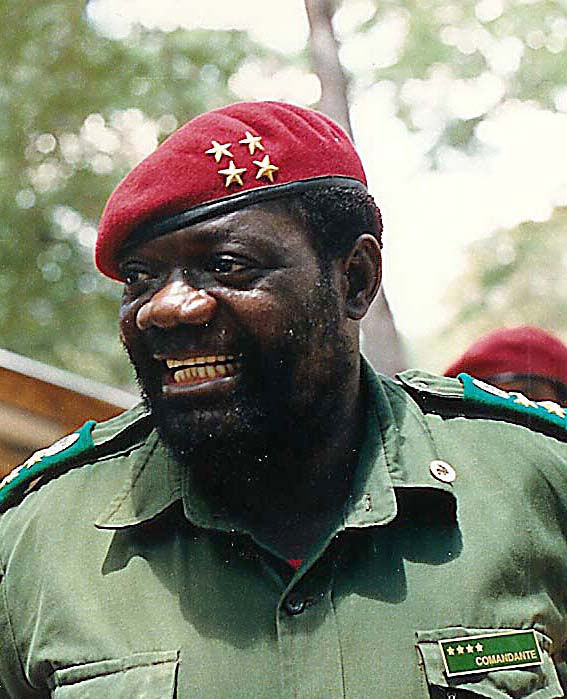
The First Congo War was not only a civil conflict within Zaire, but also a complex regional war heavily influenced by foreign actors. The involvement of neighboring countries—particularly Rwanda, Uganda, Burundi, Angola, and Sudan—played a decisive role in shaping the conflict’s outcome. These nations were motivated by a combination of security concerns, political interests, and regional ambitions. The most pivotal role was played by Rwanda, which directly supported the rebellion led by Laurent-Désiré Kabila and the Alliance of Democratic Forces for the Liberation of Congo-Zaire (AFDL). After the 1994 Rwandan Genocide, over one million Hutu refugees, including members of the genocidal regime and Interahamwe militia, fled into eastern Zaire. These groups used refugee camps as bases to launch attacks into Rwanda, creating an ongoing security threat. The Zairean government under Mobutu Sese Seko failed to neutralize these groups, prompting Rwanda to intervene militarily.
Rwandan troops crossed into eastern Zaire in 1996 under the pretext of dismantling the refugee camps and pursuing génocidaires. However, they soon became deeply involved in the war, providing arms, logistical support, and troops to the AFDL. Rwandan forces were instrumental in planning military operations, training rebel forces, and leading assaults on key towns. Rwanda’s strategic goals included neutralizing Hutu militias, protecting the Banyamulenge (Congolese Tutsis), and installing a friendly government in Kinshasa.
Uganda, led by President Yoweri Museveni, also played a key role. Uganda shared Rwanda’s concern over cross-border militancy and instability. The government provided military support and political backing to the AFDL. Uganda's participation was also driven by economic interests, regional influence, and an alliance with the Rwandan Patriotic Front (RPF), with whom they had historical ties.
Burundi, facing its own Tutsi-Hutu conflict, supported the AFDL as well, mainly for similar security reasons. Burundian rebels were believed to be operating out of Zairean territory, and the war presented an opportunity to eliminate them while supporting allied forces. Angola’s involvement was driven by its own civil war. The Angolan government, led by the MPLA, joined the anti-Mobutu coalition to eliminate support bases for UNITA, the rebel movement it was fighting. Mobutu had long supported UNITA, making his removal strategically important for Angola. Angolan troops provided crucial firepower and were instrumental in the final push to Kinshasa. On the other side, Sudan provided some support to Mobutu’s regime, largely in opposition to Uganda, which was backing anti-Khartoum rebels in southern Sudan. However, this support was limited and could not offset the multi-front pressure Mobutu faced. Western nations, particularly the United States and France, chose not to intervene directly. While France had previously supported Mobutu, by the mid-1990s he had lost much of his international support due to corruption, repression, and economic collapse.

The war was characterized by a swift and strategically coordinated military campaign led by the Alliance of Democratic Forces for the Liberation of Congo-Zaire (AFDL), under Laurent-Désiré Kabila, with critical support from Rwanda, Uganda, and Angola. The war resulted in the rapid disintegration of Mobutu Sese Seko’s regime, culminating in his ousting and the renaming of Zaire to the Democratic Republic of the Congo (DRC). The war began in eastern Zaire in October 1996. The immediate catalyst was the growing threat posed by the presence of Rwandan Hutu militants, including former Interahamwe fighters and ex-FAR (Rwandan Armed Forces), who had fled into Zaire following the 1994 Rwandan Genocide. These groups operated from refugee camps and posed a security threat to Rwanda, prompting Kigali to act. Rwanda, along with Uganda and local Tutsi militias such as the Banyamulenge, launched a military campaign under the AFDL banner.
The initial phase of the war focused on dismantling the refugee camps in South and North Kivu. The AFDL, aided by Rwandan and Ugandan forces, swiftly attacked and destroyed camps, pushing out armed Hutu elements and scattering thousands of refugees. While these operations weakened the Hutu militias, they also resulted in significant civilian casualties and humanitarian crises. After consolidating control over the eastern provinces, the AFDL launched a westward offensive. The military campaign was marked by rapid territorial gains, largely due to the collapse of Zaire’s national army, the Forces Armées Zaïroises (FAZ). Poorly trained, unpaid, and lacking morale, many FAZ soldiers either deserted or switched sides as the AFDL advanced.
In early 1997, the AFDL captured the major cities of Kisangani and Lubumbashi, two strategic and symbolic victories. Lubumbashi, the second-largest city and economic hub in Katanga province, was taken with the help of Angolan forces, who joined the campaign to eliminate UNITA rebel bases that Mobutu had long supported. The final campaign targeted the capital, Kinshasa. As AFDL troops approached from the south and east, Mobutu’s government collapsed internally. With his army in disarray and his health deteriorating, Mobutu fled into exile. On May 17, 1997, the AFDL entered Kinshasa unopposed, and Laurent Kabila declared himself president, officially ending the war.
Throughout the campaign, the AFDL and its foreign backers executed a strategy of speed and psychological warfare, avoiding large set-piece battles and focusing on quick takeovers of key cities. The success of the campaign relied heavily on foreign troops, particularly Rwandan special forces and Angolan mechanized units, who often spearheaded attacks. However, the campaigns were not without controversy. Reports of massacres, forced disappearances, and executions of Hutu refugees and civilians accompanied the AFDL’s advance. Human rights organizations accused Kabila’s forces and their allies of committing widespread abuses.

The First Congo War ended in May 1997 with the overthrow of Mobutu Sese Seko and the rise of Laurent-Désiré Kabila, marked a dramatic turning point in the history of Central Africa. While the war successfully ended Mobutu’s 32-year dictatorship and rebranded Zaire as the Democratic Republic of the Congo (DRC), its aftermath was far from peaceful. Instead of ushering in stability and democratic governance, the conflict laid the foundation for deeper political crises, regional rivalries, and the even bloodier Second Congo War. Upon taking power, Kabila promised to restore order, rebuild institutions, and unify the fractured nation. However, his government quickly revealed authoritarian tendencies. He concentrated power in his inner circle, suspended political parties, and ruled by decree. His lack of experience in governance and deep mistrust of both internal rivals and foreign backers contributed to growing discontent. While Mobutu had been removed, many of the structures of dictatorship remained.
A major point of tension in the aftermath was Kabila’s relationship with Rwanda and Uganda, the key external powers that had enabled his rise. These countries had expected Kabila to remain aligned with their interests, especially in dealing with the continued threat of Rwandan Hutu militias (Interahamwe and ex-FAR) still operating in eastern Congo. However, Kabila began to distance himself from Kigali and Kampala, viewing their military presence and economic ambitions as a threat to Congolese sovereignty. By 1998, tensions had escalated. Kabila ordered all foreign troops—particularly Rwandans and Ugandans—to leave the country. In response, these nations supported new rebel groups, such as the Rally for Congolese Democracy (RCD), triggering the Second Congo War, which drew in nine African countries and resulted in millions of deaths over the following years. The conflict became known as “Africa’s World War” due to its scale and the number of nations involved.
Internally, the First Congo War left the DRC politically fragmented and socially devastated. The war had displaced hundreds of thousands of people, disrupted communities, and weakened already fragile state institutions. Ethnic tensions, especially in eastern Congo, remained unresolved and were further inflamed by the war. Accusations of massacres and human rights abuses, particularly against Hutu refugees, haunted Kabila’s government and undermined its legitimacy on the international stage. Economically, the country remained in ruins. The infrastructure was shattered, corruption persisted, and foreign investment was minimal due to ongoing insecurity. While Kabila attempted to assert control over the country’s vast mineral wealth, much of it continued to be exploited by foreign actors and warlords, especially in the east.


Comments