Wonder Woman of the Week: Auw Tjoei Lan
- Jan 8
- 2 min read
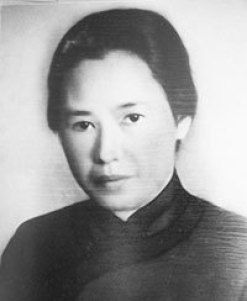
Auw Tjoei Lan’s life unfolded at the crossroads of empire, revolution, and identity in the Dutch East Indies, where rigid racial hierarchies defined who could belong and who could speak. Born into the Peranakan Chinese community in the early twentieth century, she grew up in a society stratified by colonial law—Europeans at the top, “Foreign Orientals” like the Chinese in the middle, and Indigenous Indonesians at the bottom. Yet these categories could not contain her ambitions. As nationalist ideas spread through port cities and classrooms, Auw Tjoei Lan became drawn to anti-colonial politics that promised a future beyond Dutch rule. She emerged as a committed activist at a time when political engagement by women—especially Chinese-Indonesian women—was both rare and risky.
Her political awakening brought her into revolutionary circles that transcended ethnicity, linking Chinese-Indonesians and Indigenous Indonesians in a shared struggle for independence. Auw Tjoei Lan is often remembered for her association with Tan Malaka, one of Indonesia’s most influential and controversial revolutionaries, but her activism extended well beyond any single relationship. She worked as an organizer, courier, and intellectual collaborator, helping to circulate ideas that challenged colonial capitalism and racial division. For the Dutch authorities, such work marked her as dangerous. Surveillance, arrests, and exile were constant threats, and like many revolutionaries of her generation, she paid a personal price for defying imperial power—enduring separation, instability, and political repression.
In post-independence Indonesia, Auw Tjoei Lan’s legacy faded into the margins, overshadowed by Cold War politics and the systematic silencing of leftist voices. Yet her story reveals a more complex portrait of Indonesia’s road to nationhood, one in which women and ethnic minorities played vital, if often unacknowledged, roles. Seen through a National Geographic lens, her life is not only a political biography but also a human geography of resistance—mapping how ideas moved across borders, how identities intersected, and how courage took shape in ordinary lives. Auw Tjoei Lan stands as a reminder that the struggle for freedom was never singular, but woven from many voices, many backgrounds, and many acts of quiet defiance.


Comments