
Renaissance Woman: Trotula of Salerno
Updated: Mar 18

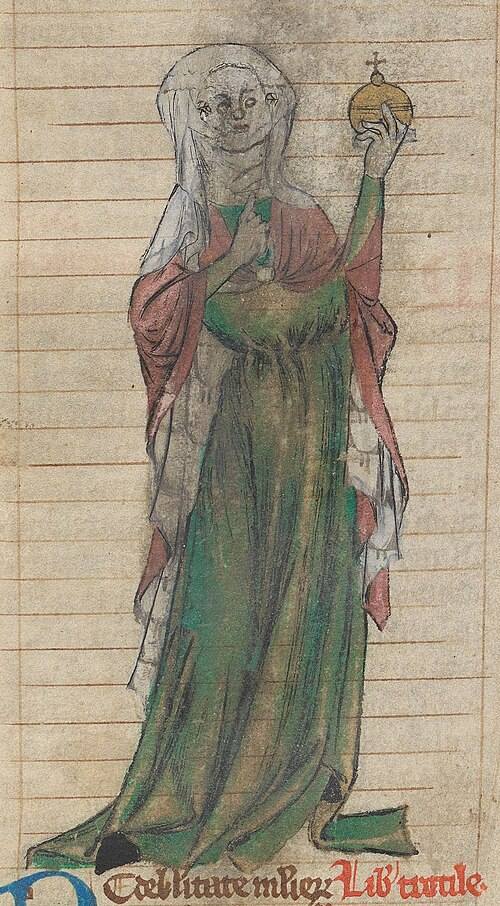
In the bustling port city of Salerno, where the Mediterranean carried merchants, scholars, and ideas from distant shores, a remarkable figure emerged in the 12th century: Trotula, a physician whose name would echo across centuries. At a time when women’s voices were often constrained, Salerno stood apart. Its famed medical school—the Schola Medica Salernitana—welcomed a diversity of influences, blending Greco-Roman traditions with Arabic medical knowledge. Within this cosmopolitan environment, Trotula became one of the most renowned practitioners of her age, specializing in women’s health with an authority rarely afforded to women in medieval Europe.
Little is known with certainty about her personal life, but historical fragments suggest she may have belonged to a prominent Salernitan family and possibly taught at the medical school itself. Some accounts describe her as married to another physician, Johannes Platearius, and as part of a lineage of medical scholars. Whether these details are entirely factual or partly embellished by later writers, they reflect the esteem in which she was held. Trotula’s reputation during her lifetime was formidable; she was cited by contemporaries as a skilled clinician whose expertise drew patients from across southern Italy and beyond.
Her legacy rests primarily on a body of texts collectively known as the “Trotula,” a compendium of medical writings focused on women’s health. These works include De Passionibus Mulierum (“On the Sufferings of Women”), De Curis Mulierum (“On Treatments for Women”), and De Ornatu Mulierum (“On Women’s Cosmetics”). Though modern scholarship debates whether all three texts were written by a single author, they nonetheless preserve a coherent tradition associated with her name. Together, they offer a rare window into medieval gynecology, obstetrics, and even cosmetic practice.
In De Passionibus Mulierum, Trotula addresses the physiological and reproductive conditions that affect women, challenging the prevailing notion that female illness stemmed solely from inherent weakness or imbalance. Instead, she emphasized observation, experience, and compassionate care. Her writing suggests a practitioner attentive to the lived realities of her patients—women who often suffered in silence due to social stigma. She advocated treatments that ranged from herbal remedies to practical advice on childbirth, seeking to ease pain and reduce risk in an era when maternal mortality was tragically common.
The companion text, De Curis Mulierum, expands on therapeutic approaches, detailing treatments for infertility, menstrual disorders, and complications of pregnancy. Trotula’s methods reveal a synthesis of classical medical theory and empirical knowledge. She recommended baths, poultices, and dietary adjustments, often incorporating ingredients such as myrrh, fennel, and pennyroyal. While some remedies reflect the limitations of medieval science, others demonstrate a surprisingly nuanced understanding of women’s bodies, marking her as a careful observer rather than a mere transmitter of inherited doctrine.
Equally intriguing is De Ornatu Mulierum, which explores the art of cosmetics and personal care. Far from trivial, this work underscores the social and psychological dimensions of health in medieval society. Trotula recognized that beauty and well-being were intertwined in the perceptions of her patients. She offered recipes for skin treatments, hair care, and perfumes, revealing a sophisticated knowledge of natural substances and their effects. In doing so, she blurred the boundaries between medicine and daily life, acknowledging that healing extended beyond the treatment of disease.
During her lifetime and in the centuries that followed, Trotula’s writings circulated widely across Europe. They were copied, translated, and adapted into Latin and vernacular languages, becoming standard references in medical education. Yet as her works spread, her identity began to shift. Later scholars, uncomfortable with the idea of a female authority, sometimes attributed the texts to male authors or recast “Trotula” as a collective name. By the Renaissance, her authorship had been obscured, her contributions absorbed into a broader, often male-dominated tradition of medical knowledge.
The 20th century brought a renewed interest in recovering lost voices from the past, and Trotula’s story began to reemerge. Historians and philologists carefully examined surviving manuscripts, disentangling layers of authorship and attribution. Scholars such as John F. Benton and Monica H. Green played a crucial role in reassessing the “Trotula” texts, arguing that at least part of the corpus could indeed be traced to a historical woman physician in Salerno. This scholarly detective work restored Trotula to her rightful place as a pioneering figure in medieval medicine.
In the 21st century, Trotula’s legacy continues to evolve as her work is studied through new lenses. Researchers explore her contributions not only as medical texts but also as cultural artifacts that illuminate gender, knowledge, and power in the medieval world. For modern audiences, she stands as both a symbol and a subject: a reminder of the women whose expertise shaped history, even when their names were nearly lost. In the enduring rhythms of Salerno’s past—its markets, its classrooms, its healing traditions—Trotula’s voice can still be heard, offering insight into a world where science and humanity were deeply intertwined.
 | Dogcatcher - The Game Dogcatcher is a web-based mystery game where players investigate eerie, supernatural cases in a shadowy world. Track clues, interview strange characters, and confront unexplainable forces as you unravel each haunting. Every decision shapes the outcome, blending puzzle-solving, storytelling, and suspense into an immersive, otherworldly investigative experience. |


Comments