
Goose Societies of the Medieval Mississippi
Across the floodplains of the American Midwest, where the Mississippi and its tributaries carve slow, deliberate paths through fertile earth, a constellation of earthen mounds once rose above the landscape. These were the centers of Mississippian life—planned settlements like Cahokia, Etowah, and Moundville—where thousands gathered in bustling towns shaped by ceremony, trade, and agriculture. Broad plazas stretched between platform mounds that supported temples or elite residences, while surrounding fields yielded the crops that sustained a complex and deeply interconnected society.

Within these communities, social organization was both structured and dynamic, and women played a central role in sustaining daily life. Far from the margins, women were agricultural specialists, craft producers, and cultural anchors. They cultivated fields, processed foods, and passed down ecological knowledge across generations. Their work was not merely labor—it was expertise, rooted in a deep understanding of seasonal cycles, soil conditions, and plant diversity. In many Mississippian societies, lineage and inheritance often traced through maternal lines, further underscoring the influence women held within both household and community spheres.
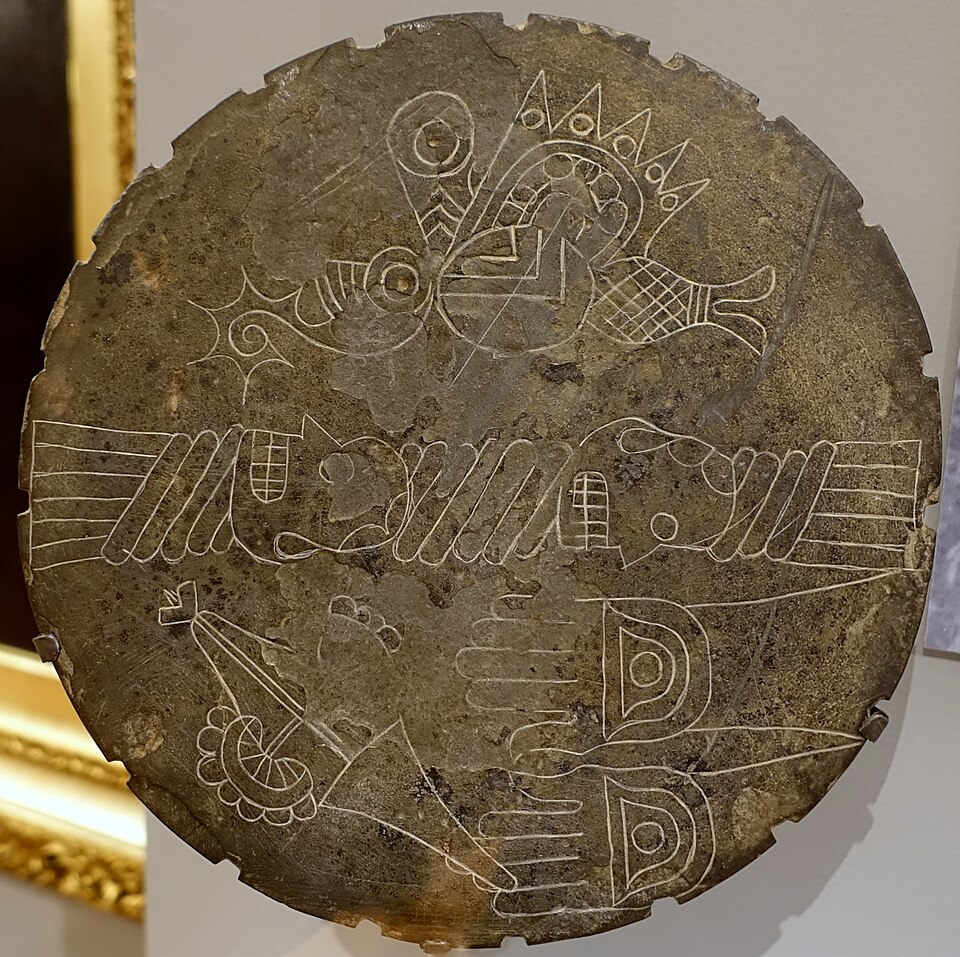
Among the more intriguing facets of Mississippian culture now emerging from archaeological and ethnohistorical research are what scholars have begun to call “Goose Societies.” Though the name is modern, it reflects iconography and symbolic associations found in engraved shell gorgets, pottery, and copper plates depicting waterfowl—particularly geese—alongside female figures. These societies may have been ritual or kin-based groups connected to seasonal migration cycles, fertility, and agricultural renewal. The goose, a traveler between worlds of water, land, and sky, appears to have embodied transformation and guidance, themes closely tied to planting and harvest cycles overseen by women.
Recent evidence is reshaping how we understand Mississippian agriculture, long characterized as heavily dependent on maize. Botanical remains recovered from habitation sites, combined with residue analysis and soil studies, suggest a more diverse cropping strategy than previously assumed. Alongside maize, farmers cultivated beans, squash, sumpweed, sunflower, and native grasses. Increasingly, archaeologists believe that women—already recognized as primary agricultural stewards—played a leading role in managing this diversity, selecting crops not only for yield but for resilience. Their decisions may have buffered communities against drought, pests, and soil depletion.
Seen through this lens, the Goose Societies take on new significance. They may represent not just symbolic or ceremonial groupings, but networks of knowledge—women sharing seeds, techniques, and ecological insight across regions. In a world shaped by rivers and seasons, where survival depended on balance, these societies could have functioned as both spiritual and practical institutions. Today, as researchers continue to piece together the lives of Mississippian peoples, a clearer picture emerges: one in which women, guided by observation and tradition, helped sustain entire civilizations—not only through what they grew, but through how they understood the land itself.
The rise of Mississippian civilization was no accident of time, but a convergence of geography, climate, and human ingenuity. Nowhere was this more evident than in the American Bottom—a broad, fertile floodplain stretching along the Mississippi River in present-day Illinois. Here, centuries of seasonal flooding deposited rich alluvial soils, creating one of the most productive agricultural zones in North America. For Mississippian farmers, many of them women refining generations of planting knowledge, this landscape offered an unparalleled opportunity. Fields yielded abundant harvests of maize and complementary crops, supporting not just survival, but surplus—and with surplus came growth.
By the 11th century, that growth had transformed Cahokia into a metropolis unlike anything north of Mesoamerica. At its height, the city may have housed between 10,000 and 20,000 people, its influence extending far beyond its earthen boundaries. Monks Mound, the largest of its structures, rose in tiers above the central plaza, a testament to coordinated labor and social organization. Roads radiated outward, connecting neighborhoods, satellite communities, and distant trade networks that carried shell, copper, stone, and ideas across vast distances. Cahokia was not only a political and economic hub—it was a cosmological center, where ritual life, seasonal cycles, and agricultural rhythms converged.

Yet the very forces that fueled Cahokia’s ascent may have also sown the seeds of its unraveling. Intensive agriculture placed increasing demands on the land, even in the fertile American Bottom. Forests were cleared for fields and timber, altering local ecosystems and potentially contributing to erosion and resource strain. Climatic fluctuations, including periods of drought and unpredictable flooding, would have tested even the most carefully managed agricultural systems. For the Goose Societies and other knowledge networks, adapting to these changes may have become an ever more complex challenge.
Around 1300 CE, signs of strain became unmistakable. Archaeological evidence points to a sharp population decline in Cahokia and surrounding regions. Construction of new mounds ceased, and some neighborhoods were abandoned altogether. Burial patterns shifted, suggesting changes in social structure or stress within the population. The reasons remain debated—environmental pressures, political instability, disease, and shifting trade dynamics likely all played a role. What is clear is that the densely populated urban experiment that had defined Cahokia began to fragment.
In the centuries that followed, Mississippian societies did not vanish so much as transform. Populations dispersed into smaller, more decentralized communities, carrying with them traditions, stories, and agricultural knowledge shaped over generations. The legacy of places like Cahokia endured not only in the mounds that still rise above the floodplain, but in the resilience of the people who adapted to a changing world. Today, as archaeologists continue to uncover the layers of this history, the story of the Mississippians stands as both a testament to human achievement and a reminder of the delicate balance between society and the land that sustains it.
For decades, the story of the Mississippian world—and its decline—has been told as a cautionary tale of environmental overreach and centralized control pushed beyond its limits. But archaeologist Gayle Fritz has spent much of her career carefully dismantling that narrative. Working with plant remains, soil samples, and the overlooked details of daily life, Fritz argues that the collapse of places like Cahokia may not have been driven by catastrophic ecological failure or the missteps of powerful elites. Instead, she points to a quieter, more complex reality—one rooted in resilience, diversity, and the often underestimated role of women.
A key pillar of Fritz’s work is the striking absence of clear evidence for widespread environmental disaster at the moment of Cahokia’s decline. While earlier theories emphasized deforestation, erosion, or devastating floods, the archaeological record tells a less dramatic story. There is no singular layer of destruction, no abrupt break in subsistence patterns that would signal famine on a massive scale. Instead, plant remains suggest continuity and adaptation. Fields were still being cultivated, and a variety of crops continued to appear in the archaeological record, complicating the notion that ecological collapse forced populations to abandon their cities.
Equally transformative is Fritz’s challenge to the idea of centralized agricultural control. Traditional interpretations of Mississippian society often place powerful chiefs or ruling elites at the center of decision-making, directing labor and dictating crop production. Fritz, however, finds little evidence to support such top-down management of farming. Instead, she highlights the likelihood of decentralized systems, where households—or networks of households—made their own decisions about what to plant, when to harvest, and how to manage risk. In this framework, authority was dispersed, and knowledge was local, flexible, and deeply embedded in community life.

At the heart of this decentralized system were women, whose agricultural expertise shaped the Mississippian food landscape. Botanical evidence reveals a rich tapestry of cultivated plants: bottle gourds used for containers and tools, native squashes adapted to regional conditions, oil-rich sunflower, and a host of seed crops that predated or complemented maize. This diversity was not incidental—it reflects deliberate choices aimed at balancing nutrition, storage, and environmental resilience. Fritz argues that women, as primary cultivators, were the architects of this system, maintaining a broad portfolio of crops that could withstand shifting conditions and reduce reliance on any single staple.

Seen through Fritz’s lens, the story of Mississippian decline becomes less about sudden collapse and more about gradual transformation. Rather than a civilization undone by its own excess, it may have been a network of communities adapting to social, environmental, and political changes in ways that are still not fully understood. The Goose Societies, with their emphasis on shared knowledge and ecological awareness, fit naturally into this picture—suggesting that Mississippian resilience lay not in rigid hierarchy, but in the distributed wisdom of those who worked the land.
Long before laboratories and modern plant science, Mississippian farmers were engaged in a form of genetic engineering grounded in observation, patience, and generational knowledge. By selectively saving seeds from plants with desirable traits—larger seeds, thinner shells, higher yields—they gradually reshaped the crops they depended on. Over time, this careful stewardship produced distinct varieties of native plants, from oil-rich sunflower to hardy squashes and prolific seed crops like sumpweed and chenopod. These were not wild resources passively gathered, but domesticated species actively guided by human hands, their evolution intertwined with the people who cultivated them.
Yet agriculture alone did not define the Mississippian diet. The surrounding woodlands were just as essential, offering a dependable reserve of nutrition that complemented cultivated fields. Each autumn, families gathered hickory nuts, acorns, and walnuts, processing them into calorie-dense pastes and oils. Hickory milk—a rich liquid extracted by boiling crushed nuts—provided both sustenance and flavor, while acorns, carefully leached of their tannins, became a versatile staple. This blending of farming and foraging created a flexible food system, one that buffered communities against the uncertainties of weather and harvest.
The landscape itself bore the imprint of deliberate management. Through controlled, low-intensity burns, Mississippian communities reduced underbrush, recycled nutrients into the soil, and minimized the risk of catastrophic wildfires. These burns also encouraged the growth of useful plants and maintained open woodland environments that supported game animals. Far from being untouched wilderness, the forests of the Midwest were shaped by human intention—a mosaic of habitats carefully tended to meet both ecological and cultural needs.
Among the most striking examples of this stewardship were the hickory groves that dotted the region. Evidence suggests that Mississippian peoples did more than simply harvest wild trees; they actively managed and, in some cases, cultivated entire stands of hickory. By protecting young saplings, clearing competing vegetation, and perhaps even selecting for trees with superior nut production, they created what can best be described as orchards. These groves provided reliable harvests year after year, anchoring communities to specific places while reinforcing the connection between people and land.
Taken together, these practices reveal a society deeply attuned to its environment, one that blurred the boundaries between wild and cultivated. The same knowledge networks that sustained diverse crop fields—likely carried and refined by women within decentralized communities—extended into the forests and river valleys beyond. In this world, agriculture was not confined to rows of maize, but woven into a broader system of ecological care. The Mississippians did not simply inhabit their landscape; they shaped it, guided its growth, and, in doing so, ensured their survival across generations.

Beneath the quiet rise of earthen mounds and the long-abandoned plazas of Mississippian towns, human remains are offering new insight into the movement of people across ancient North America. Through isotopic analysis—examining chemical signatures preserved in teeth and bones—researchers have begun to trace where individuals spent their early years. The results are striking: in some major settlements, as many as 20 to 30 percent of residents appear to have been born far to the east, in regions stretching toward the Appalachian Mountains and beyond. These were not isolated migrants, but part of a steady movement that helped shape the social fabric of Mississippian life.
Cahokia, in particular, emerges as a magnet for this migration. At its peak, the city’s scale and influence likely drew people from distant communities seeking opportunity, connection, or refuge. Some may have arrived through established trade and kinship networks, while others could have been drawn by the city’s ceremonial importance. Whatever their reasons, these newcomers brought with them knowledge—different farming practices, culinary traditions, and cultural perspectives—that would have blended into the already dynamic life of the American Bottom. The Goose Societies and other decentralized networks may have played a role in integrating these arrivals, transmitting ecological knowledge across both local and regional lines.
While the movement of people reshaped communities, new technologies are transforming how archaeologists uncover their past. Among the most influential is water flotation, a technique that allows researchers to recover tiny plant remains from soil samples with remarkable efficiency. By agitating soil in water, lightweight organic materials—seeds, husks, fragments of ancient meals—rise to the surface, where they can be collected and analyzed. This method has dramatically accelerated fieldwork, enabling archaeologists to process larger volumes of soil and detect botanical evidence that would once have gone unnoticed.
Through flotation, the timeline of agriculture in the Midwest has been pushed back thousands of years. Long before the rise of Mississippian cities, people in the region were already experimenting with plant cultivation. Seeds recovered from sites dating as far back as 2500 BCE reveal early forms of farming, including the management of native seed crops that would later become staples. These findings challenge older models that placed the origins of agriculture in the region much later, instead pointing to a deep history of innovation and adaptation that set the stage for the agricultural systems Mississippian societies would inherit and refine.
Together, these discoveries paint a picture of a world in motion—of people, plants, and ideas circulating across landscapes and generations. Migration was not a disruption, but a defining feature of Mississippian life, enriching communities even as it reshaped them. And through tools like water flotation, the smallest remnants of that world—charred seeds, fragments of ancient harvests—are helping to tell a much larger story. It is a story of continuity as much as change, where the roots of Mississippian achievement stretch deep into the past, nourished by centuries of human curiosity and care.
For generations, maize has stood at the center of how Mississippian agriculture is understood—a golden symbol of abundance rising from the floodplains of the Midwest. But a growing body of archaeological evidence is reframing that picture, revealing a far more diverse and resilient food system. Charred seeds, preserved in hearths and storage pits, tell a story not of dependence on a single crop, but of careful balance. Maize was important, certainly, but it was only one thread in a much broader agricultural tapestry.
Long before maize spread widely into the region, indigenous farmers had already domesticated a suite of native plants often referred to as the Eastern Agricultural Complex. These included sumpweed, goosefoot (chenopod), maygrass, little barley, and knotweed—crops selected over generations for their nutritional value and adaptability. When maize arrived, it did not replace these earlier foods overnight. Instead, it was folded into an existing system, complementing rather than erasing the knowledge that had sustained communities for millennia.
Evidence from Mississippian sites shows that these pre-maize crops continued to play a significant role even at the height of maize cultivation. Seeds of chenopod and knotweed appear alongside maize kernels in domestic contexts, while residues found on pottery suggest meals composed of mixed grains and plants. This diversity would have offered critical nutritional advantages: maize, while calorie-rich, lacks certain essential amino acids unless paired with other foods. The continued use of native seed crops and gathered resources helped round out diets, supporting both health and long-term sustainability.
This agricultural diversity also reflects a strategy of risk management. By cultivating multiple crops with different growing seasons and environmental tolerances, Mississippian farmers reduced their vulnerability to drought, pests, or flooding. If maize yields faltered in a given year, other plants—hardier, faster-growing, or more tolerant of poor conditions—could help fill the gap. Such an approach suggests deliberate planning and ecological awareness, likely guided by the decentralized networks of knowledge that researchers like Gayle Fritz have brought to light. Women, as primary cultivators, would have been at the center of these decisions, maintaining a dynamic relationship between crops, climate, and community needs.
Seen in this light, maize becomes less a dominant force and more a partner within a sophisticated system of food production. The persistence of pre-maize crops underscores the depth of Indigenous agricultural knowledge—knowledge that valued variety, flexibility, and long-term balance over short-term yield alone. As archaeologists continue to recover the botanical traces of Mississippian life, a clearer picture emerges: one of a people who understood that resilience lies not in reliance on a single resource, but in the careful cultivation of many.
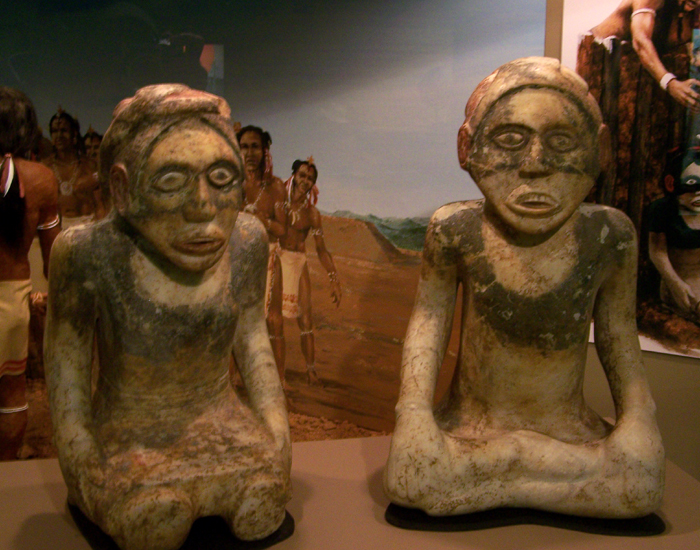
In the soft light of excavation sites across the Midwest, small figures have emerged from the soil—delicately shaped, quietly expressive, and profoundly revealing. These flint-clay figurines, often depicting women with detailed hair, posture, and adornment, are offering archaeologists a more intimate glimpse into Mississippian life. Some appear seated, others engaged in daily tasks, their forms both stylized and grounded in reality. Long overlooked as decorative or symbolic curiosities, these figures are now being reconsidered as reflections of identity, memory, and perhaps even authority within agricultural communities.
What stands out is not just their craftsmanship, but their emphasis. Many of these figurines highlight the physical presence and labor of women—bodies rendered with care, sometimes accentuating the abdomen or hands, suggesting fertility, productivity, or sustenance. In the context of a society so deeply tied to the rhythms of planting and harvest, these representations may point to a cultural recognition of women as central figures in maintaining life. Rather than existing in the background, women appear here as subjects worthy of depiction, their roles elevated into something enduring and communal.
Archaeologists are increasingly connecting these artifacts to the idea of organized farming societies—networks of women who shared labor, knowledge, and responsibility across households and settlements. The Goose Societies, once glimpsed primarily through iconography of waterfowl and seasonal symbolism, now seem to align with these findings. Together, they suggest a system in which women were not only cultivators, but coordinators—figures who shaped agricultural decisions, preserved seed diversity, and ensured continuity across generations. Empowerment, in this context, was not abstract. It was embedded in daily practice, in the authority to decide what to plant, how to adapt, and how to sustain a community.

These interpretations resonate with later Native American traditions, particularly the widespread figure of the “Grandmother”—a cultural archetype representing wisdom, guidance, and the enduring connection between people and the earth. In many Indigenous stories, the Grandmother is both teacher and caretaker, a figure who understands the cycles of nature and passes that knowledge forward. While separated by time, the echoes are difficult to ignore. The figurines, with their grounded presence and quiet strength, may represent early expressions of this enduring archetype—women whose roles extended beyond the immediate into the spiritual and cultural fabric of their societies.
Seen together, these discoveries challenge older narratives that minimized or overlooked women’s influence in Mississippian life. The flint-clay figures are not just artifacts; they are statements—subtle, but persistent—about who held knowledge and how that knowledge was valued. In their forms, we glimpse a society where farming was more than subsistence, and where those who worked the land held a kind of power that was both practical and profound. Across centuries, their legacy lingers, shaped in clay and carried forward in story, reminding us that the roots of civilization are often tended by hands history has only just begun to recognize.
For much of its history, archaeology has been shaped by the questions its practitioners chose to ask—and, just as importantly, by the perspectives they brought with them into the field. Today, a growing number of female archaeologists are reshaping the study of Mississippian cultures, asking different questions of familiar sites and uncovering patterns that earlier generations often overlooked. Where past interpretations centered on chiefs, warfare, and monumental construction, these researchers are turning attention to households, fields, and the subtle traces of daily life—places where women’s influence is most visible.
This shift is not simply about representation; it is about methodology. Female archaeologists working in the Midwest and Southeast have been at the forefront of integrating botanical analysis, soil science, and fine-grained excavation techniques into broader cultural interpretations. By examining charred seeds, pollen residues, and planting patterns, they are reconstructing agricultural systems in unprecedented detail. These findings consistently point to a decentralized, knowledge-rich network of cultivation—one that aligns with the idea of women as primary agricultural decision-makers. In this way, scientific evidence is converging with interpretations that foreground women’s roles, strengthening arguments that might once have been dismissed as speculative.
Equally important is the growing collaboration between archaeologists and the descendant communities of Mississippian peoples. Oral traditions, ceremonial practices, and enduring cultural beliefs among tribes such as the Osage, Choctaw, and Creek offer vital context for interpreting the archaeological record. Stories of the “Grandmother” figure, agricultural rituals tied to seasonal cycles, and longstanding relationships with specific plants provide a cultural framework that helps make sense of material evidence. When flint-clay figurines, seed assemblages, and landscape modifications are viewed alongside these living traditions, a more cohesive picture emerges—one that supports the idea of women as central figures in both subsistence and spiritual life.
For many female archaeologists, this interdisciplinary approach feels less like a departure and more like a restoration. It challenges the long-standing divide between science and story, recognizing that data and tradition can inform one another. By valuing Indigenous knowledge systems and engaging directly with descendant communities, researchers are uncovering layers of meaning that extend beyond what artifacts alone can reveal. In doing so, they are not only refining our understanding of Mississippian societies, but also addressing the biases that once limited the field’s scope.
The implications reach far beyond the American Midwest. When more women enter archaeology—bringing diverse perspectives, priorities, and lived experiences—the discipline becomes better equipped to ask nuanced questions about the past. Societies around the world, long interpreted through narrow lenses, begin to reveal new dimensions: networks of care, systems of shared knowledge, and forms of leadership that do not always leave monumental traces. In the story of the Mississippians, this shift has illuminated the hands that planted, harvested, and sustained entire communities. Elsewhere, it promises to do the same, reminding us that the past is not fixed—it deepens with every new voice willing to uncover it.


Comments