
Colonial America's Culinary Heritage
In the 17th and 18th centuries, the food of colonial America was a fusion of cultures and ingredients, shaped by the diverse peoples who settled the thirteen colonies. European settlers, native populations, and African slaves brought their own culinary traditions and foodstuffs, creating a complex tapestry of flavors and techniques. From the shores of New England to the plantations of the South, the colonial kitchen was a space of adaptation and invention, where global spices, native crops, and European staples came together to form the distinct tastes of early America.
Each region of the colonies had its own unique culinary influences, shaped by geography, climate, and culture. The New England colonies relied heavily on the fish and seafood of the Atlantic, as well as grains like corn, wheat, and rye, which were staples of their diet. The Mid-Atlantic colonies, including Pennsylvania and New York, enjoyed a more diverse spread, with hearty meat dishes, dairy, and abundant vegetables. The Southern colonies, particularly Virginia and the Carolinas, developed a cuisine deeply influenced by African ingredients and techniques, with a heavy reliance on rice, corn, and a variety of fruits and vegetables. In addition, the introduction of sugarcane and the development of the plantation system led to the widespread use of sugar in Southern desserts.
This melting pot of culinary influences was further enriched by the transatlantic trade. Spices like cinnamon, cloves, and nutmeg were prized imports from the East Indies, while Caribbean-grown sugar and molasses became crucial to Southern cooking. The food of colonial America was, at its core, a product of necessity and innovation, as settlers learned to make use of what the land provided and integrated the global exchange of ingredients into their daily lives. The cuisine of colonial America may have begun as a patchwork of old-world traditions, but it evolved into something entirely new, marking the early stages of American culinary identity.

Breakfast in colonial America was a humble and functional meal, shaped by both the practicality of early American life and the traditions of English settlers. Nearly half of all residents in the 13 colonies were of English descent, bringing with them their customary food practices, which largely revolved around simple, hearty meals. For English settlers, breakfast was not a grand affair but a practical way to fuel up for a day of hard work. The meal typically consisted of bread, porridge, and sometimes leftovers from the previous evening's dinner, which might include meat or stews.
The most common breakfast staple among English settlers was bread, often accompanied by butter or cheese. Bread was a central element of their diet, made from various grains such as wheat, rye, or corn, depending on what was locally available. In New England, where wheat was grown in abundance, settlers enjoyed wheat bread, while those in the South often relied more heavily on cornbread. For the wealthy or those with access to mills, finer bread made from white flour was a luxury, while poorer colonists often consumed coarser, darker bread made from rye or cornmeal. In some homes, bread was dipped in milk or served with preserves or jam, providing a simple but satisfying start to the day.
Porridge, made from oats, cornmeal, or wheat, was another common breakfast dish among the English settlers. This dish, often sweetened with molasses or honey, was especially popular in the colder months, providing warmth and nourishment. It could be flavored with spices like cinnamon or nutmeg, both of which were valued imports from the East Indies. The meal was typically served in a bowl, with a spoon or sometimes a wooden bowl, and eaten by the entire family. For settlers who lived in more rural areas, where food supplies could be limited, porridge was a versatile and inexpensive dish that could be made in large quantities to feed everyone.

As for beverages, the English settlers drank a variety of hot and cold drinks, depending on the season and availability of ingredients. In the morning, hot beverages like tea and coffee were becoming increasingly popular, especially in the wealthier households, but they were not as widely accessible as they would become later. Instead, many colonists drank ale, cider, or small beer, a low-alcohol brew made from fermented grain or fruit, which was considered a safer option than drinking water, which could be contaminated. Milk was also consumed, particularly in households with dairy cows, and sometimes, settlers enjoyed a simple cup of warm broth to start the day.
Dinner- eaten at midday- was the primary meal for English settlers in the 17th and 18th centuries, and it offered a heartier, more varied spread than the lighter breakfast. The timing and content of the meal often depended on the region, the season, and the availability of ingredients, but it was generally consumed between noon and 2 p.m. In households across the colonies, from the bustling cities of New England to the plantations of the South, dinner was an opportunity for families to sit down together and enjoy a filling meal before returning to the labor-intensive work of the afternoon.
For many English settlers, the foundation of dinner was meat. Roasted or stewed beef, pork, and lamb were common, especially in the more affluent households where livestock were kept. In rural areas, where hunting was a more common practice, venison, wild turkey, and game birds could be found on the table. Poultry, particularly chickens and ducks, was also a regular feature of the midday meal. The meat was often accompanied by hearty vegetables, such as cabbage, carrots, turnips, and potatoes, which were either boiled, roasted, or stewed. Root vegetables, in particular, were a staple in the colder climates of the North, where they could be stored for much of the year.

Bread remained central to the English settler’s diet, and at dinner, it was often paired with meats or used to soak up rich gravies and sauces. The variety of bread consumed varied by region and economic class. In wealthier homes, wheat bread was prized, while those in the poorer regions of the colonies made do with coarser rye or cornmeal breads. For English settlers in the Southern colonies, cornbread became a key feature of the midday meal, a dish that reflected both the availability of corn and the cultural influence of Native Americans. Alongside bread, settlers often ate pies or pastries filled with fruits such as apples, peaches, or berries, or savory fillings like meats and vegetables.
As for beverages, dinner was often accompanied by cider, ale, or small beer. Cider was particularly popular in New England, where apple orchards were abundant, while ale was more common in the Mid-Atlantic and Southern colonies. The idea of drinking water with meals was not as common, as water sources could often be contaminated, and alcohol was considered a safer alternative. For those who did not drink alcohol, small beer—a low-alcohol brew made from fermented grains—was the drink of choice. For some wealthier settlers, tea or coffee, though expensive and less widely available, began to make their way into the midday meal as imports became more common from England.
In colonial America, taverns were more than just places to drink; they were hubs of social life, where travelers, settlers, and traders could gather to exchange news, rest, and enjoy a warm meal. For English settlers, these establishments offered a respite from the rigors of daily life and a chance to indulge in the comfort of hearty, filling fare. Taverns varied in quality and offerings, from modest roadside inns to upscale establishments in bustling port cities. The menu typically reflected the abundance of local ingredients and the culinary traditions that English settlers brought with them, often centered around meats, seafood, and breads.
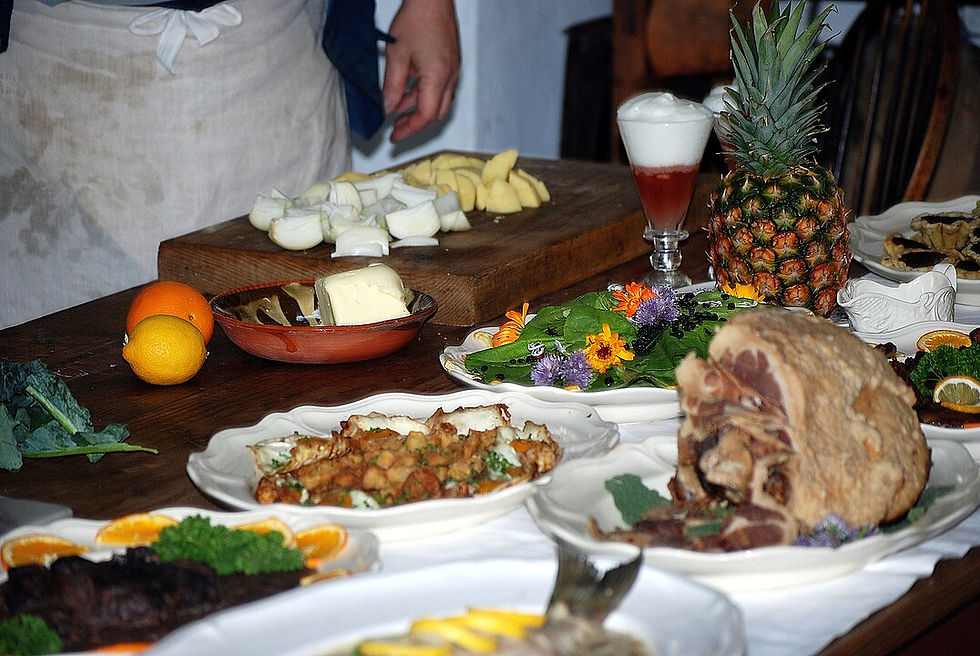
Meat was a central component of tavern fare, with roasted beef, pork, and mutton frequently gracing the tables of tavern guests. In the southern colonies, where livestock were abundant, venison, wild turkey, and even game birds found their way onto the menu. Poultry, particularly chicken, was a regular offering, often served with stews or roasted with herbs. As taverns were located along trade routes and near waterways, seafood became an integral part of the dining experience, especially in coastal regions. Fish such as cod, bass, and mackerel, alongside shellfish like clams and oysters, were staples at coastal taverns, where fresh catches were delivered daily from local fishermen.
Among the most popular coastal delicacies were oysters, which were highly prized and became synonymous with tavern dining in places like New England and the Mid-Atlantic colonies. Taverns located near the shore often served oysters in a variety of ways: raw on the half shell, roasted with butter, or stewed in broths flavored with spices. These shellfish were abundant in the waters along the Eastern Seaboard, and their availability made them a cheap and plentiful option for settlers and travelers alike. In cities like Boston, New York, and Philadelphia, oysters were often enjoyed alongside a mug of beer or cider, and they quickly became a signature dish at local taverns. The combination of briny oysters and the hearty beverages offered a satisfying and distinctly colonial experience.
Drinks were an essential part of the tavern experience. Ale and cider were the most common beverages, especially in the New England and Mid-Atlantic colonies, where apples were plentiful. Small beer, a low-alcohol drink made from fermented grain or fruit, was widely consumed, often served in large quantities to quench thirst during long, hot days. Wine was less common but available, particularly in larger, wealthier taverns that catered to the elite. In some taverns, tea or coffee was available, though these drinks were still considered rare luxuries and primarily reserved for the more affluent classes. Taverns offered a place not only to eat but to connect with the larger world, making them an essential part of colonial American social and culinary life.

In colonial America, sweets were a rare luxury for most settlers, but when available, they were highly valued and often served during special occasions, gatherings, or after meals. The English settlers, with their love for sugar and spices, brought many traditional recipes with them, but the availability of ingredients in the New World shaped how these sweet treats evolved. Early American desserts were often simple, utilitarian, and created from locally grown ingredients, with sugar, molasses, and honey serving as the primary sweeteners. While some sweets, like cakes and pastries, became commonplace in wealthier households, they were a luxury for the majority of settlers who relied on more basic and seasonal ingredients.
One of the most popular and accessible sweets for English settlers in colonial America was pie. With an abundance of fruits like apples, berries, and peaches in the orchards, pies filled with these sweet, tart fruits became a mainstay in colonial kitchens. Apple pie, particularly in New England, was a signature dessert that symbolized the settlers' ingenuity in utilizing local produce. These pies were often sweetened with molasses, maple syrup, or honey, as refined white sugar was an expensive commodity. Other fruit-based desserts, like cobblers and crisps, became beloved ways to showcase seasonal harvests, though they were typically more rustic than the elaborately decorated pies enjoyed in later years.
Candies were less common in early colonial America, as sugar was expensive and often imported from the Caribbean. However, settlers did make use of locally available sweeteners like maple syrup and honey to create simpler confections. One such treat was "sugar cakes," small cookies or biscuits made from flour, sugar, and butter, often flavored with spices like cinnamon or ginger. Other early colonial candies included taffy-like confections made from boiled molasses or maple syrup, which would be stretched and pulled until chewy. These sweets, though far less refined than modern candies, provided a welcome burst of sweetness in the otherwise savory diets of colonial settlers.

Beverages like cider, ale, and small beer were frequently paired with sweets in taverns and at family gatherings. Apple cider, particularly in New England, was a popular drink and sometimes served warm with spices, offering a sweet counterpoint to the savory flavors of colonial meals. In wealthier homes, where sugar was more readily available, beverages like tea and coffee were often consumed alongside sweets during afternoon gatherings. Despite their occasional indulgence in sugar and treats, the sweets of colonial America were often a reflection of scarcity and resourcefulness. These simple yet satisfying desserts and candies provided a glimpse into how early American settlers adapted European traditions and local ingredients, making the most of what they had while adding a touch of sweetness to their everyday lives.
Scottish and Irish settlers, particularly those who arrived in colonial America in the 17th and 18th centuries, brought with them culinary traditions that were deeply influenced by the rugged landscapes of their homelands. While English settlers were the largest group in colonial America, the Scots and Irish also had a significant impact, especially in the Appalachian Mountains and the Ohio Country. For these settlers, food was not just a means of survival; it was deeply intertwined with cultural identity. Their diets were shaped by both the harsh conditions of frontier life and the availability of local resources, as well as the legacy of their homelands, where simple, hearty meals were the norm.
For many Scottish and Irish settlers, the basic diet consisted of grains, vegetables, and meat, with a focus on practicality and sustenance. In both Scotland and Ireland, hearty porridge made from oats or barley was a staple breakfast dish, and this carried over into colonial America. The Scots, particularly, favored a porridge called "pottage," a thick stew made from grains, root vegetables, and sometimes meat. In the remote corners of Appalachia, where settlers lived far from major trade routes, this humble dish continued to provide essential nutrition, often boiled over an open fire. Corn, readily available in the New World, also became a major part of their diet, especially in the form of cornbread, a dish that was favored by both the Scots-Irish settlers and their Native American neighbors.

Meat played a vital role in the diet of Scottish and Irish settlers, particularly those who moved into the remote Appalachian region. For the Scotch-Irish longhunters—frontiersmen who ventured deep into the wilderness to hunt game—their meals consisted of whatever they could catch. Wild game, including deer, turkey, and bears, provided an abundant source of protein. Longhunters would often preserve meat through salting, smoking, or drying, ensuring they had food during lean months. Hunting also connected settlers to their heritage, as many Scottish and Irish families had been hunters and herders back in Europe. In addition to game, settlers raised livestock like cattle, pigs, and chickens, ensuring a steady supply of pork, beef, and eggs. For the Scots-Irish, who had little access to fresh vegetables in the wild, meat-based stews were a common dish, often accompanied by potatoes, beans, or whatever crops could be grown in the small, difficult-to-manage plots they cleared.
The rich, smoky flavors of cured meats and game were often balanced by the simple but nourishing vegetables that settlers could cultivate in the fertile soil of the Appalachian hollows. The Scots and Irish were adept at growing root vegetables like potatoes, turnips, and carrots, as well as hearty greens like cabbage and kale. These vegetables formed the foundation of many stews, soups, and casseroles that were staples of their diet. Corn was also frequently used in the form of cornmeal, which was ground and used to make cornbread, corn pudding, or mush, a porridge-like dish often served with butter or syrup. Unlike many other colonial settlers who had access to refined flour, the Scots and Irish typically used coarse cornmeal or whole grains in their baking, resulting in more rustic, hearty foods.
As for beverages, the Scotch-Irish settlers of Appalachia and the Ohio Country drank much like their European ancestors, with whiskey and beer playing central roles. Whiskey, often homemade from corn or rye, was the drink of choice for many Scots-Irish families and played a significant part in social gatherings. In fact, the production of whiskey became an essential part of their economic life, with small-scale distilleries popping up throughout the Appalachian region. Ale and hard cider, which were readily available in the larger settlements, were also commonly consumed. In the more remote settlements, tea and coffee were less common, though they occasionally made their way into the homes of wealthier settlers or those who had access to trade goods.
While English, Scottish, and Irish settlers formed the majority in colonial America, a diverse array of other European groups brought their own culinary traditions to the New World, shaping the evolving American palate in distinctive ways. The Dutch in New Netherland, Germans in Pennsylvania, French in Louisiana and the northern frontier, Swedes in the Delaware Valley, and Sephardic Portuguese Jews in Rhode Island all introduced regional ingredients, preservation methods, and signature dishes that reflected both their heritage and their adaptation to a new environment. Though often overlooked in broader colonial narratives, these communities left an enduring legacy on the nation’s culinary history.
The Dutch settlers of New Netherland, particularly around present-day New York and the Hudson River Valley, maintained a rich food culture based on hearty stews, pancakes, and baked goods. Dutch ovens—heavy iron pots used for slow cooking—became kitchen staples throughout the colonies thanks to Dutch influence. Settlers regularly ate dishes such as hutspot (a mash of potatoes, carrots, and onions), and snert (a thick split pea soup with pork), especially during colder months. Dutch colonists also had a sweet tooth, introducing waffles, cookies (from the Dutch word koekje), and New Year’s doughnuts called oliekoeken, which would eventually evolve into the American doughnut. They consumed beer as a daily beverage, with many households brewing their own from barley or wheat.
In Pennsylvania and the surrounding backcountry, German settlers—including the so-called “Pennsylvania Dutch” (a corruption of “Deutsch”)—brought with them a strong culinary tradition rooted in preservation and simplicity. Sauerkraut, pickled vegetables, and smoked sausages were essential parts of the diet. One of the most iconic German contributions was scrapple, a dish made from pork scraps and cornmeal, fried into crisp slices for breakfast. Soft pretzels, rye bread, and apple butter were other favorites. Beer and cider were common beverages, often brewed at home or in small community operations. Their emphasis on thrift, fermentation, and hearty, high-calorie meals suited the demands of farming life in the Pennsylvania countryside.

French settlers, particularly in Louisiana and along the northern frontier, contributed a distinct flair to colonial cuisine. In the Mississippi Delta, French culinary traditions mixed with African, Native American, and Spanish influences, creating the foundation of what would later be known as Creole cuisine. Gumbo-like stews, rice dishes, and beignets (fried dough pastries) were all present in early colonial Louisiana. French settlers in the northern frontier regions also embraced wild game, freshwater fish, berries, and maple syrup, integrating these ingredients into familiar French techniques like roasting and slow braising. Wine was the beverage of choice when available, though settlers often made fruit-based cordials and cider when grapes were scarce.
Swedish settlers, though small in number and mostly concentrated in the Delaware Valley during the 17th century, also left culinary footprints. They introduced log cabin building techniques and hearty peasant-style foods centered around bread, dairy, and fish. Rye bread, smoked herring, and preserved fruits were common, as were dishes like lutfisk (dried cod reconstituted in lye) and thick grain porridges. Swedish colonists made beer and mead, often brewed with herbs and local flavorings. While many Swedish settlements were eventually absorbed into other colonies, their rustic cooking methods endured, particularly in rural areas where subsistence farming remained the norm.
Among the most unique communities in colonial America were the Sephardic Portuguese Jews who settled in Rhode Island, particularly in Newport. Fleeing persecution in Europe and the Caribbean, they brought with them Mediterranean culinary traditions centered around olive oil, legumes, herbs, and spices. Their diets featured dishes like stewed chickpeas, fish with preserved lemon and garlic, and pastelicos—savory pastries filled with meat or vegetables. Because of kosher dietary laws, these settlers were among the first to establish organized butchering practices, and they were known for their carefully prepared Sabbath meals. While wine was used ceremonially, many Jewish families also brewed or imported fortified wines such as Madeira or port for special occasions.

Long before the arrival of European settlers, the Indigenous peoples of North America had developed complex and highly sustainable food systems that varied across regions and cultures. From the coastal fisheries of the Northeast to the maize fields of the Southeast and the hunting grounds of the Great Plains, Native communities cultivated and harvested a rich variety of foods that were deeply tied to the land and seasons. In colonial America, these foodways not only sustained Indigenous nations but also influenced the diets of arriving settlers, who quickly adopted native crops and techniques essential for survival.
Corn, beans, and squash—often referred to as the “Three Sisters”—formed the foundation of many Indigenous diets. Grown together in a sophisticated intercropping system, these plants supported one another and provided a balanced nutritional base. Cornmeal was used to make porridge or bread, beans offered vital protein, and squash contributed vitamins and texture to stews. In addition to cultivated crops, Indigenous peoples gathered wild berries, nuts, and roots, fished in rivers and coastal waters, and hunted game such as deer, turkey, and rabbits. Cooking methods included roasting, boiling, and drying, often using clay pots or hot stones, while foods were preserved by smoking or sun-drying.
Drinks varied by region and included herbal infusions made from plants like mint, sassafras, and yarrow. In the Northeast, maple sap was boiled into syrup and consumed as a sweetener or drink. In the Southwest, beverages included teas made from roasted corn or fermented drinks derived from cactus or agave. These drinks were not only nutritional but often held spiritual significance. As colonists spread across the continent, many adopted these ingredients and techniques, from cornmeal mush to smoked meats, embedding Indigenous culinary knowledge into the foundation of American foodways—even as Indigenous communities were displaced from the very lands they had sustained for generations.

In colonial America, the culinary traditions of African-Americans—both enslaved and free—emerged from a blend of hardship, resilience, and deep cultural memory. For the millions of Africans forcibly brought to the colonies through the transatlantic slave trade, food was not only a source of nourishment but also a powerful connection to their homelands. Despite their constrained circumstances, African-Americans adapted familiar ingredients, cooking techniques, and communal food traditions to a new and often hostile environment. In doing so, they laid the foundation for some of the most enduring elements of American cuisine.
Enslaved Africans were typically given meager rations by plantation owners: cornmeal, lard, salt pork, molasses, and sometimes rice or beans. To supplement this, they hunted, fished, foraged, and cultivated small garden plots, growing okra, sweet potatoes, collard greens, black-eyed peas, and melons—many of which had African origins or parallels. These ingredients were transformed into hearty, flavorful dishes like stews, gumbos, and porridges, often cooked in large iron pots over open fires. On rice plantations in the Carolinas and Georgia, enslaved people brought with them expert knowledge of wetland rice cultivation, contributing significantly to the region’s agricultural success while incorporating rice into their daily meals.
Seasoning and slow-cooking were hallmarks of African-American cooking in the colonies. Even with limited supplies, enslaved cooks—many of whom worked in the kitchens of wealthy white families—used herbs, peppers, onions, and smoked meats to flavor dishes. These cooks became the unsung architects of Southern colonial cuisine, blending African techniques with European and Native American ingredients. Fried foods, particularly fritters and fish, became staples, and the use of molasses and sorghum gave rise to distinctive sweets and sauces. Food was often shared communally, reinforcing bonds of kinship and culture in the face of oppression.

For free African-Americans—especially in urban areas like Philadelphia, New York, and Charleston—culinary life was more varied. Many worked as skilled bakers, caterers, and street vendors, selling spiced cakes, fried fish, and seasoned meat pies. Drinks such as ginger beer, molasses-based switchel, and herbal teas were common among both enslaved and free Black communities. Food was more than sustenance—it was an act of resistance, survival, and cultural preservation. Through ingenuity and memory, African-Americans in colonial America preserved ancestral knowledge and shaped a rich culinary tradition that would profoundly influence the national palate for generations to come.
The culinary legacy of colonial America continues to shape the American table in ways both obvious and subtle. Many of the foods and cooking techniques introduced or adapted by settlers—whether English, German, Dutch, African, Indigenous, or otherwise—formed the building blocks of what we now recognize as regional American cuisine. Cornbread, baked beans, pot roast, and stews trace their roots to colonial hearths, where ingredients were seasonal, meals were communal, and resourcefulness was key. The colonial reliance on preserved goods like smoked meats, pickled vegetables, and dried fruits still echoes in pantry staples today.
Perhaps the most enduring influence lies in the blending of food traditions. The use of Indigenous ingredients like corn, squash, and beans became essential to settler survival and later formed the core of iconic American dishes. African-American cooking contributed techniques such as slow-braising, deep-frying, and heavy seasoning—now hallmarks of Southern cuisine. European settlers brought breads, cheeses, fermented drinks, and pastry-making skills, giving rise to favorites like pies, cookies, and gingerbread. Colonial taverns and kitchens served as the first laboratories of culinary fusion, producing meals that were born of necessity but flavored by diverse heritage.
Modern American cuisine, from Thanksgiving tables to backyard barbecues, owes much to these early foodways. Comfort foods such as mashed potatoes, apple pie, and roasted turkey have become cultural symbols, deeply rooted in colonial tradition. Even the farm-to-table movement mirrors colonial practices of local, seasonal eating. While modern palates may enjoy global ingredients and sophisticated techniques, the essence of colonial cooking—adaptability, regional diversity, and the blending of cultures—remains. It is a legacy not only of survival, but of innovation, one plate at a time, that continues to define what it means to eat—and live—American.


Comments